
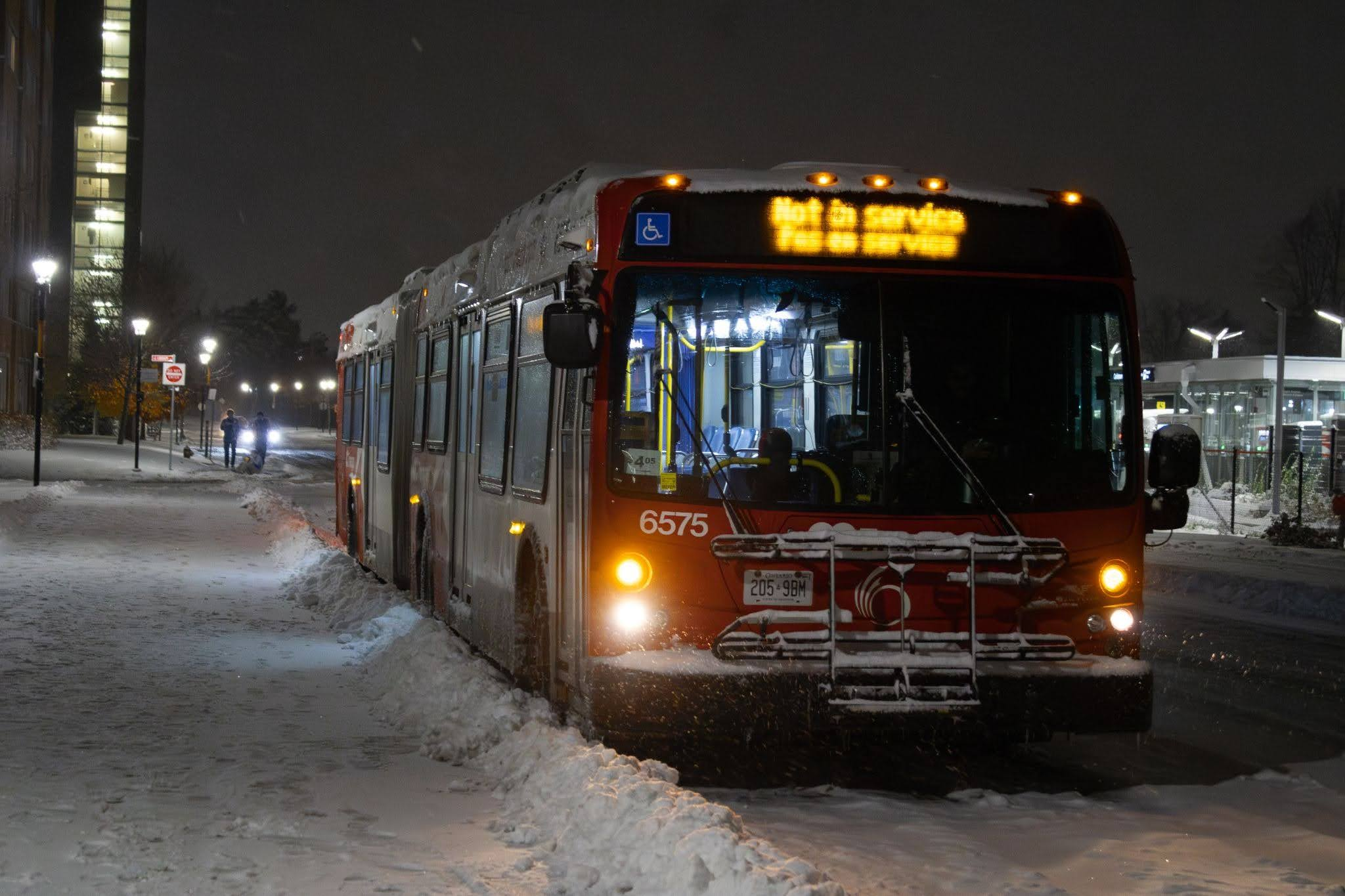
The Carleton University Students’ Association estimates nearly three in four undergraduate students take transit to attend class. But students often feel left behind — often literally — by OC Transpo, and students are pushing for change after an academic year rife with transit chaos.
Natalie Barcewicz, a third-year cognitive psychology student, said she relies on transit to commute around the city and finds the system very unreliable.
“Most routes that go downtown are fine, but when you get more into the neighborhoody areas — like Baseline, the 88 — it’s a hit or a miss. It either comes or it doesn’t,” she said.
“It’s never on time, ever.”
Second-year journalism and political science student Atisa Khalaj has a similar grievance.
“When you plan a trip, it never goes accordingly, and you can’t really rely on the OC Transpo services, which is quite devastating because of the prices,” she said.
Barcewicz and Khalaj said they sometimes have to splurge on ridesharing services to get to class.
Pushing for change
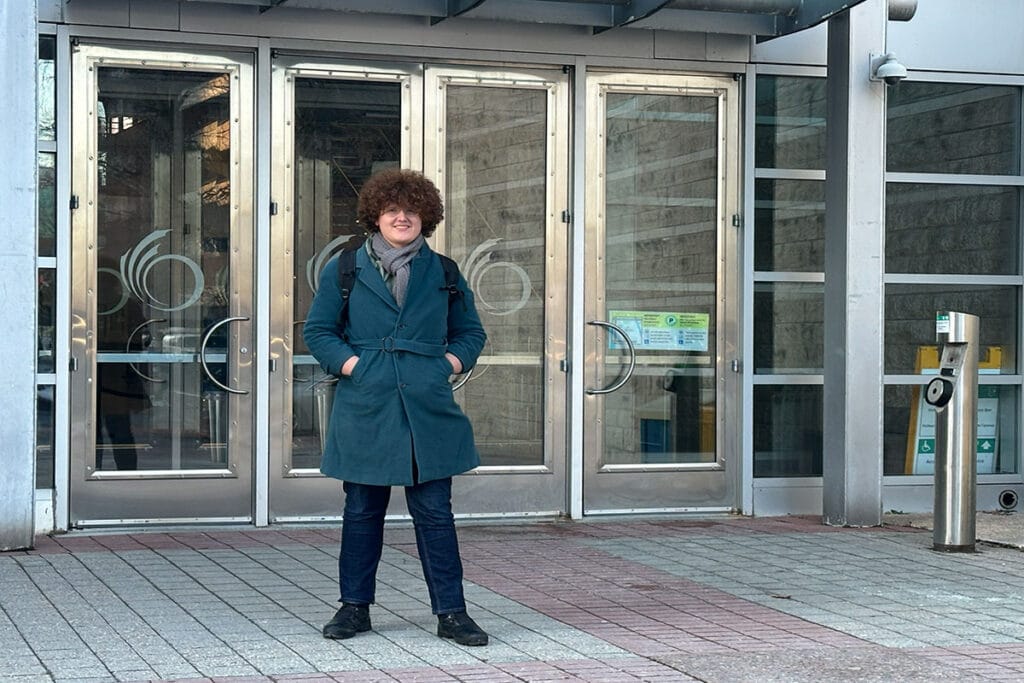
Carleton’s branch of the Ottawa Transit Riders is wrapping up its first academic year in operation.
The organization, which recently received official CUSA club status, aims to platform student concerns about transit in front of local lawmakers. President and founder, Brooke Anderson, said the organization is making strides.
“While we haven’t gotten crowds of students out there, we’ve had the attention of the room, hearing what we have to say in the place where decisions are made,” she said.
Earlier this year, the group presented at the city’s transit committee and held tabling events on campus.
OC Transpo said they are listening and working on reliability for Carleton students.
“OC Transpo’s network redesign in 2025 placed a stronger emphasis on frequency and improved connections to Carleton University, including the decision to maintain key routes such as the 7, 10, 48 and 111,” a city transit spokesperson said in a statement to the Charlatan.
The city added OC Transpo monitors bus service in real time and reviews and adjusts its schedules four times per year.
Anderson said the service still isn’t doing enough, and she isn’t giving up hope for a better transit system anytime soon.
“Transit is an issue that we often have a lot of pessimism around,” she said.
“It can get better. It just takes the right leadership, the right funding, and the right pressure. And we can apply that pressure.
“All we need from city council is the leadership and the funding.”
Featured image by Nathan Cox/the Charlatan
This article, and all of the Charlatan’s work, is brought to you by an independent student newspaper dedicated to informing, uplifting and entertaining the Carleton University community. We are a levy-funded organization which plays a role in the broader, vibrant student culture on campus. By reading this article, you are supporting our efforts.