
Startled by a lack of awareness around political injustice and corruption in the Philippines, Carleton student Asal Durrani decided to found the university’s Committee for Human Rights in the Philippines.
The committee was formed in September and looks to address human rights issues in the Philippines through education and community participation. They focus much of their support on political prisoners targeted by the Filipino government.
The Charlatan sat down with Durrani, the president of the committee, to learn more about initiatives to shed light on the plight of Filipinos around the world.
The Charlatan (TC): What do Carleton students need to know about human rights issues in the Philippines?
Asal Durrani (AD): Currently, the Philippines’ government is run by Ferdinand Marcos Jr., the son of a former dictator who imposed martial law. The vice-president is Sara Duterte, whose father, the previous president, compared himself to Hitler in his vow to “slaughter” millions for the war on drugs. Their elections are also unfair.
There’s immense poverty because the landlord class is syphoning government funds into their pockets, and while the country is rich in natural resources, those resources aren’t going back to the people.
When the people of the Philippines try to speak out or resist, they are either tortured, kidnapped, arrested or killed.
TC: Do you have a connection to the Philippines? What sparked your support for their cause?
AD: Although I’m not from the Philippines, I know solidarity means we come together on issues because we’re all connected in some way. We should all care about the different things that are happening across the world, no matter where you’re from.
We need to stop being so caught up in our personal lives because I think that’s how governments like the Philippines get away with this. You can’t be silent.
TC: Why is this group important to the Filipino diaspora at Carleton?
AD: Many of the Filipino diaspora would love to to be in the Philippines but are unable due to the brutal conditions.
The Philippines has the capacity to be better, and they have the agricultural landscape to be self sustainable, but it’s the system set up by the government that is preventing the diaspora from thriving there.
We hope to instill the idea that the Philippines can succeed, and remind the diaspora that we’ll continue to fight for their homeland.
TC: What are some issues you’d like to draw more attention to?
AD: Environmental concerns are important for us. Climate change disproportionately affects non-Western countries. Unprecedented typhoons, hurricanes and floods have hit the Philippines.
Recently, there was the flood corruption scandal, where the government claimed to invest in flood control projects, but it was a sham.
The floods are a direct result of the government not doing its due diligence to provide for Filipino citizens and protect its communities.
TC: What has CU-CHRP accomplished in its inaugural year?
AD: We’ve hosted educational events that taught the community about a variety of social issues and we co-hosted an International Women’s Day event with other clubs. We also did two letter writing campaigns, where students wrote letters of moral support for political prisoners in the Philippines.
The prison conditions for political prisoners are demoralizing and severe, but it’s not in the news. Our goal was to raise awareness, and I think we accomplished that.
This interview has been edited for length and clarity.
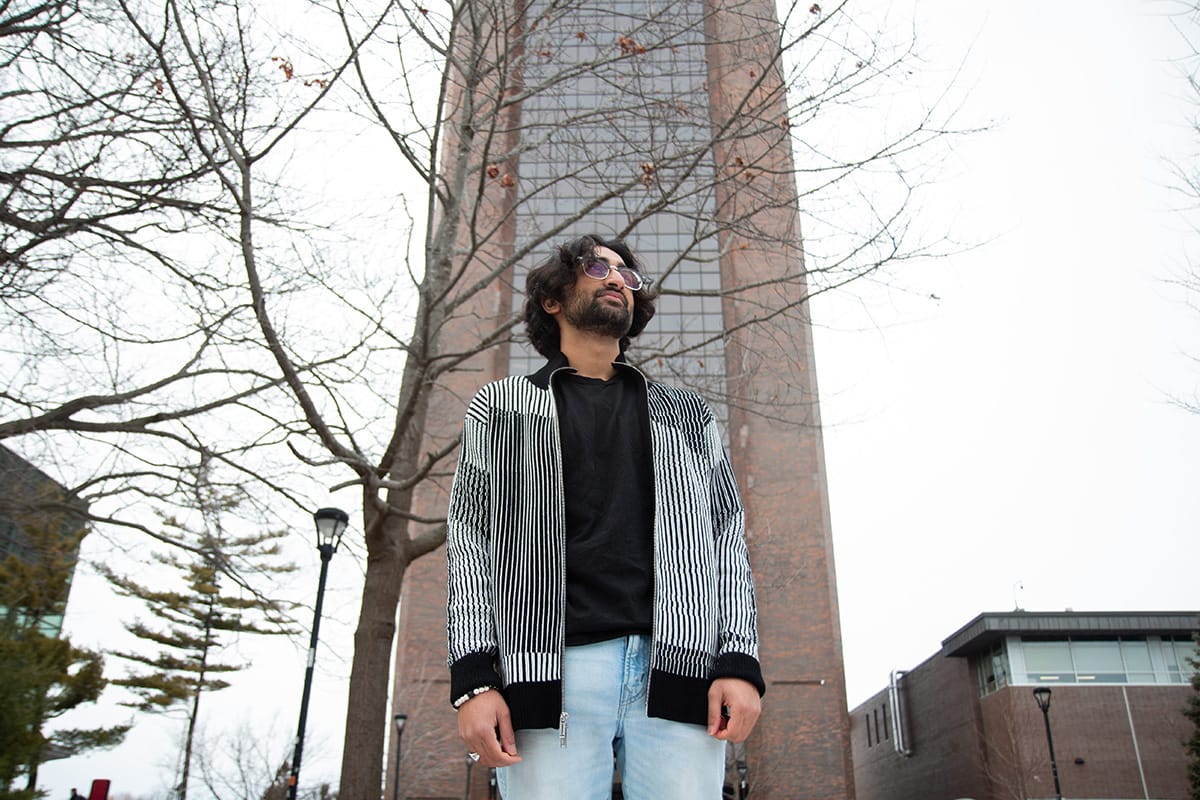
Featured image by Simon McKeown/the Charlatan
This article, and all of the Charlatan’s work, is brought to you by an independent student newspaper dedicated to informing, uplifting and entertaining the Carleton University community. We are a levy-funded organization which plays a role in the broader, vibrant student culture on campus. By reading this article, you are supporting our efforts.