

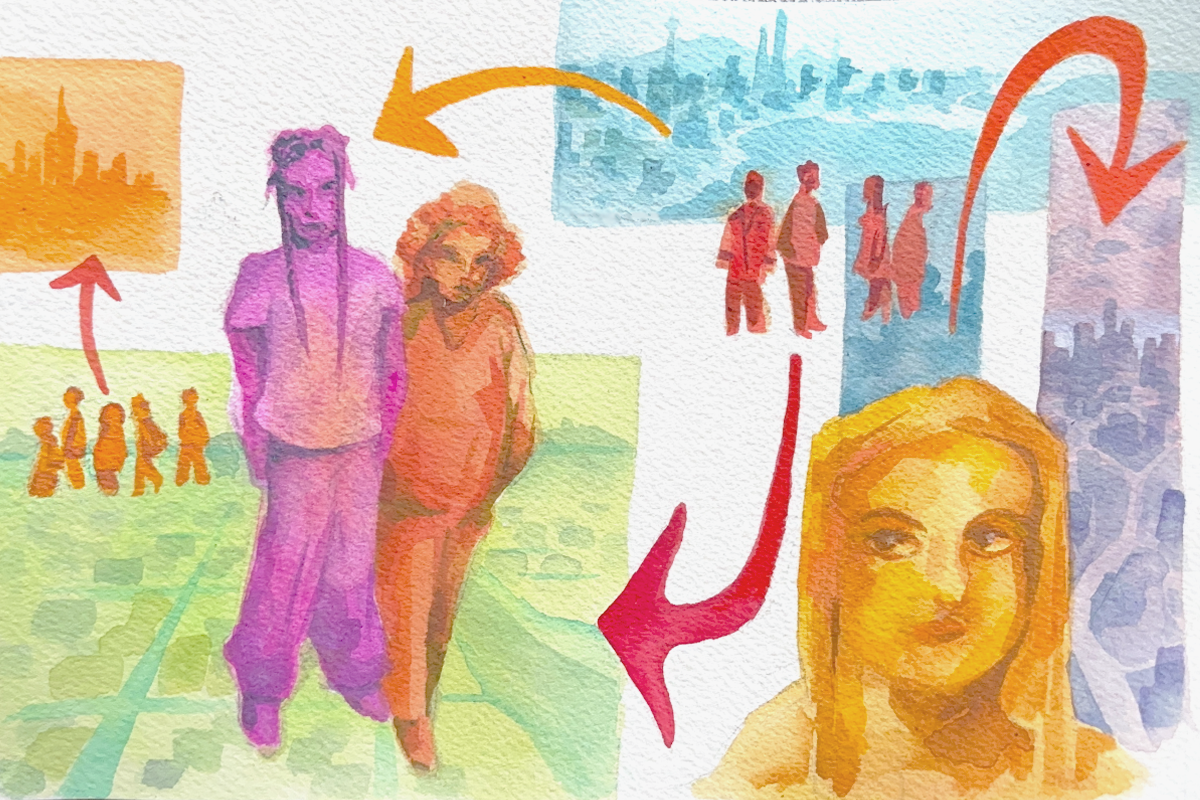
The migration and diaspora studies program at Carleton University is fostering a space for refugee voices to reflect on the work that their communities contribute to global peace while educating others on the importance of refugee collaboration.
Last month’s “Refugees as Diaspora Partners” discussed how refugee communities in Canada contribute to peace and prosperity in diasporic communities.
Several of the event’s speakers were forced to flee their home countries and now work in Canada with organizations that work closely with refugee communities globally.
James Milner, a speaker and the director of migration and diaspora studies at Carleton, said groups across the country are engaged in collective efforts to advance policy and provide support for development activities outside of Canada.
Milner said this framework of refugee expertise within Canadian organizations plays a “critical role” in aid and understanding partnership with global refugees.
“There was an old model 50 years ago where community groups in the Global North went to communities in need and delivered programs,” he said. “It was very top-down and problematic from a colonial perspective.”
Now, Milner said when policies are being developed, the perspective of refugees is crucial in understanding if assistance programs are effective. Refugee partnership is essential to success, he said.
He gave an example of “the power of the diaspora” through the work of fellow speaker Mustafa Alio. Alongside Jumpstart Refugee Talent, a group that connects refugees with jobs, Alio mobilized a group of organizations led by Syrian refugees to raise $100 million to support rebuilding efforts in Syria.
According to Milner, refugees are subjected to negative stereotypes that paint them as passive victims, despite their conscious efforts to mobilize their communities to provide protection and assistance to other refugees.
This comes at a time when funds are crucial for increasing global need, with Milner citing recent billion-dollar cuts by the U.S government across the humanitarian sector.
“The needs are always trending with ongoing situations such as Gaza, Ukraine, the Rohingyas and Venezuela,” he said. “Traditional leaders in humanitarian responses are really backing away from the principle and practice of collective action and multilateralism.”
Stellah Nikuzo, a member of the Refugee Advisory Network of Canada and the co-founder of the HODARI Foundation which offers programs for refugee women and children, spoke of the Canadian government’s faults regarding refugees, including pausing programs like private sponsorship.
Nikuzo said she believes government failures are where diaspora communities step in.
She said refugee communities make significant contributions to their home countries by sending funds to support households, healthcare and funding journeys to Canada. Once a person is supported in Canada, “it gives them the opportunity to support others as well.”
Maria Prieto, a member of RAN Canada and Action Réfugiés Montreal, said sending money to family back home is common among refugee communities, and another way that diasporas work as partners to global communities.
“We are promoting autonomy within our family, which has been happening for generations and breaks the class social system that we have in Latin America.”
Prieto said partnerships between refugee organizations worldwide force governments to keep a close eye on the treatment of refugees in other countries.
“Refugee diasporas bring so much information on policy building because we are frontline workers,” she said.
Prieto stressed the importance of recognizing the partnership between refugee diasporas and the global community and the work they are doing, especially during a time when headlines often depict refugees as helpless.
“Being a refugee is just a situation in a moment in time. We are much more than what forced us to be here,” she said.
Featured image by Matt Piaskoski/the Charlatan
This article, and all of the Charlatan’s work, is brought to you by an independent student newspaper dedicated to informing, uplifting and entertaining the Carleton University community. We are a levy-funded organization which plays a role in the broader, vibrant student culture on campus. By reading this article, you are supporting our efforts.