
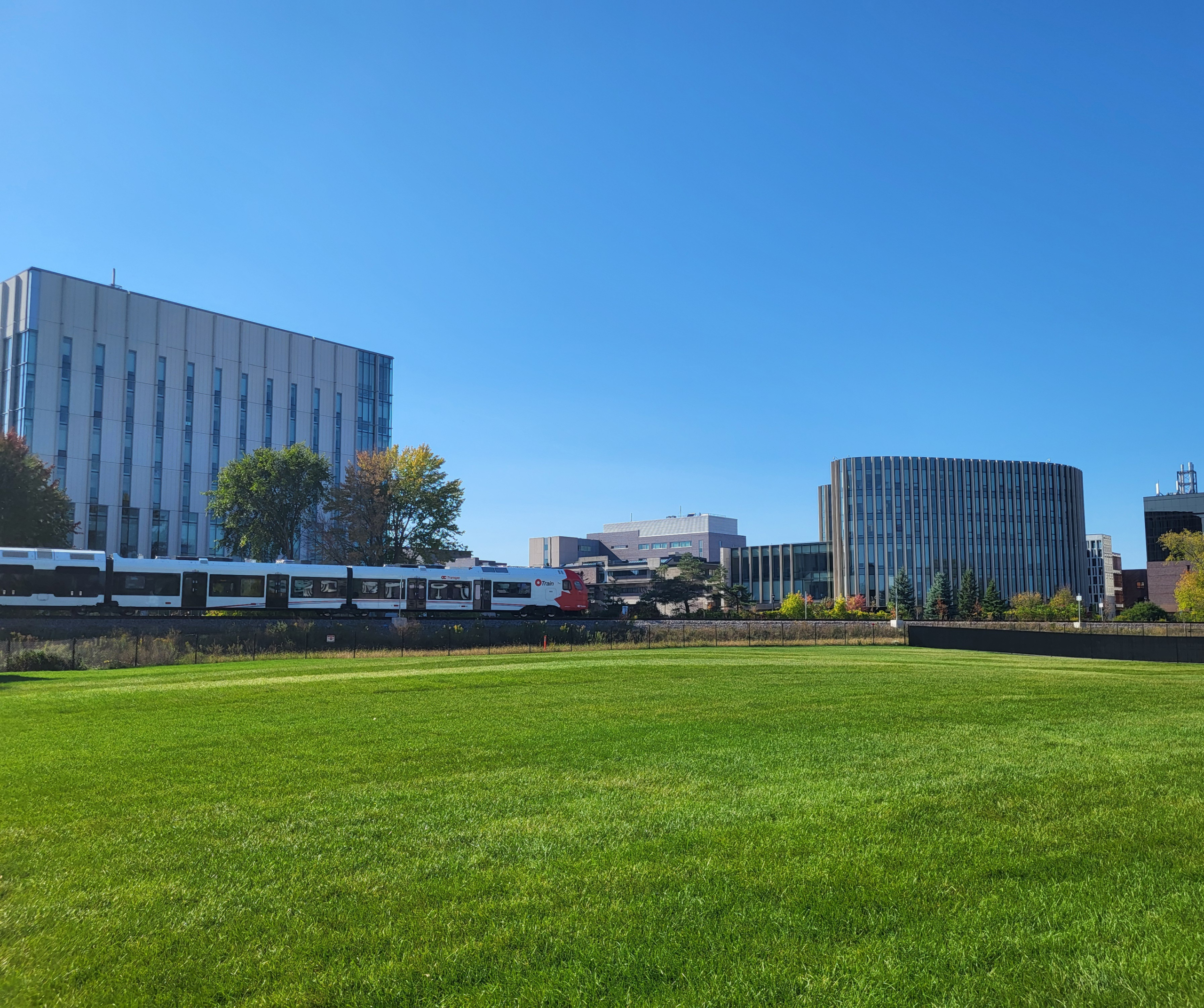
Built in 1969, the P9 parking garage stood on Carleton University’s campus for more than 50 years. But when engineering reports in 2020 called for its decommission, it was demolished in 2024.
In February, Carleton University Facilities Management and Planning put out a call for students to help design a new outdoor space on the site, opening the the P9 Greenspace Design Competition.
With a $100,000 budget, students are asked to reimagine the area as a third space and campus life hub.
“This is very much a city within a city,” she said. “You do everything here, and part of that is you want to make this place your home. This is a great opportunity for us to give some of that back to the students.”
The new design proposes a flexible outdoor space, according to the competition letter.
The letter says the new design will mirror Carleton’s core values of accessibility, sustainability, inclusion and community engagement, while also facilitating use of Alumni Park and the broader P9 green space.
Jennifer Drake, a Carleton engineering professor, said she hopes the competition will shed light on the use of green space and outdoor spaces on Carleton’s campus.
“I think that it’s such an important part of university, and even more so nowadays, when people are so isolated with all their devices,” she said.

“We have some real big problems with invasive species on campus, so we need to think about a planting plan,” she said, adding that one of these invasive species on campus is called the dog-strangling vine. “Looking at your choice of materials – whether you’re using wood-based materials versus concrete, those are gonna have sustainability impacts.” she said.
For Drake, it’s also important the design prioritizes accessibility needs, saying people with mobility issues are an important part of Carleton’s community.
A group of second-year architectural engineering students entering the competition said their design will work towards Carleton’s sustainability goals.

Their design makes study spaces out of geodesic domes, which are half spheres made of glass and other materials.
“The idea was to create spaces that are outside and more incorporated with nature where students can come and relax and study and learn,” Boyer said.
Aiden Alvarez, another member of the group, said the popularity of Carleton’s tunnels, especially during the winter, inspired their design.
For Alvarez, having an outdoor space “where you’re able to be inside but still have all [the] visual outside components gives you the illusion that you’re outside a lot of the day.”
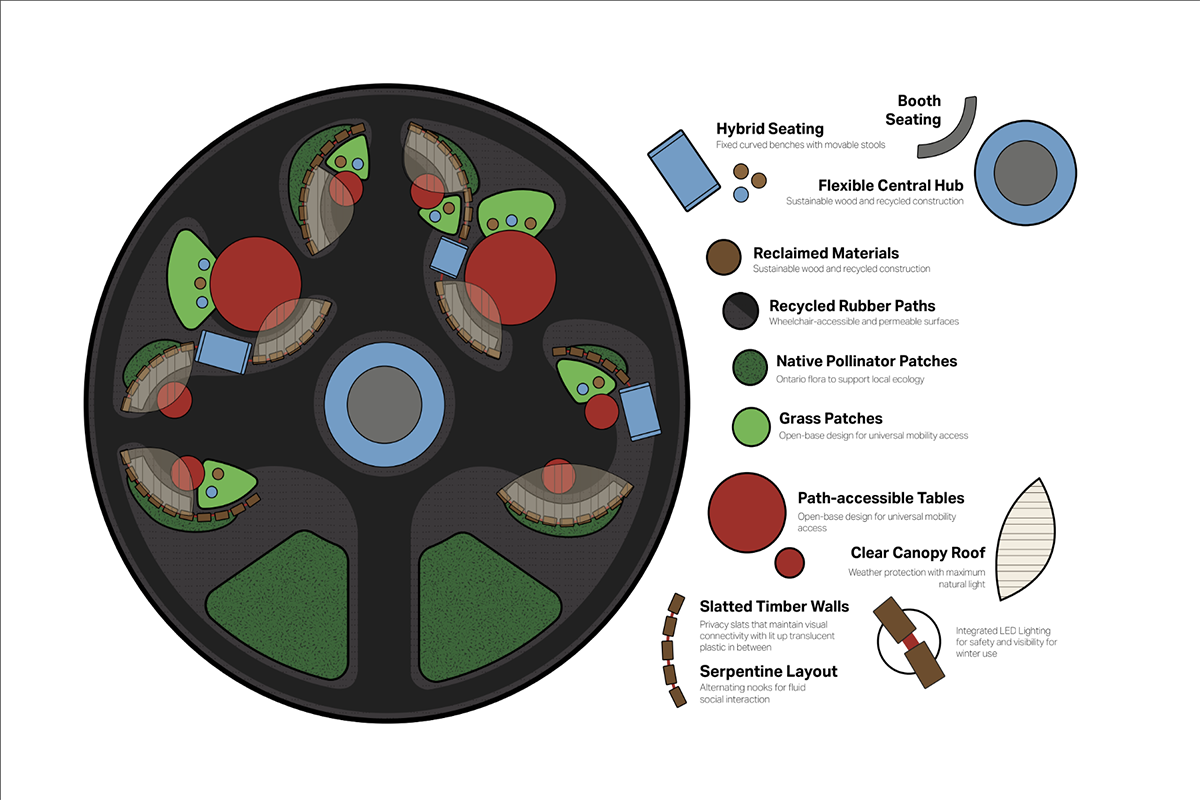
Sharon Yu, a third-year industrial design student from Vancouver who has now made the competition’s top five, echoed that sentiment.

“This is something they can definitely add to their resume portfolio of something that they’ve accomplished here,” Dupuis said.
Campus-wide voting to select the new design will open on March 30, and the winners will be announced on April 8.
Featured image provided by Carleton University.
This article, and all of the Charlatan’s work, is brought to you by an independent student newspaper dedicated to informing, uplifting and entertaining the Carleton University community. We are a levy-funded organization which plays a role in the broader, vibrant student culture on campus. By reading this article, you are supporting our efforts.