

Celebrating at the Panda Game, watching varsity men’s and women’s hockey or rugby on the weekend and participating in adaptive sports like wheelchair basketball: This year’s graduating class of Carleton University students have known nothing else.
But 20 years ago, Carleton’s recreation and sports landscape was wildly different from today’s reality — for students and athletes alike.
There was no football program, men’s hockey had been disbanded for 33 years, and rugby or adaptive sport athletes had no team to join under the Ravens banner.
Things began to change in 2005, when Jennifer Brenning stepped in as Carleton’s associate vice-president for the Department of Recreation and Athletics.
Brenning is one of several women who have shaped Carleton’s athletics programs behind the scenes, leaving a lasting impact on the department and continuing to drive its growth today.
Brenning, who retired in 2024, was recruited to Carleton with her 11 years of experience working at the Canadian Interuniversity Athletics Union (now known as U Sports) and eight years as the assistant director of athletics at the University of Ottawa.
Crossing town to Carleton, Brenning arrived at a school in the midst of a rebuild. The Raven’s Nest had just opened that February, and plans for a new ice hockey facility were already underway for the fall.
Then-Recreation and Athletics director Drew Love wanted Brenning to help him restructure the athletics department and breathe life into the brand-new facilities with fresh programming.
“We were really in a building phase and trying to grow the athletics department, which was quite exciting,” Brenning said.
By 2006, the Carleton Ravens women’s hockey team upgraded from a competitive club to earn varsity status, and in July 2007, Brenning became the Director of Recreation and Athletics.
And in the fall of that year, Brenning helped revive the men’s hockey team, elevating them to varsity status and relaunching the program with its first league game in the OUA.
Men’s hockey had originally started at Carleton in 1961 but was suspended in 1974.
Football at Carleton was victim to a similar fate.
The program started after the Second World War in 1945 but was disbanded in 1998 after years of sustained financial losses.
“There was no thought of a football program when I was coming over to Carleton,” Brenning said.
But at a football alumni event in 2008, Brenning had a conversation with Kevin McKerrow, the chapter president of the “Old Crows”: a group of former Ravens football players who support the team through mentorship, fundraising and preserving the program’s history.
“He asked me, ‘Would [you] be interested in bringing the football program back?’” Brenning recalled.
“I wasn’t sure, so they said they had some financial backers — alumni who had been very successful in business — who wanted to help fund the program.”
That’s when Brenning brought the idea to Carleton’s advancement office and to Roseanne O’Reilly Runte, the university’s president from 2008 to 2017.
By 2013, football was back at Carleton.
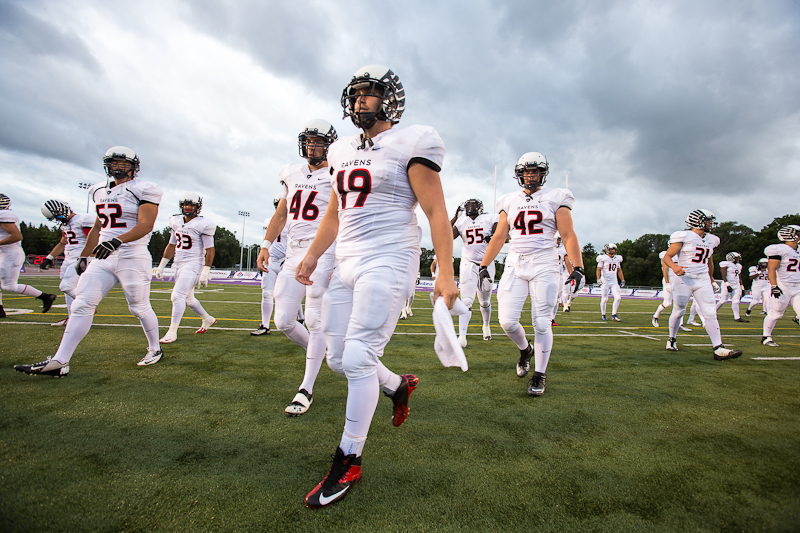
“How the community came out to support the program was amazing.”
Two years later, in 2015, the historic Panda Game between longtime rivals, the uOttawa Gee-Gees and Ravens, returned for the first time since 1998.
From the work of the Old Crows to Carleton’s athletics department and president, many people were involved in bringing back the football team — including Brenning’s successor, current associate vice-president of Recreation and Athletics Yolana Junco.
Junco came to Carleton as an international student, where she earned her MBA.
She worked in various areas across the university, mainly in finance and accounting, before starting with the athletics department in 2008 as the Director of Finance and Operations.
At the time, the department was facing a deficit, and Brenning realized she needed someone with financial expertise.
With Junco on her side, Brenning continued a successful 19 years at Carleton.
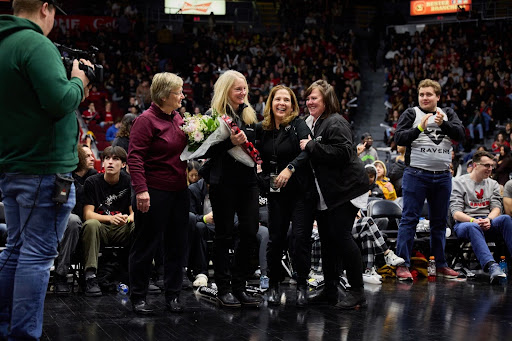
She celebrated the success of the basketball programs — 12 men’s and three women’s national championships — the soccer program’s many U Sports national championship appearances, and two national titles for the curling program during her time at Carleton.
“I really feel it’s important for all women and young men, and for all inclusivity, to have the opportunity to participate and be a part of something,” Brenning said.
“It was important for me that we offer equal opportunity for men and women at the varsity level.”
Part of her focus on providing opportunity and fostering excellence led to the hiring of Stacey Colarossi, who came to Carleton in 2022 to coach the women’s hockey program. Brenning’s vision, Colarossi recalled, was to transform the women’s program into a top contender after years of struggling.
“She wanted to change that,” Colarossi said. “She thought, ‘I could transition this program into something that the university could be proud of.’”
In Colarossi’s debut season as head coach, the team posted an 8-14-3 record, earning 19 points — the program’s strongest performance in over a decade. Last season, the hockey program officially moved to the OUA.
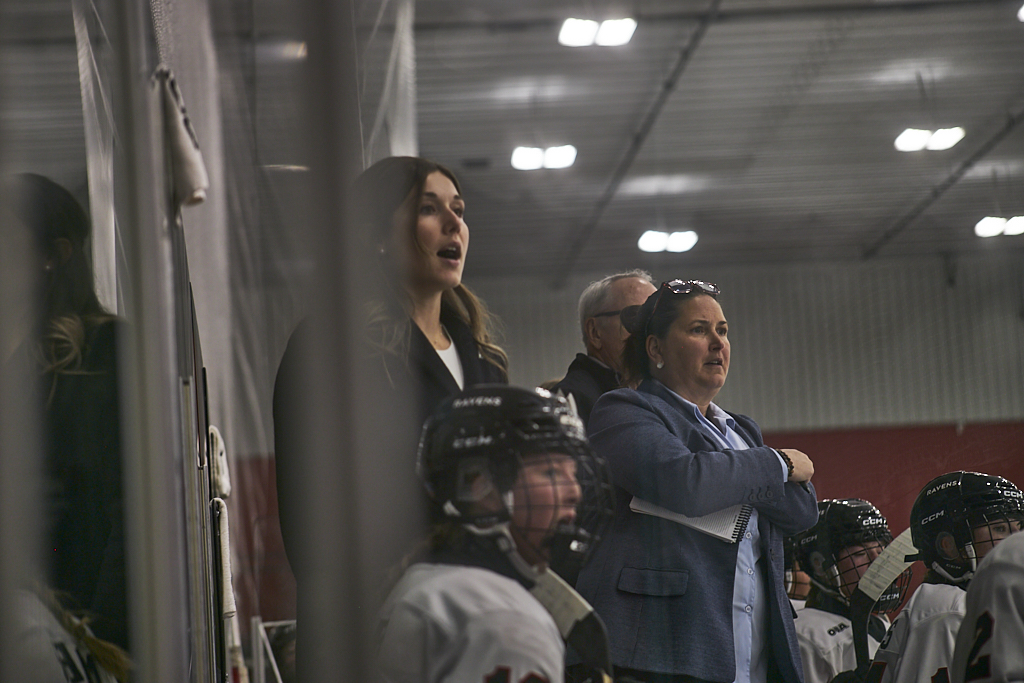
That support includes strength and conditioning, nutrition coaching and a focus on the unique challenges for female athletes, Colarossi added.
Now a year and a half in, the Junco era is taking off in Carleton athletics, where she plans to continue highlighting women’s sports and inclusivity.
“With the whole movement of women’s sport, we are the foundation of it.” Junco said.

The project is now moving into its execution phase, with plans for a two-storey facility featuring expanded amenities, including a permanent women’s-only area, upgraded cardio and weight-training equipment and multipurpose activity rooms. The renovation will nearly triple the size of the fitness centre from 11,000 to 32,000 square feet across two floors.
Inclusivity and adaptive sports are a cornerstone of Junco’s vision.
During the COVID-19 pandemic, Carleton introduced wheelchair basketball at both junior and adult levels as part of its adaptive sports program. The department has also added boccia, adaptive strength and flexibility training, para personal training and para swim.
“Wheelchair basketball is our flagship program,” Junco said.
“We’re becoming the place to go when it comes to talking about wheelchair basketball.”
“For me to convince myself to take the role, [I realized] there are going to be other girls that are going to look at you and think, ‘I can be that person, I can be that person and be a leader and make changes.’”
Featured image supplied by Carleton Ravens