

Flowing south from downtown Ottawa, the suburban community of Barrhaven is an attractive one — especially to families.
My first encounter with the area was, however, a dark and puzzling one. Eighteen-year-old me had just arrived in Canada and I was heading to a family friend’s home for a scheduled 14-day quarantine.
After an unpleasant exchange with taxi drivers at the Ottawa/Macdonald–Cartier International Airport, I hoped desperately, with my dead iPhone, that kidnapping did not exist in this new country.
This was the start of my journey as a young Nigerian girl whose parents did all they could to afford their last daughter the brightest future possible.
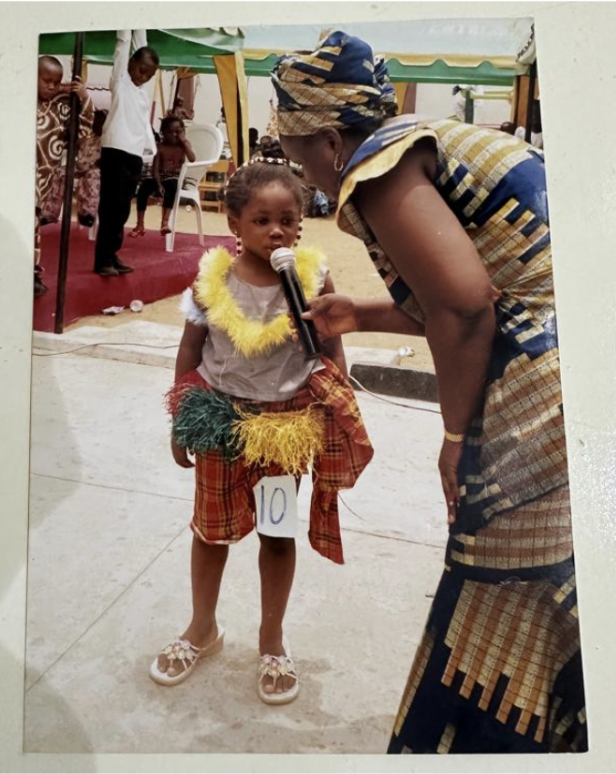
I preface this by stating two major factors that play vastly into my privileged — yet tumultuous — adulthood years. One: I am an international student in Canada and two; I am an overachiever — two truths that birth each other, yet find themselves in a seemingly unending wrestle.
Life in Lagos and Abuja was both entrancing as it was erratic.
I often tell people “Nigeria is not a real place,” in my own efforts to make light of the rather apocalyptic economic state of the country.
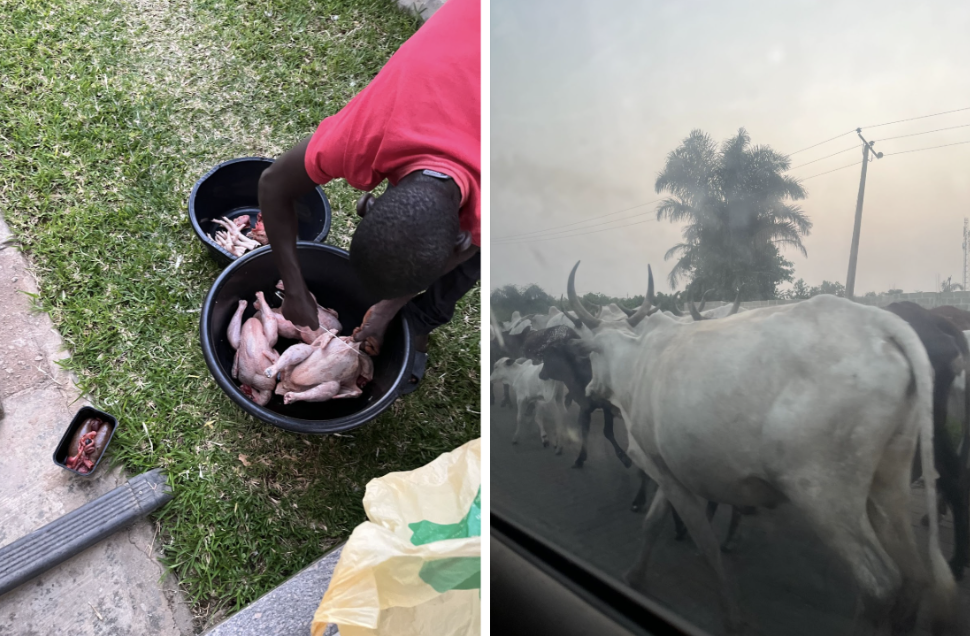
Nigeria is not a real place because one day a live chicken is being slaughtered in your backyard in preparation for Easter celebrations, and the next, you are fitting a hand-tailored garment for a distant relative’s wedding or maybe you even find yourself stuck in traffic with a herd of cattle.
Nothing was off the table.

Where mental health issues are commonly labeled “possession by evil spirits”, you develop a certain numbness to the troubles of the average person.

But amidst these struggles, only one statement would ring in my head: “I have to succeed, I have to make my parents proud.”
So I resorted to coping — the Nigerian way.
There is a popular Nigerian Pidgin phrase that goes “No be me kill Jesus” – which literally translates to “I did not kill Jesus.”
It’s a colloquial phrase used to emphasize the need to detach judgement from oneself. It is one of the most common sayings you will hear muttered from the lips of any Nigerian when offering words of encouragement to themselves in the face of adversity.
Nigerian pidgin, like many other pidgins, has been characterized as “broken” and “chaotic” and yet has survived for generations. A characteristic that indicates a fairly stable system, and could perhaps be considered one of the earlier beginnings of our rather peculiar coping methods.
For most Nigerians, there is God, then there is laughter, then music and, lest we forget, sarcasm.
When Nigeria’s currency dropped more than 36 per cent in 2023, I questioned if my parents would have the means to continue supporting my university education — there was laughter.

Because if I didn’t laugh, I would cry.
Qing Madi, a famous Nigerian artist, said in an interview with the Guardian, “I believe the reason Nigerians love music so much is because we don’t have therapists.”
She has a point.
When I moved to Toronto to complete my 12-month internship at a global pharmaceutical company at 21 — an experience that was accompanied by severe depression and loneliness — there was music.

Rema had recently released his hit album HEIS, so the wooden floors of my Toronto apartment did not stand a chance. I was sad, but I could dance; so I danced.
When I spent four months working tirelessly to win a case competition, and was eventually rejected from the job, there was sarcasm. I murmured quietly to myself: “I am too good, they are worried I will take their jobs.” I joked sarcastically to rationalize the despair out of me.

It takes concerning amounts of desensitisation and a particular confidence in being an “African Giant” – although statistics suggest an irony — to be able to cope through such difficult situations, due to an unspoken yet unanimous understanding amongst fellow Nigerians that success is the only option.
So I resorted to coping – the Nigerian way.
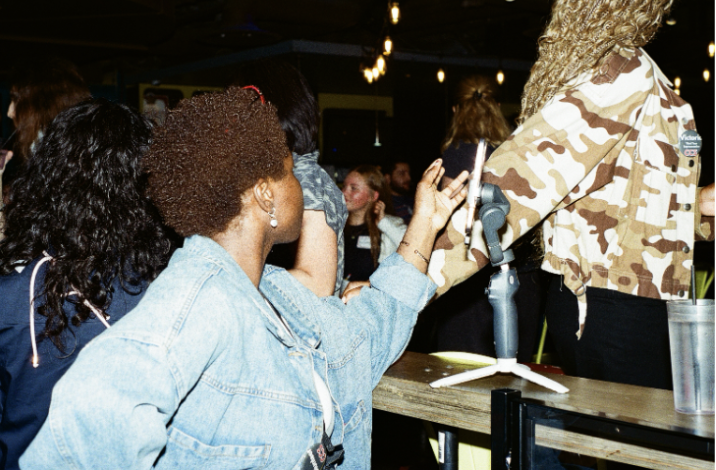
I couldn’t fit the entirety of it in one page even if I tried. I realize that the crossroads never end and hardship may continue to present itself in new and clever ways.
But my encouragement when facing these crossroads in the coming weeks, months, years – ever, even when success is the only option, is to give myself some grace, because after all, no be me kill Jesus.
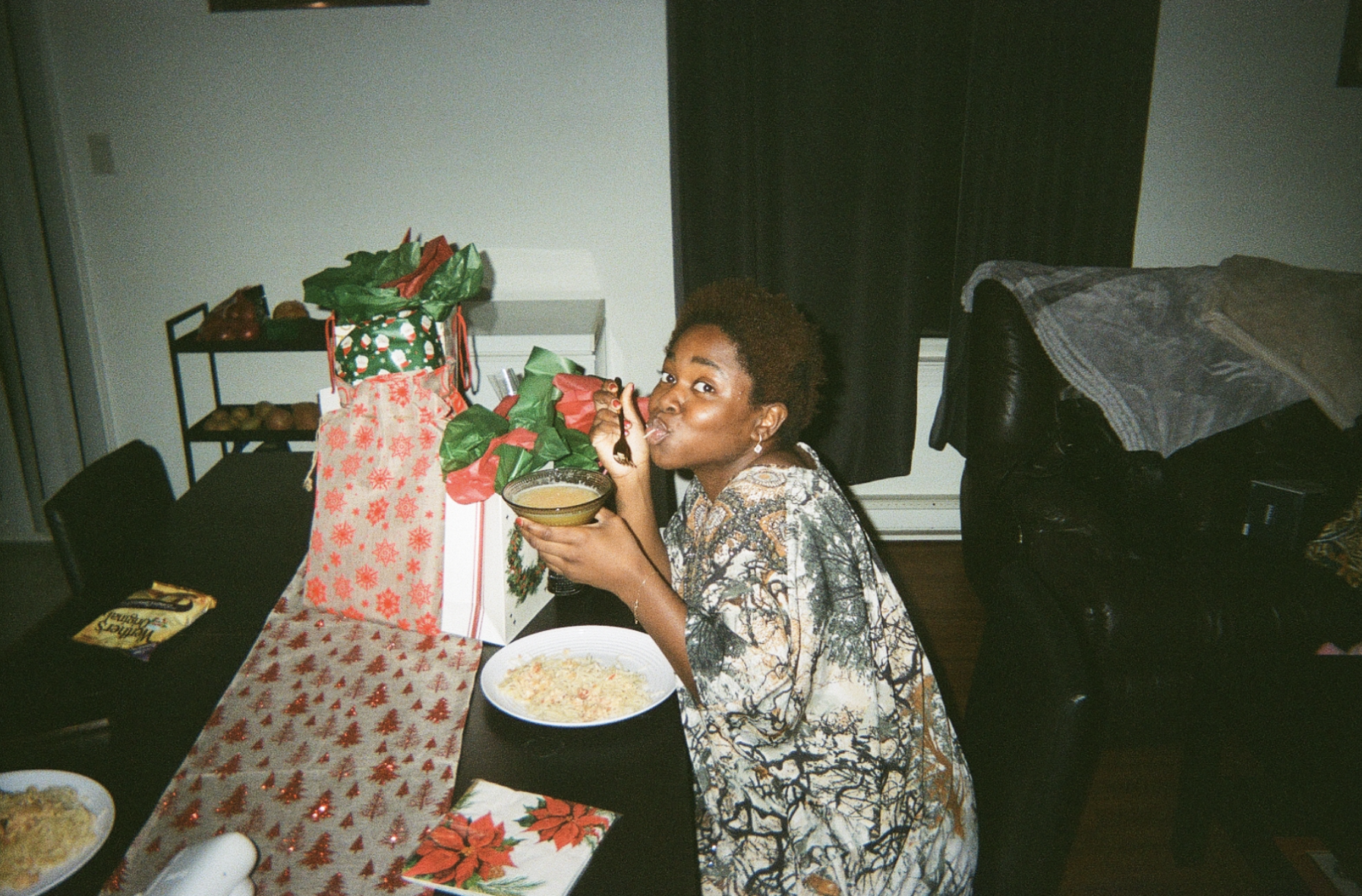
Featured image provided by Itoro Umanah
This article, and all of the Charlatan’s work, is brought to you by an independent student newspaper dedicated to informing, uplifting and entertaining the Carleton University community. We are a levy-funded organization which plays a role in the broader, vibrant student culture on campus. By reading this article, you are supporting our efforts.