
After five months of bargaining, Carleton University and CUPE 4600 have reached a tentative agreement for teaching and research assistants.
The university and union — which represents teaching assistants, research assistants and contract instructors at Carleton — bargained for 13 hours on Jan. 27, according to an email obtained by the Charlatan.
“Your bargaining team reached a tentative agreement with the university thanks to the help of Paul Pooler, a Ministry of Labour-appointed conciliator,” the email read. “This tentative agreement comes with the full endorsement of your elected bargaining team, and we are excited to share the details.”
The details of the tentative agreement have not been made public but will be shared at a Unit 1 special membership meeting on Feb. 3, the union wrote.
After the meeting, an online ratification vote will take place over the course of three days, according to the email.
What were TAs asking for?
The news of the tentative agreement comes less than a week after the union held a protest rallying against Carleton’s drafted artificial intelligence framework and demanding protections for TAs against artificial intelligence.
In a Jan. 8 open letter to President Wisdom Tettey, the union asked the university to guarantee AI would not reduce or replace TAs’ work.
“At present, we have no protections of any description against AI,” said Ariel Becherer, the union’s lead negotiator for TAs, in an interview with the Charlatan before the Jan. 27 round of bargaining.
“For graduate students, our TA pay is one of the main reasons we can come here, especially for working-class people,” Becherer said.
With reduced TA hours or without that work, she said, graduate studies could become accessible only to students of wealthier backgrounds.
Members of the union were also concerned about being forced to use AI and its potential threats to intellectual property rights, environmental impacts and the risk of sexism and racism within AI programs, Becherer added.
The union’s open letter also asked for guardrails to be put in place so that hiring, staff evaluation, disciplinary and other management decisions aren’t made by AI.
“AI can’t be held accountable,” Becherer said, adding it could threaten the union’s ability to use its grievance process.
The proposed university framework says AI has the “potential to empower academics, students and staff to work more efficiently, deepen learning experiences and foster innovation.”
In the framework, the university says it will “maintain human judgement in feedback, research, teaching, learning and decision-making.”
Becherer said the union doesn’t agree with the university’s willingness to integrate AI into the educational experience.
“Our position on the university’s AI policy is that it assumes that AI is coming, and assumes AI is coming ethically and that it is inevitable,” Becherer said.
“This is not our position.”
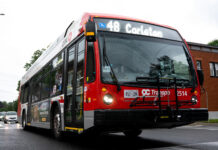
Featured image by L. Manuel Baechlin/the Charlatan
This article, and all of the Charlatan’s work, is brought to you by an independent student newspaper dedicated to informing, uplifting and entertaining the Carleton University community. We are a levy-funded organization which plays a role in the broader, vibrant student culture on campus. By reading this article, you are supporting our efforts.