

This story contains mentions of suicide. Those in need of support can call the Suicide Crisis Helpline: 9-8-8. Youth and young adults can call Kids Help Phone at 1-800-668-6868 or text CONNECT to 686868.
From improvised pieces to scripted plays, six shows took the stage at this year’s Youth Infringement Festival, a theatre festival run by youths between 16 and 25 years old.
Playwrights, directors and stage managers developed their skills under professional mentorship in an accessible environment, with shows that ran this year between March 11 and 21.
Here’s a review round-up of four Youth Infringement Festival pieces, each of which brought unique strengths and themes that stayed with me long after leaving the theatre.
‘Drink the Kool-Aid’ blends absurdity with tragedy
Sometimes a brand has to go to extremes to keep their reputation alive.
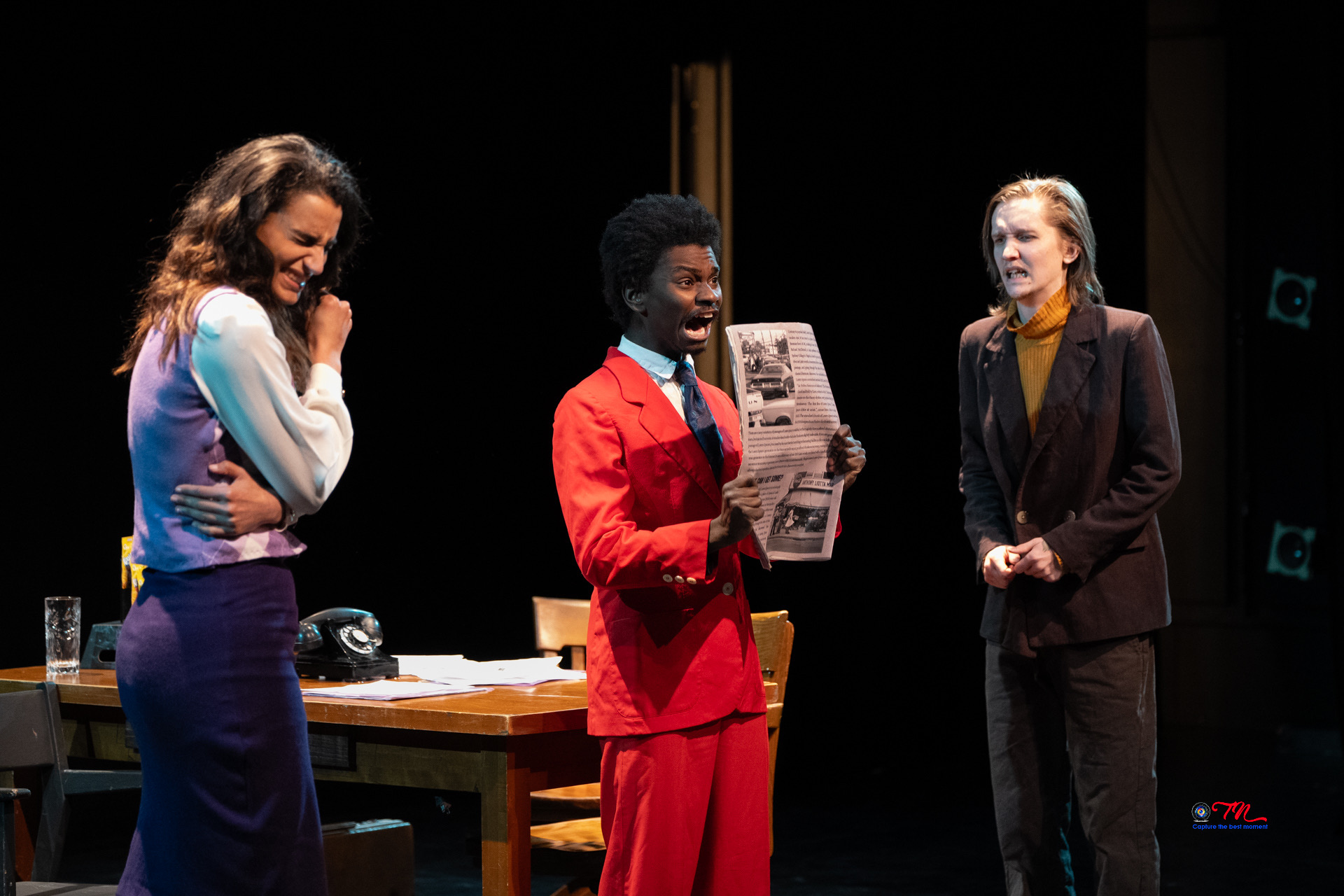
Drink the Kool-aid is a darkly comedic take about the aftermath of the mass suicide of more than 900 members of the Peoples Temple cult in Jonestown, who drank the infamous cyanide-laced fruit punch. (Although the event spawned the idiom “drink the Kool-Aid,” which means having unquestioning belief in a cause, the drink used was actually Flavour-Aid.)
When Kool-Aid PR team member Sam opens the daily paper to discover the worst Kool-Aid related news possible, he desperately searches for ways to spin the event in their favour and save the company.
Amidst panic, ridiculous suggestions packed with dark and absurd humour are tossed around: from crafting the idiom to marketing a new “suicide flavour” to a drink combining Kool-Aid and poison, targeted at future cult leaders.
The performers – Sock ‘n’ Buskin regular Donovan Martin, Harper Smith and Reem Mabrouk – brought balance to their respective roles. While Sam (Smith) introduced the wild ideas, his boss Peter (Martin), flamboyant in his cherry-red suit, reacted with comical exuberance to his suggestions.
Julia (Mabrouk) was a necessary mediator, becoming fed up with her colleagues’ chaos and attempting a realistic approach.
Although hilarious, certain elements of the play felt shockingly unrealistic, including the attempted murder of the head of their rival company. If intended to be satirical, this plot choice highlights the ridiculousness of the marketing industry. A victim of its own absurdity, the Kool-Aid PR team’s scheme fails miserably.
‘D&D&D: The Secret of the Forest’ is an epic journey of heartfelt friendship and reciprocity

The improvised piece was enthralling, welcoming a world of three heroes on a quest to uncover the dark force that has drained their beloved forest of its energy.
As a dungeon master introduced the story with animated narration from his seat at the head of a table, each of the players’ characters came to life on stage, emerging straight from the tale. The spirit of D&D shone through epic battles, complete with thrilling sound effects and an eerie smokescreen.
An impressive array of props enlivened the set further, such as a large D20 die rolling across the stage and showing glimpses of the real world in the fictional realm.
Along the way, the travellers grappled with their own insecurities and came to recognize that they were not alone on their journey, with their heartwarming development ringing through the band’s joyous music.
‘The Fire in Which We Burn’ explores the tensions of the Suffragette movement
What next?
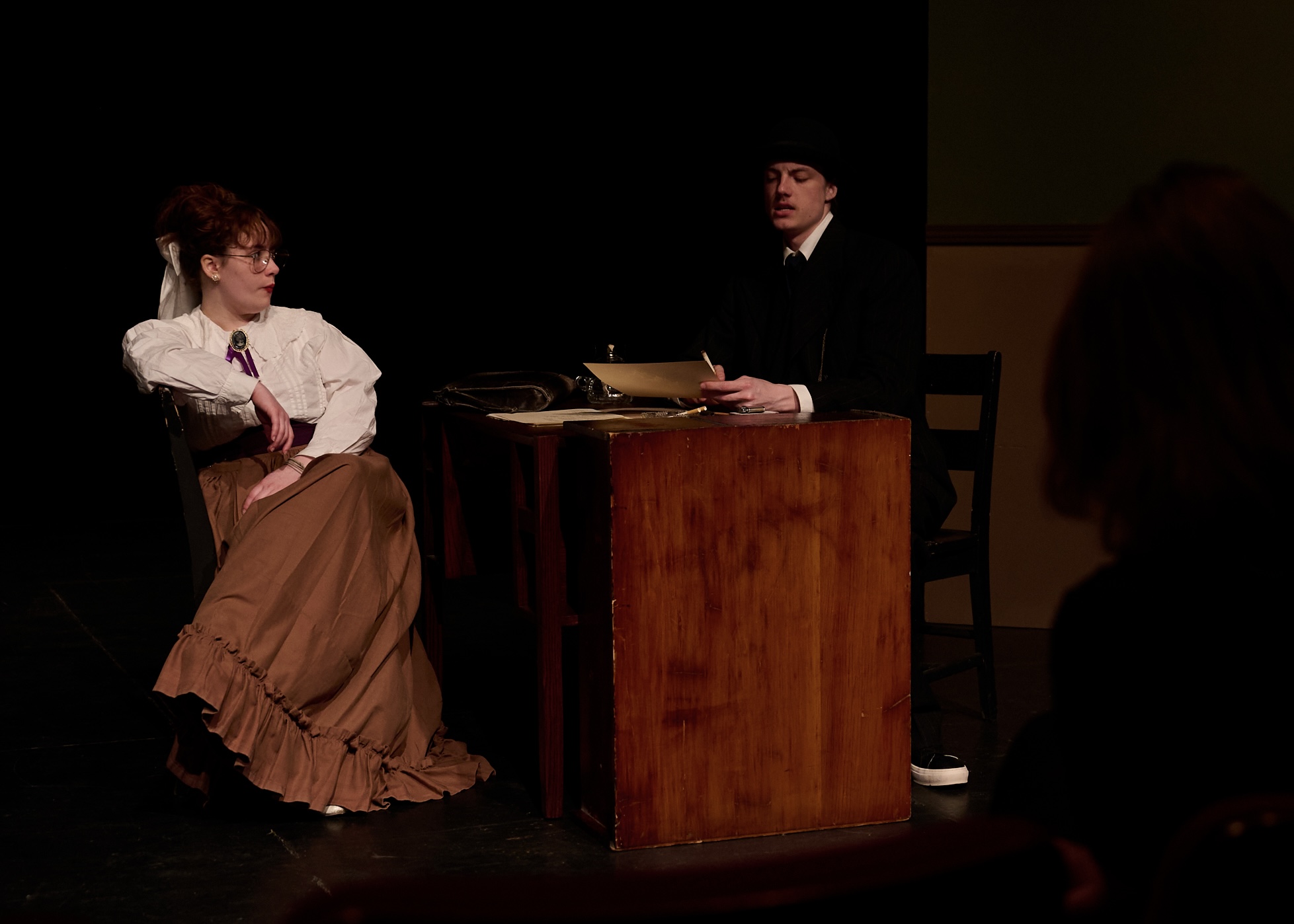
Mariette, played by Beth Hughes, is adamantly opposed to the law system of Great Britain in 1913. She and several other women-and-arms are prepared to go to great lengths to defend their cause.
The Fire In Which We Burn travelled back in time to the Suffragette movement demanding voting rights for women. The story explored a dialogue between two characters forcibly joined by circumstance but divided by gender.
Hughes delivered her fiery lines with conviction. She communicated her fury at women’s treatment in the early 20th century through emotionally charged, powerful speeches, as well as subtle mannerisms such as the crossed arms underlying her character’s guilt.
Simon van Wesenbeeck’s portrayal of Troyer was no different.
A stickler for order who had to work his way up, his respect and admiration towards the law system was unlikely to falter. Despite their differences, he gradually sympathized with Mariette – a raw apology evidencing his care.
The show remarked on the power of socialization: our upbringing and experiences can leave us divided and prejudiced in our thoughts and beliefs. The play displayed the struggle of the Suffragette movement but spoke to the continued realities of gender-based discrimination and the oppressive systems alive today.
‘Angsty Puppet Play’ tells the struggle of stepping outside one’s bubble

Angsty Puppet Play, a captivating glimpse into a character’s inner world, is sure to be relatable to anyone who has struggled to control their narrative.
Aphra Paulson’s character, Puppet, flips through her journal and dives into stories of friendship and love. Eventually, she is forced to face her vulnerabilities when she encounters Macy, the person who has been manipulating her. It is revealed that Puppet is the voice of Macy’s journal and her innermost thoughts.
Paulson switched seamlessly from cheerful quirkiness to unguarded confessions. Puppet voiced fears of endings and being vulnerable with her girlfriend, which resulted in a difficult breakup.
Miranda Lewis clearly distinguished between Macy and Puppet, as she is more reserved with her thoughts.
Featured image by Tri Nguyen.
This article, and all of the Charlatan’s work, is brought to you by an independent student newspaper dedicated to informing, uplifting and entertaining the Carleton University community. We are a levy-funded organization which plays a role in the broader, vibrant student culture on campus. By reading this article, you are supporting our efforts.