

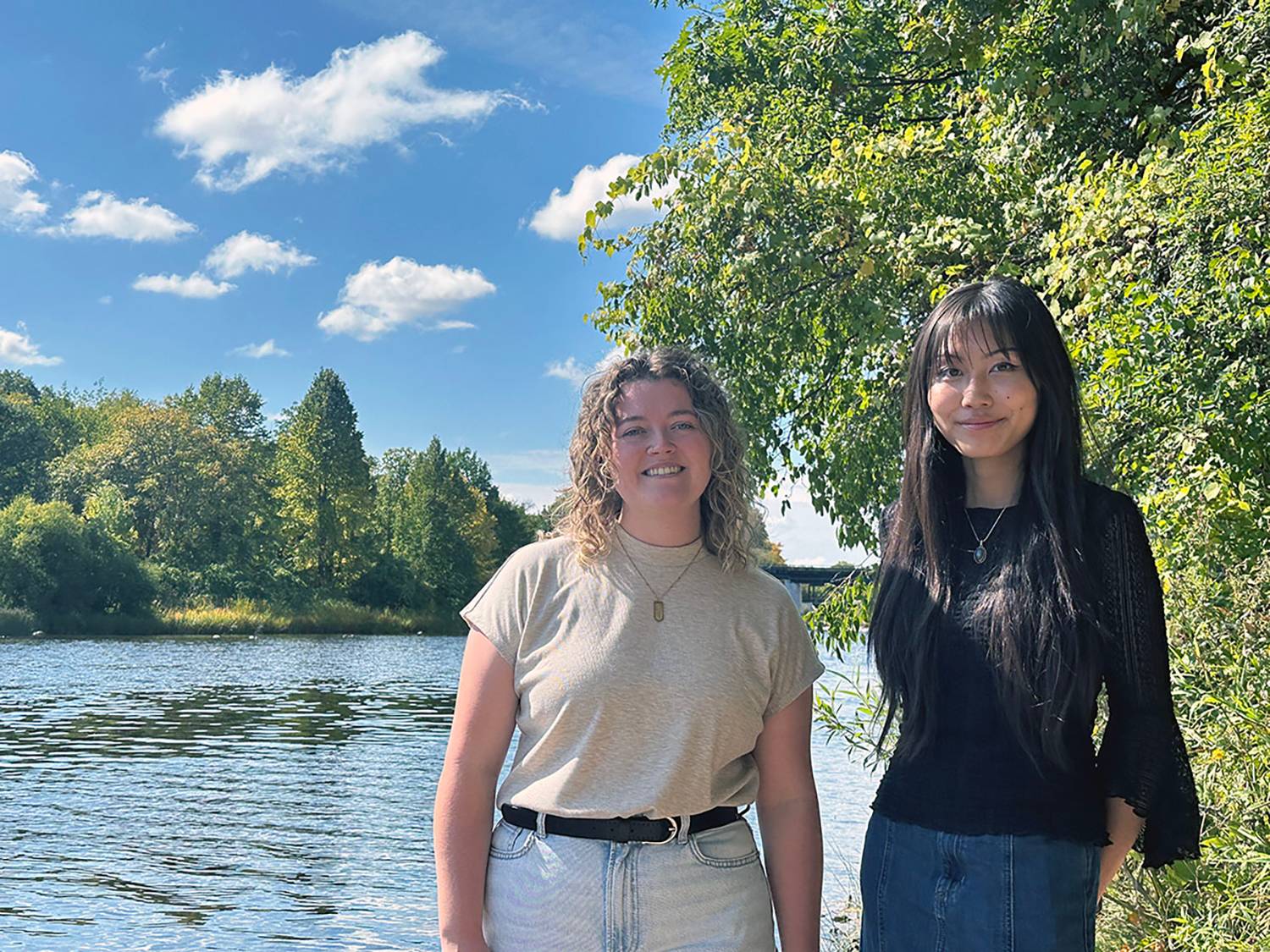
It’s not everyday that you find yourself scouring the sand of a volleyball field for turtle eggs.
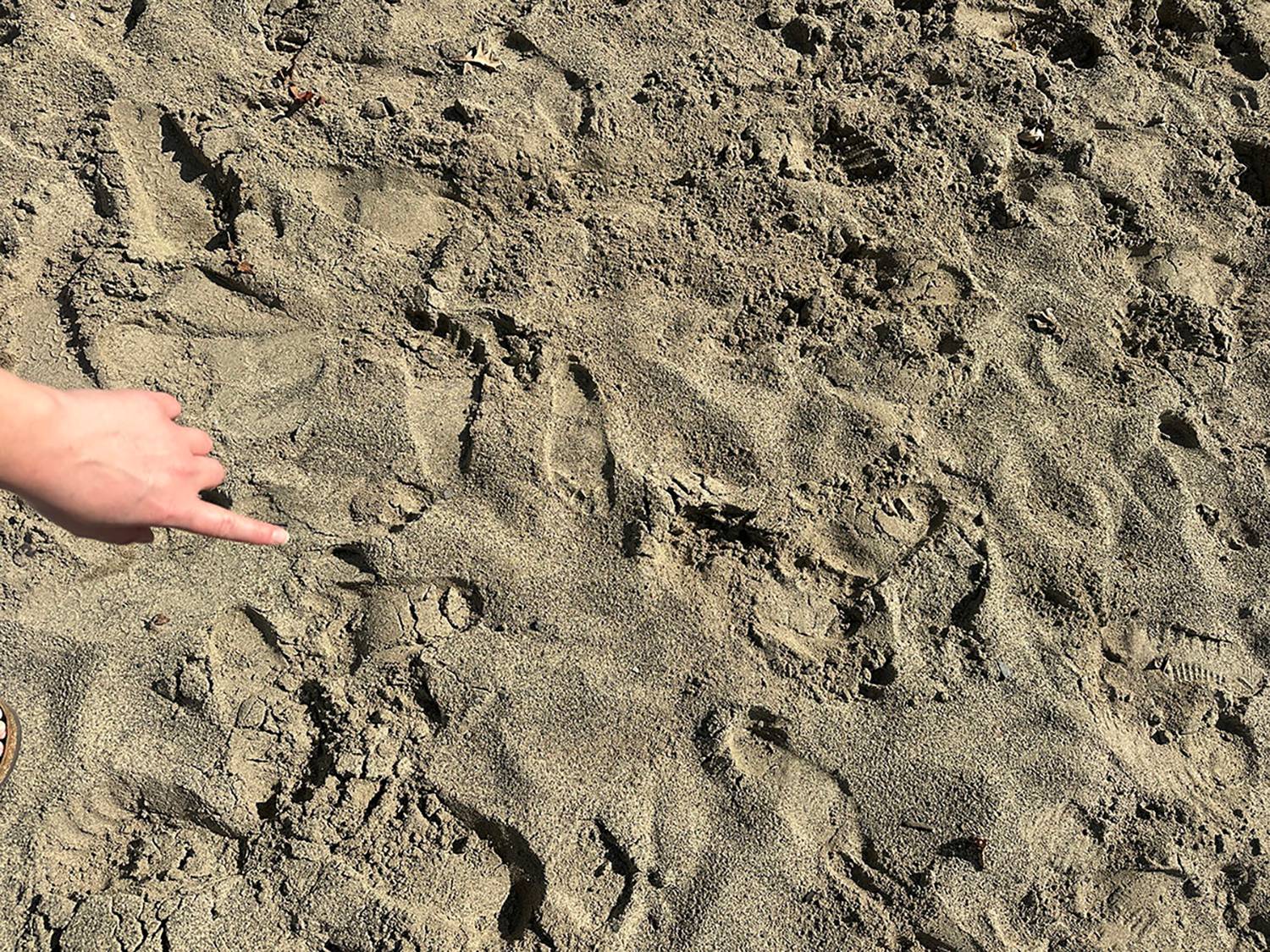
But it was just another day for Charlotte Galloway. On a bright spring day in Ottawa, Galloway found herself collecting an eye-popping 53 turtle eggs from one of Carleton University’s sandy volleyball fields.
Called in by campus security who discovered the nest, Galloway — a graduate researcher at a Carleton conservation lab — said she was already rescuing turtle eggs from another site in West Ottawa when she received the call.
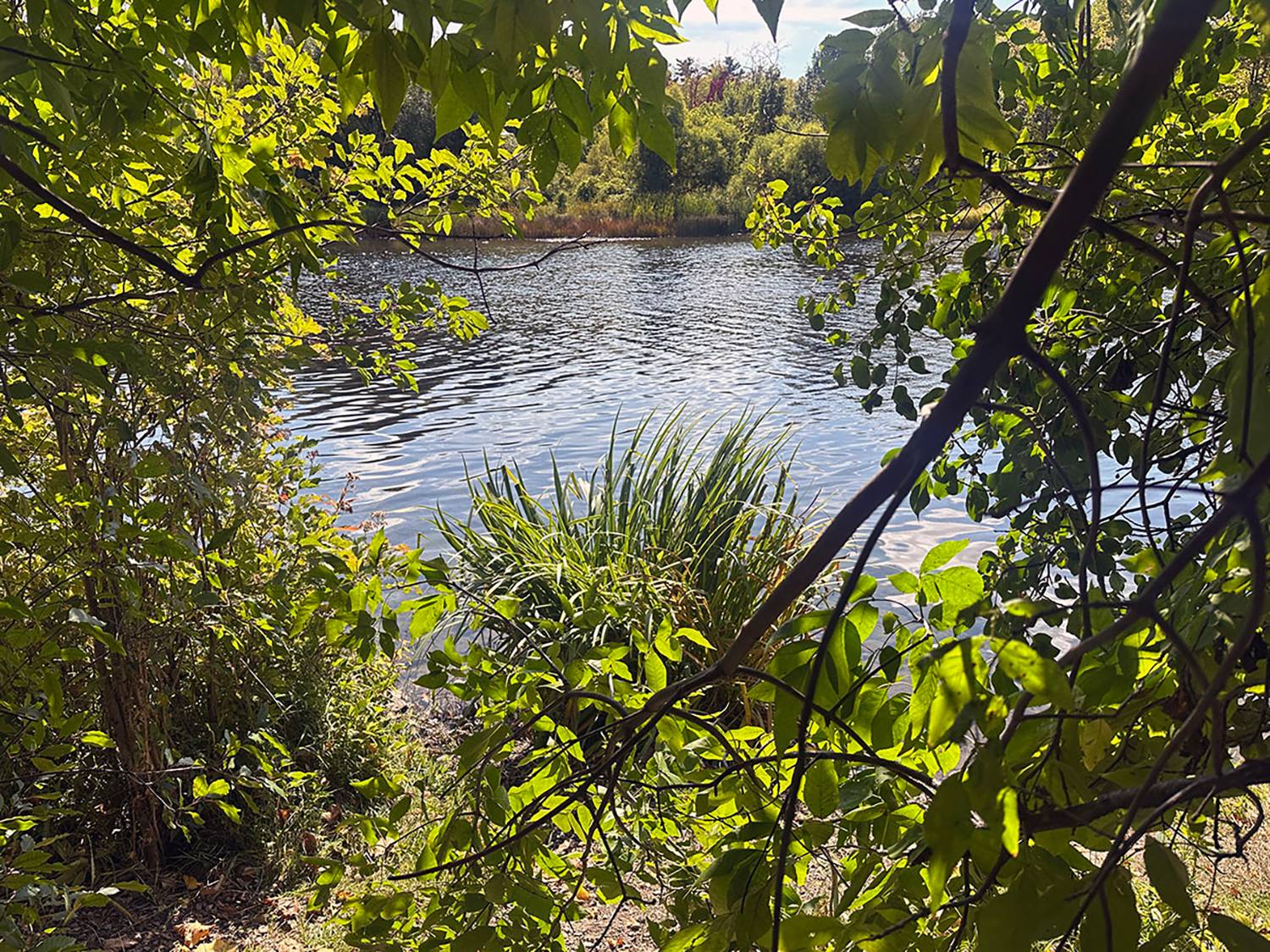
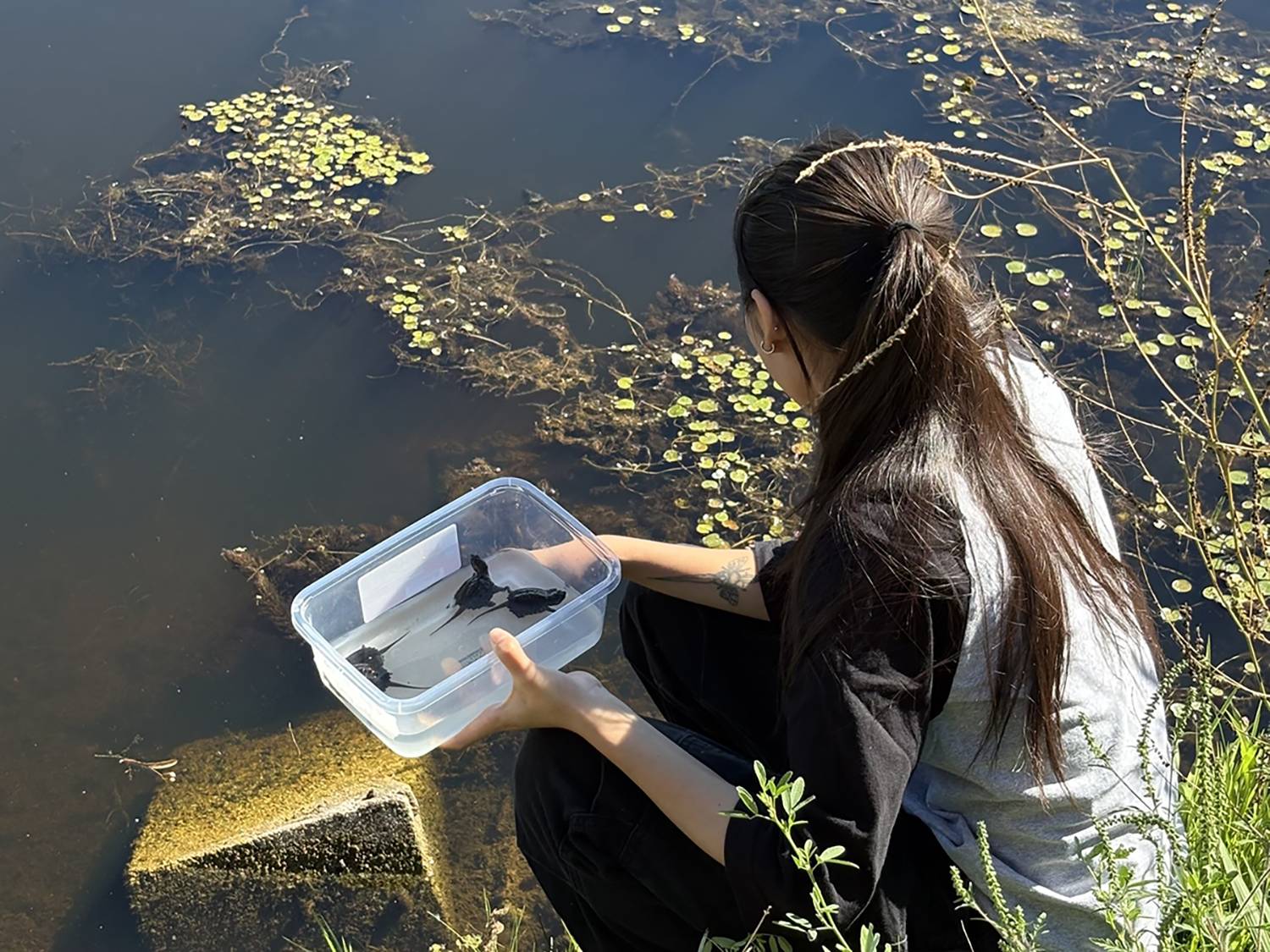
Galloway, whose research examines how vibrations caused by human infrastructure affect embryo development in turtles, worked with fourth-year thesis student Kira Yoshimura to monitor and incubate the eggs. Once they hatched, Galloway and Yoshimura returned them to the site where they were found, releasing the turtles into the Rideau River near the court that was once their original home.
From participating in animal rescues to planting trees and gardens, members of the Carleton community have demonstrated a personal commitment to conserving and enriching the campus environment. So much so that over the summer, Carleton made the 201-300 band globally in the 2025 Times Higher Education Impact Rankings for its contributions to sustainability.
Galloway said oftentimes when mother turtles choose nest locations, it’s without recognizing the dangers of human activity.
“The volleyball court was this turtle mom’s ideal location,” Galloway said. “It was above the waterline, it had no vegetation, it would have been full sun… so this was a great location for her.”
Beyond the lab: The Turtle Team
Both Yoshimura and Galloway are passionate about conservation, animals and wildlife – key motivations behind their work.
“I’ve always loved animals, and I like finding things out,” Galloway said. “I like being outside, I really enjoy interacting with the local wildlife, and I’ve always really had a soft spot for reptiles and amphibians … especially because I know a lot of people don’t like them.”
Galloway says she cares deeply about nature and finds joy in her interactions with the environment.
“I want to be able to understand and make sure that it’s now preserved for future generations and preserved for other people that I know also love it.”
Vice-president (student issues) Aidan Kallioinen*, who leads the task force, said the initiative has been part of the CUSA policy for about five years.
One of the task force’s first orders of business was a new program to dole out free blue recycling bins to students.
“We ran out of blue bins in the first hour, which was awesome,” said Maya Shaban, a member of the Climate Task Force and CUSA councillor for the Faculty of Arts and Social Sciences. “A lot of students needed them.”
The task force also made an appearance at the Sept. 20 “Draw the Line” protests, held “for people, for peace, and for the planet.” On Oct. 4, four of the five task-force members helped plant a “tiny forest” on campus.
“Any way we can get CUSA visible and taking concrete action on the climate crisis is the goal of this force,” Kallioinen said. “And [we’re] really fortunate to have a dedicated group of volunteers that are passionate about this and want to work towards a better planet for students.”
“This is just the start of something that I hope will be much bigger,” Shaban said. “I think that if everybody works as a collective to try to change things for the better … it’ll help a bunch of other causes too.”
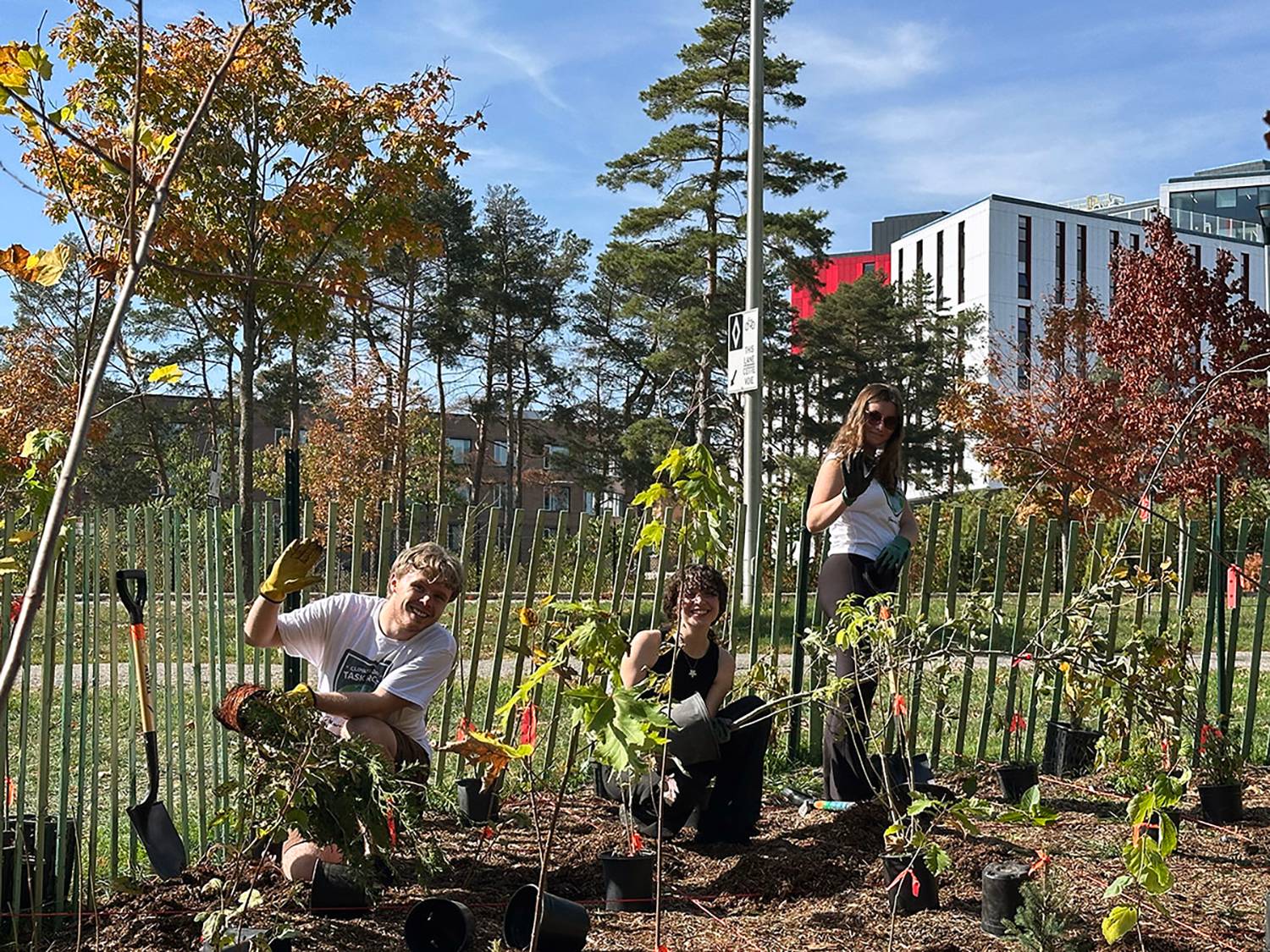
“It’s cliché, but without a planet, there’s nothing left for us,” Kallioinen said, calling climate change the “everything crisis.”
“It really is the be-all, end-all of what students are experiencing… It affects the affordability crisis, the price of food, it affects our health care, it affects the quality of our education, and even has direct effects on the housing crisis.”
Connectivity through pollinator gardens
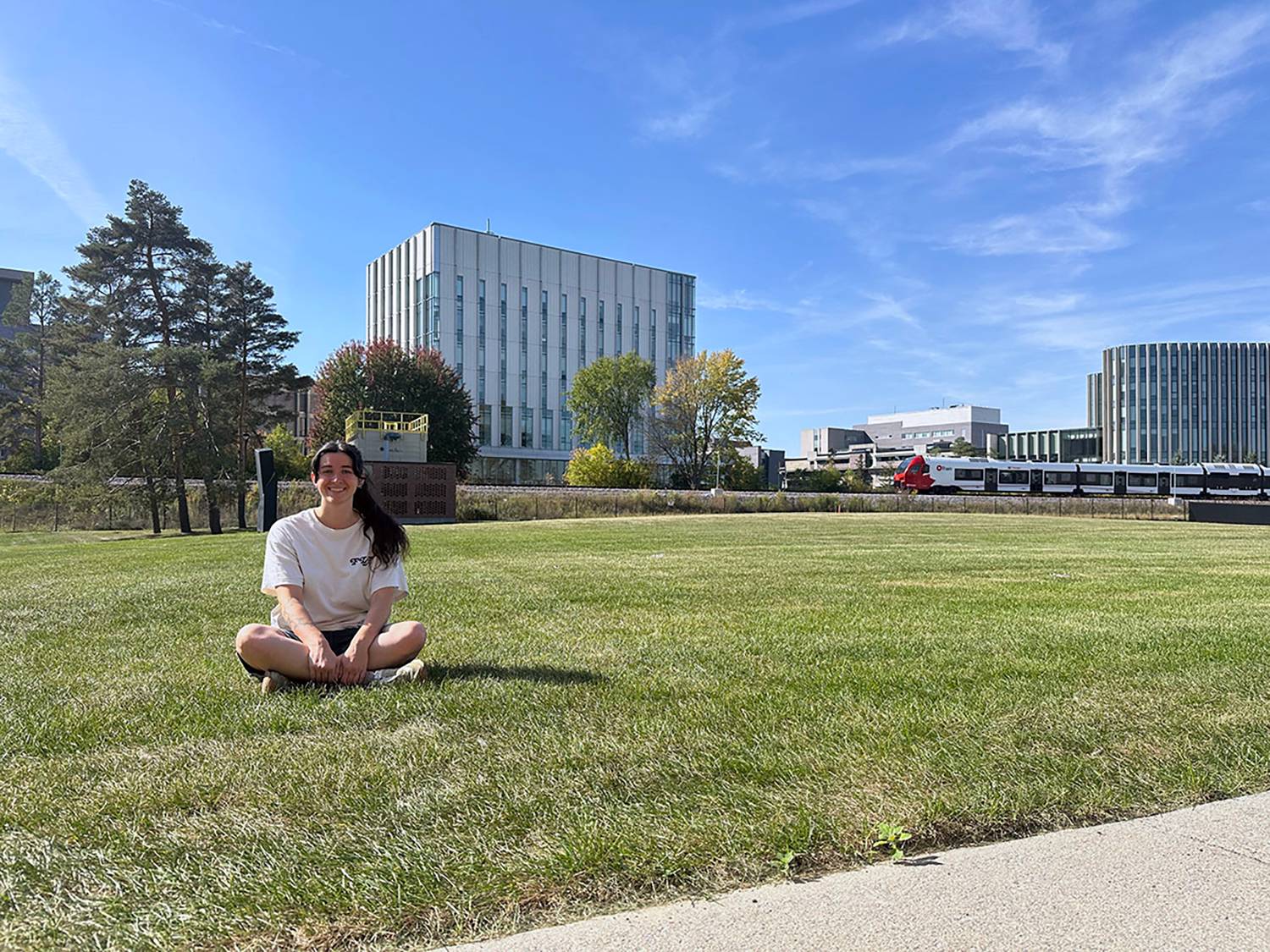
Even as Ottawa braces for winter, environmental initiatives at Carleton are still in full bloom. One graduate student is involved in turning an unused part of land on campus into a pollinator garden.
Kristen Vlahiotis, a graduate researcher at Carleton whose research looks at Indigenous-led land caring in urban areas, said she successfully pitched the idea of the garden to the university after being inspired by the downtown community garden where she.
Supported by strong community interest and a fall pollinator grant from Ecology Ottawa, Vlahiotis was able to launch the project and participated in a planting day for the garden on Oct. 14.
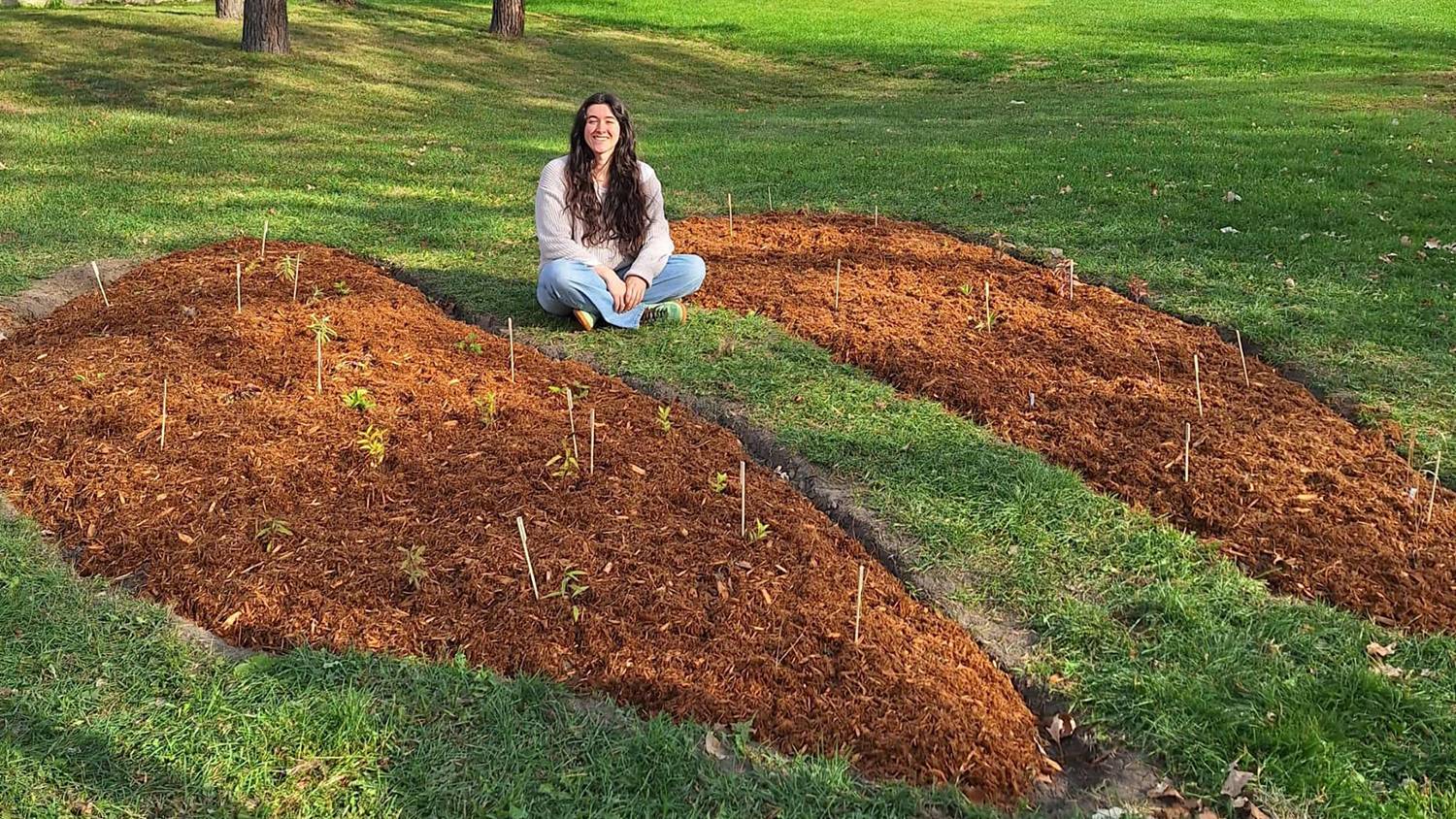
“Connectivity is … the idea that if we have more coordination it’ll connect more biodiversity,” Vlahiotis said. “For example, Ottawa is right in the middle of a big flyway for birds and for migrating butterflies too.”
“If we have more connectivity and more places for them to have food or to rest, then we’re helping provide more habitat in our urban areas.”
Vlahiotis says the importance of pollinator gardens in open green spaces has been enhanced by the disappearance of pollinator species.
Pollinator gardens in open green spaces play an even more important role as pollinator species continue to decline, she added.
“There’s a lot of native species that are being replaced by invasive species, so there’s been a real emphasis to convert open green space, like this field, into places that are more friendly for insects and birds.”
The field in question is located right beside Pigiarvik Building, and previously housed a parking garage that was demolished in 2024.
Vlahiotis encouraged Carleton students to take note of areas on campus where they see room for sustainability efforts.
“Be observant and notice if there’s something that can change about campus or just support initiatives that are already ongoing.”
‘We’re a small but mighty group’
Vlahiotis is part of the Carleton Conservation Collective, a group of faculty and students dedicated to conservation action on campus. The collective was founded by Rachel Buxton, an assistant professor in Carleton’s Department of Integrated Science and Biology.
Buxton says the collective was founded because many of her graduate students had expressed frustration with the fact that they were studying problems in the environment and felt they had “lost sight” of pragmatic solutions.
The group’s first project was a painted bird mural between the Azrieli and Mackenzie buildings.
“One of my students looks at bird window collisions, which is a huge source of mortality for birds in the city. And she found some dead birds underneath that walkway,” Buxton said.
“We got in touch with a local artist and ended up painting a bird-friendly mural on the window. And I don’t think anyone’s found any dead birds since.”
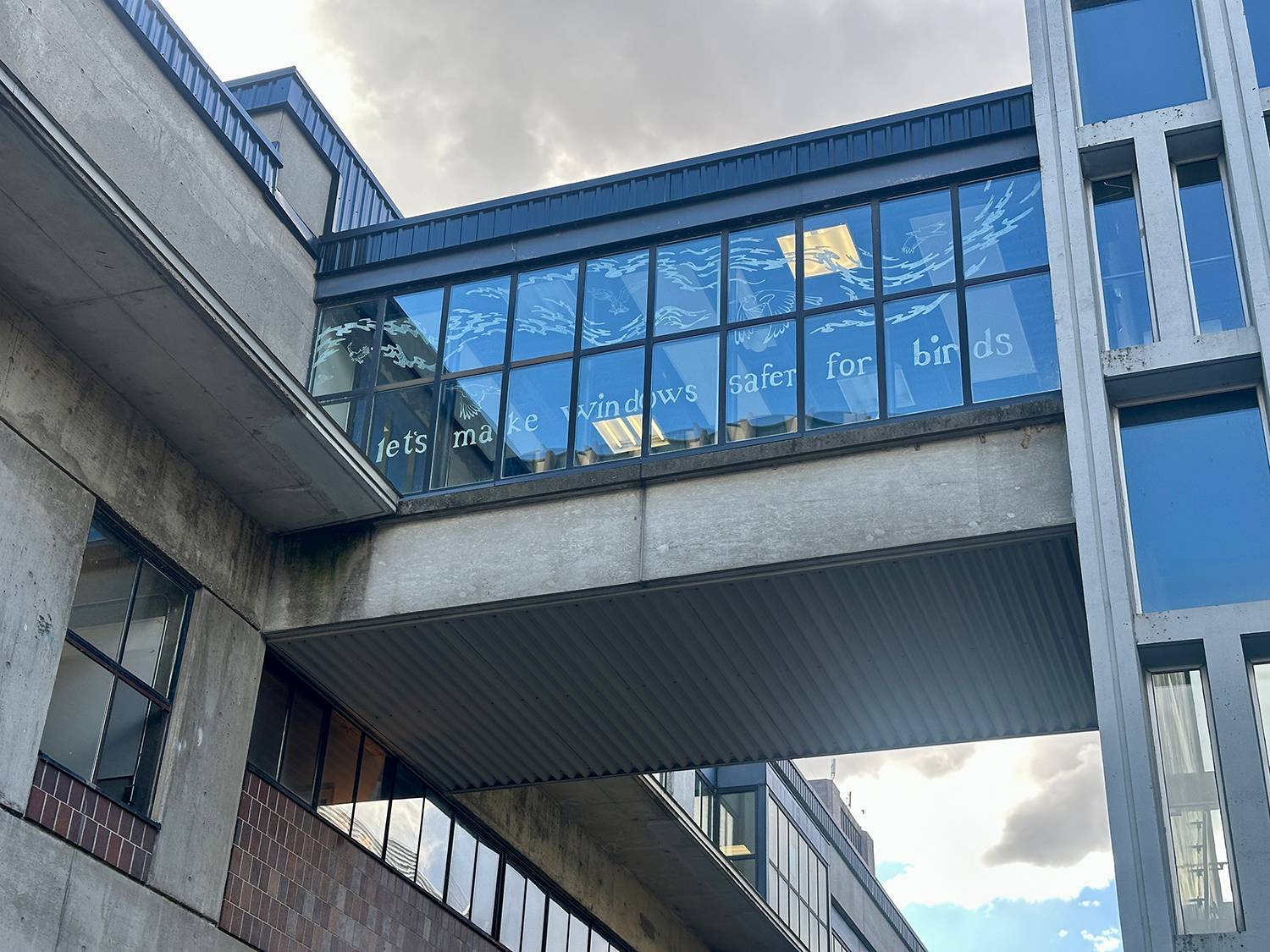
“We’re a small but mighty group,” Buxton said.
Part of Buxton’s own research studies the links between biodiversity and people’s wellbeing, and she said she recently probed the link between bird and tree diversity and self-reported mental health based on a community health survey from Statistics Canada.
“Some of the big drivers, bird diversity and tree diversity still were significantly associated with better mental health outcomes or better self-reported mental health outcomes,” Buxton said.
“So we really have an increasingly large amount of evidence that shows that there is a link between species diversity, biodiversity and people’s well-being.”
According to Buxton, her students’ research ranges from improved self-reported mental health in neighbourhoods with birdsong to the relationship between the amount of green spaces on university campuses and students’ academic success on those campuses.
“I mean, it kind of makes intuitive sense, right?” Buxton said. “You go outside, you go for a walk, you come back to your desk, you’re maybe more likely to be able to tackle something tricky or, you feel like you’re refreshed, rejuvenated.”
Buxton said students who don’t care about the environment are doing a “disservice to ourselves.”
“Nature might be the furthest thing from your mind when you’re stressed about a test – ‘Why do I need a pollinator garden? I just need to get through exams.’ When in reality, if you lock yourself in a room and you don’t go outside, you’re not going to do as well on your exams,” Buxton said.
Buxton added anyone can get involved and contribute to conservation and sustainability efforts, regardless of their field of study or expertise.
“We’ve got civil engineers on campus who are looking at green roofs. We’ve got environmental engineers who are looking at how to absorb pollutants and wetlands,” Buxton said. “Although sometimes the connection might not be as obvious, everything is connected.”
*Aidan Kallioinen has contributed to the Charlatan.