
Every couple of decades, a film comes along that reshapes the boundaries of modern filmmaking. Even rarer is a filmmaker capable of making that film feel like a cultural event before anyone has even seen it. Christopher Nolan has made a career out of doing exactly that, and with The Odyssey, he may have found a story big enough to match the occasion.
Over a year before its release, 70mm IMAX screenings of the film were already selling out. Following the success of his Oscar-winning Oppenheimer, Nolan mounted his most expansive production yet.
With Matt Damon taking on the role of Odysseus, the Greek king of Ithaca and a commander in the Trojan War, Nolan surrounds him with an ensemble built to match the scope of the story, including Anne Hathaway and Tom Holland, among many others.
Never one to undersell the impact of large-format filmmaking, Nolan makes cinematic history by committing the entirety of the film to IMAX. Every clash of steel, every wave breaking against a hull and every scream fills the theatre until the film seems to engulf the audience.
That same commitment to physical authenticity runs through the production. Shot across six countries, Nolan fully leaned into practical filmmaking, from a 60-foot puppet playing the stomach-churning Cyclops to staging the siege of Troy in Morocco. His commitment to physical authenticity reflects his belief that audiences can feel the difference between what stood before a camera and what was assembled afterward. Ludwig Göransson’s score carries that conviction into the music, using replicas of ancient instruments like the lyre and aulos.
Hoyte van Hoytema’s stunning cinematography binds the entire film together. He wields a nearly 300-pound IMAX camera to capture the epic and intimate in the same frame.
If there was ever a film that justified such an ambitious production, it is an adaptation of the bedrock of Western literature.
Nolan had previously said the script draws heavily on Emily Wilson’s translation of the ancient poem, the first English translation of The Odyssey published by a woman.
Wilson imbues the story with newfound empathy through her direct use of the English language. Her Odysseus is intelligent and determined but also arrogant and selfish, famously described by her as “a complicated man.”
She extends the same treatment to Penelope, usually presented as faithfully waiting for Odysseus, but reimagined by Wilson as a woman actively holding her kingdom together, with patience as one weapon in her arsenal.
Nolan extends that complexity further. Damon delivers a restrained, layered performance as Odysseus, while Hathaway brings equal strength to Penelope, with both anchoring the film emotionally without getting lost beneath its scale.
Nolan is no stranger to these themes. Much of his career has explored people trying to return to something they’ve lost.
Interstellar follows a man breaking the limits of space and time to return to his children, while Inception captures a man descending into dangerous dreamscapes trying to return to the life he left behind.
But surprisingly, The Odyssey is proof that homecoming is only half of what interests Nolan. Intentionally or not, the other half lies in a loose trilogy Nolan has crafted through the 2020s about the apocalyptic nature of the world.
The first of this trilogy, Tenet, released in 2020, approaches the apocalypse as an incessantly convoluted sci-fi thriller, where the future is undone by the very tools meant to save it.
Oppenheimer approaches it through history, following the man who helped create the apocalyptic weapon we all know and fear. And The Odyssey, the myth of all myths, reaches back far enough to find where this story of the apocalypse began.
Each story is told through men who believe themselves to be far more important than they are, becoming catalysts for mistakes capable of outliving them by generations.
For all its scale, The Odyssey ultimately arrives at something much smaller and human: the realization that our stories survive us. The mistakes of one generation become the lessons of the next, passed down through songs, poems, and now films, each retelling giving us another chance to understand them.
Perhaps that cycle of mistakes never truly ends, but neither does the attempt to break it.
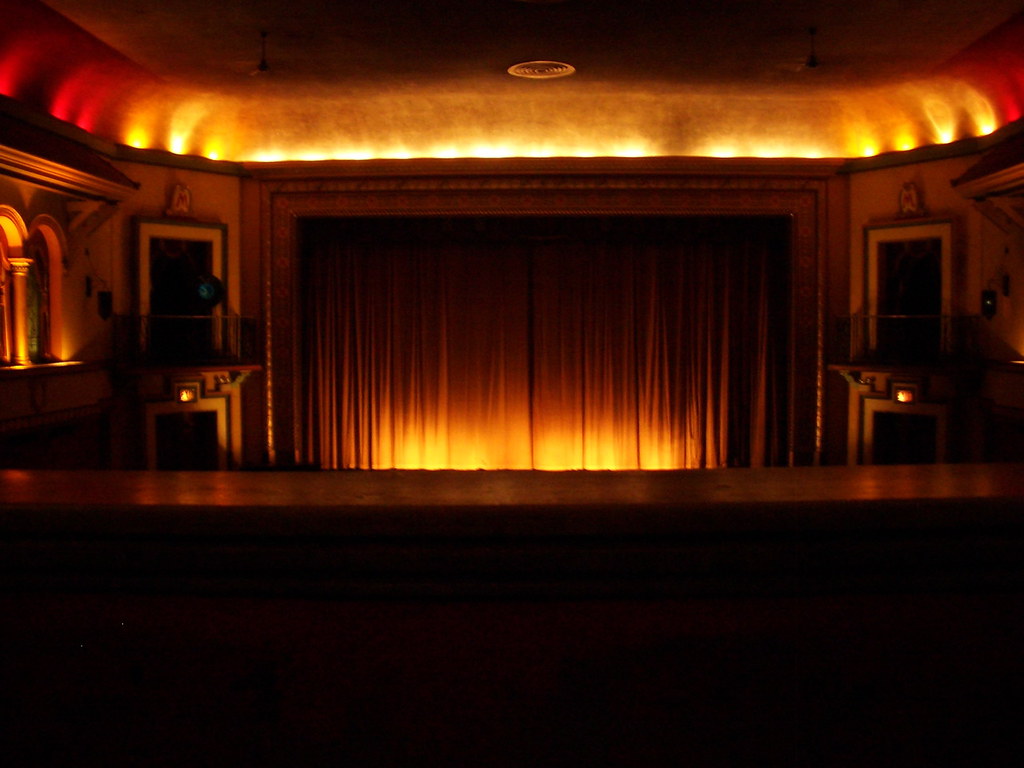
Featured image by Flickr.
This article, and all of the Charlatan’s work, is brought to you by an independent student newspaper dedicated to informing, uplifting and entertaining the Carleton University community. We are a levy-funded organization which plays a role in the broader, vibrant student culture on campus. By reading this article, you are supporting our efforts.