
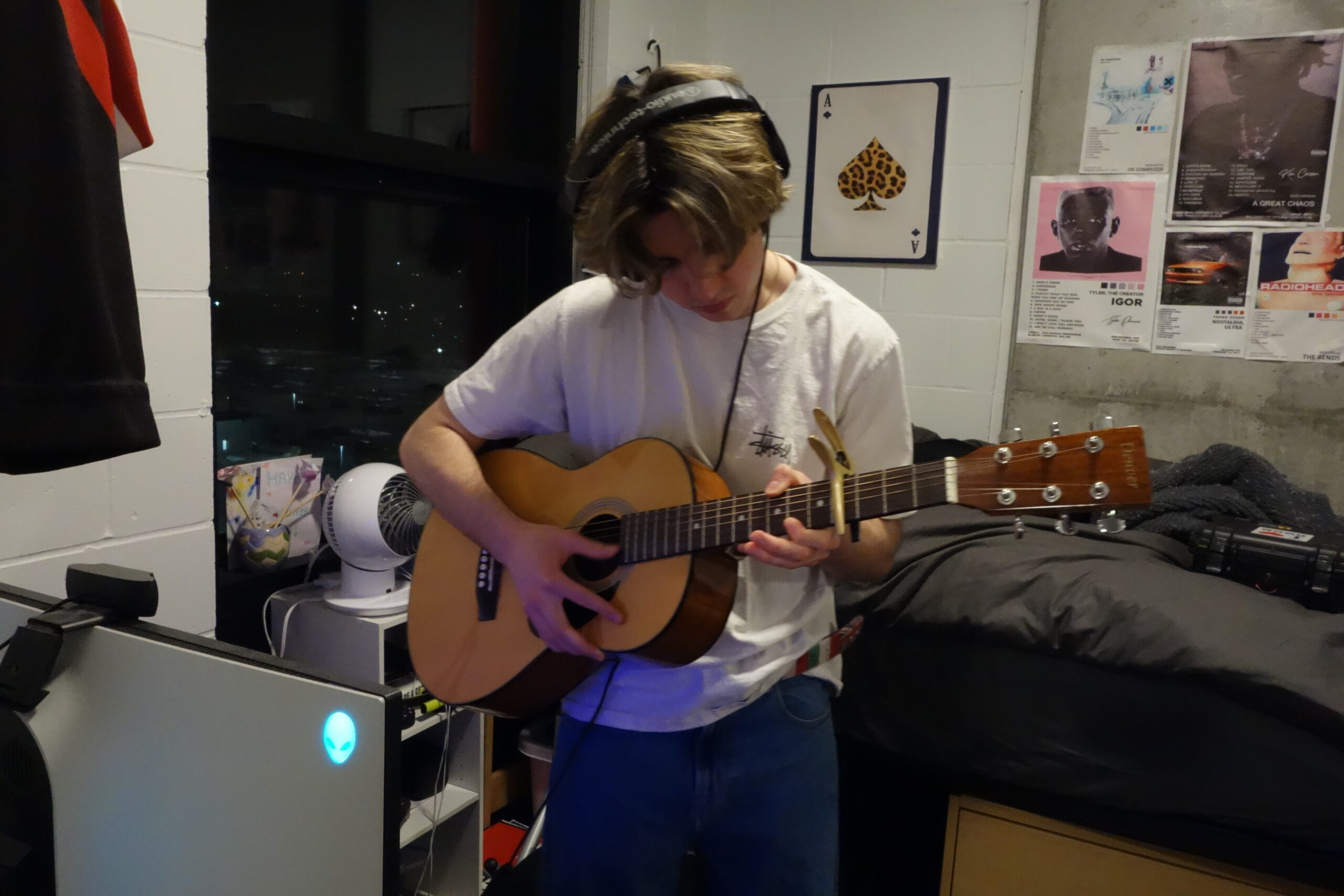
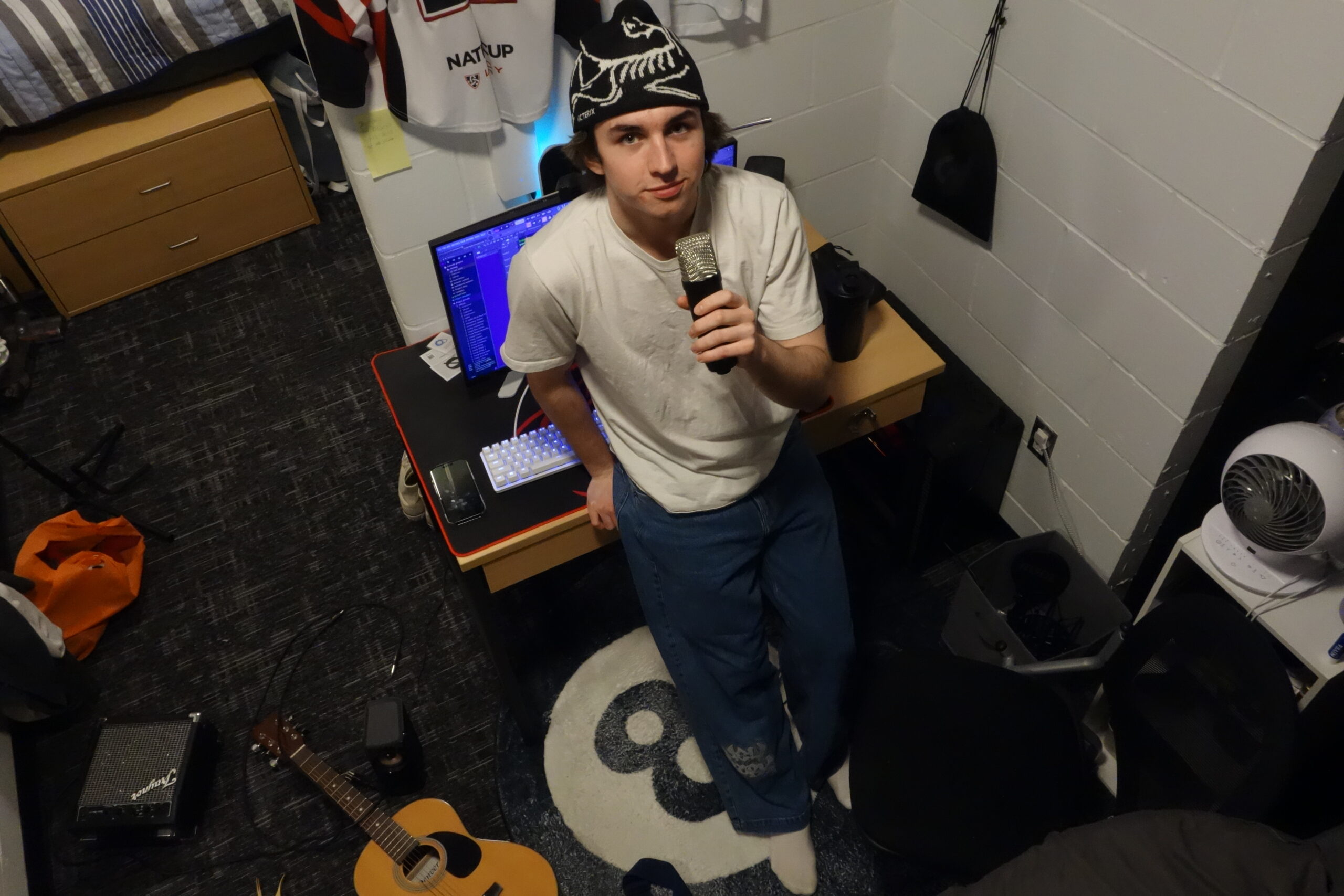
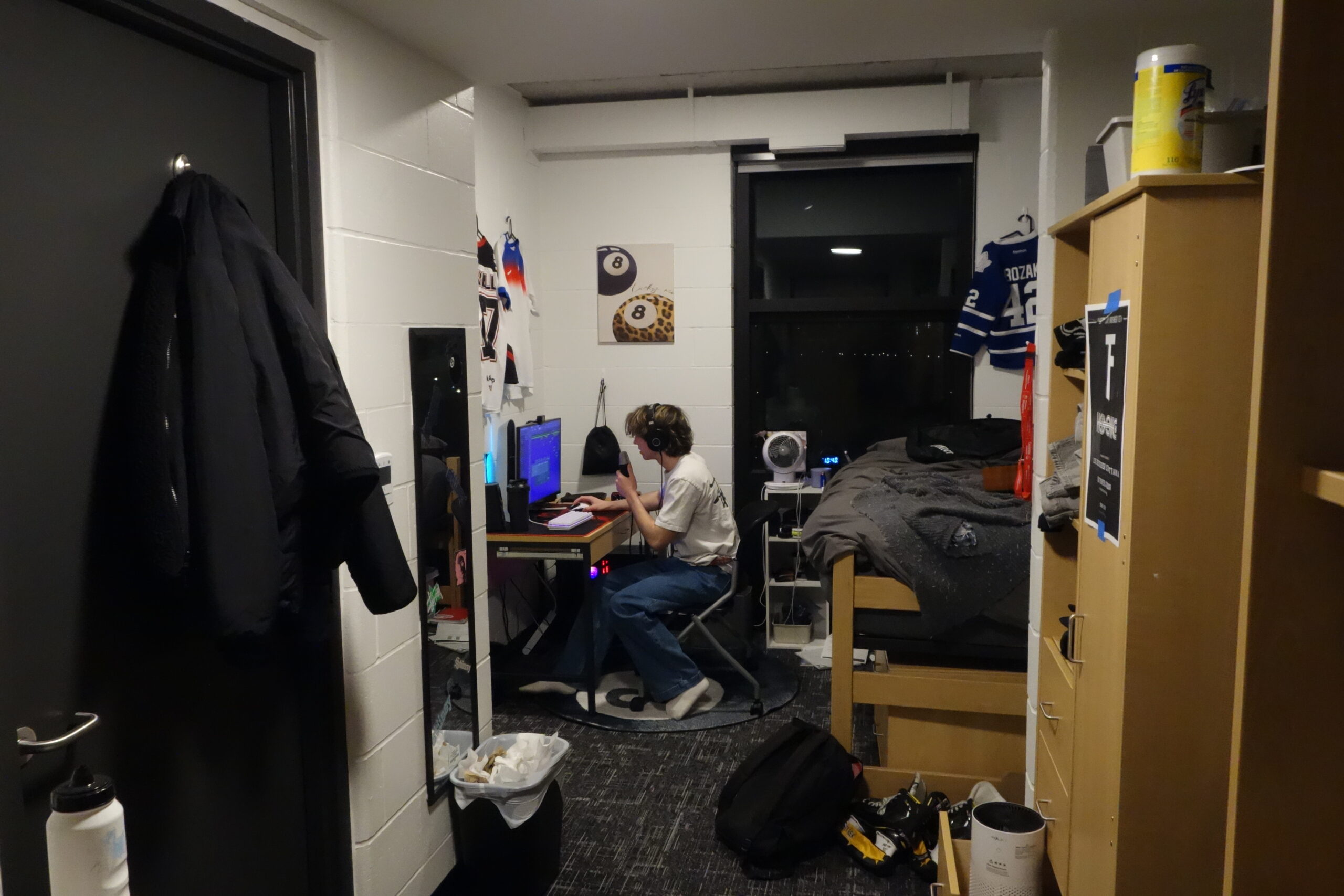
On an ideal night, Hudson Farrell sits at his desk donning headphones.
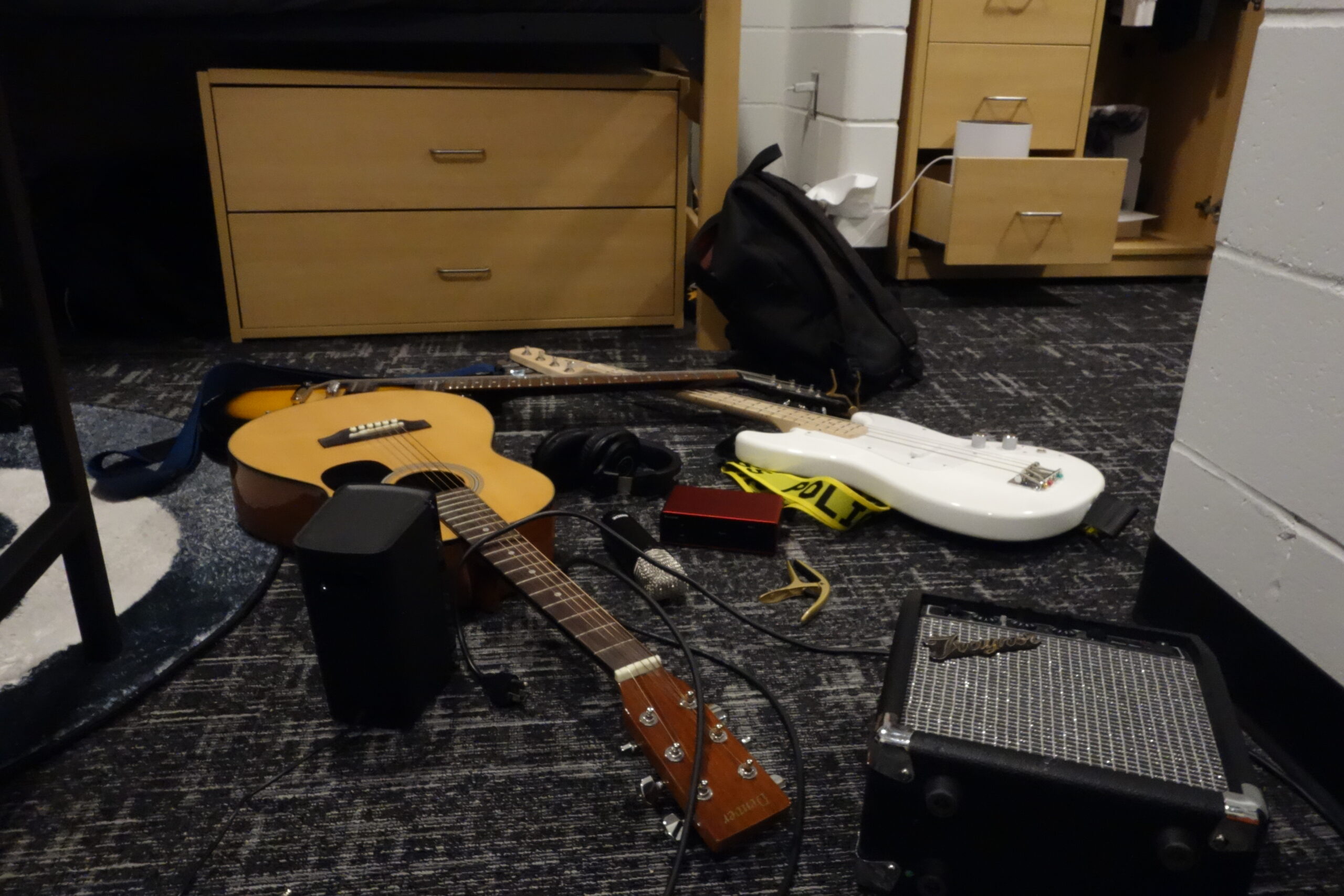
Locked in on his laptop, he is creating, repeating and testing sounds. The purple screen of his monitor is the only light in an otherwise dark Carleton University dorm room.
“I like working in pure darkness,” he said. “I turn every light off, and I listen to the beat for like, three times, and I just think.”
Farrell has been producing music for more than two years and has published 11 songs on Spotify, under the name “hudy,” since September 2025.
Farrell said his indie tracks aspire to tell “a story in each song.”
As a second-year Carleton student, Farrell said it can be difficult to balance music with his computer science degree — but he has learned to find time for his passion. He has accumulated 40 monthly listeners.
His friend and inspiration, Declan Kells, a second-year geomatics student at the University of Waterloo, said Farrell’s genre resembles “math rock” and “midwest emo.”
Tarun Shan, an early listener and second-year Carleton mechanical engineering student, said Farrell’s music illustrates “meaningful messages” with a sound Shan hadn’t heard before.
But Farrell’s music didn’t always sound the way it does today.
Becoming ‘someone’
Two weeks into the fall 2025 semester, Farrell released his first song “someone,” which became his most popular. As of March this year, the song has accumulated 336 listens on Spotify.
Farrell said he made the first version of the song over the summer. He re-recorded “someone” after he played songs to his girlfriend on a camping trip, and she chose that track out of three options.
Farrell quickly bought all the recording equipment he needed, an electric guitar and FL Studio, audio editing software for professional artists.
“I had all my equipment and then I came up to school,” he said. “Like, I actually had the equipment to make the quality worthy enough to be put on a streaming platform.”
Before he invested more into his equipment, Farrell said he had to find creative ways to carve decent sound.
“You know how there’s closets in the residence buildings? I used to box myself in with cardboard,” he said.
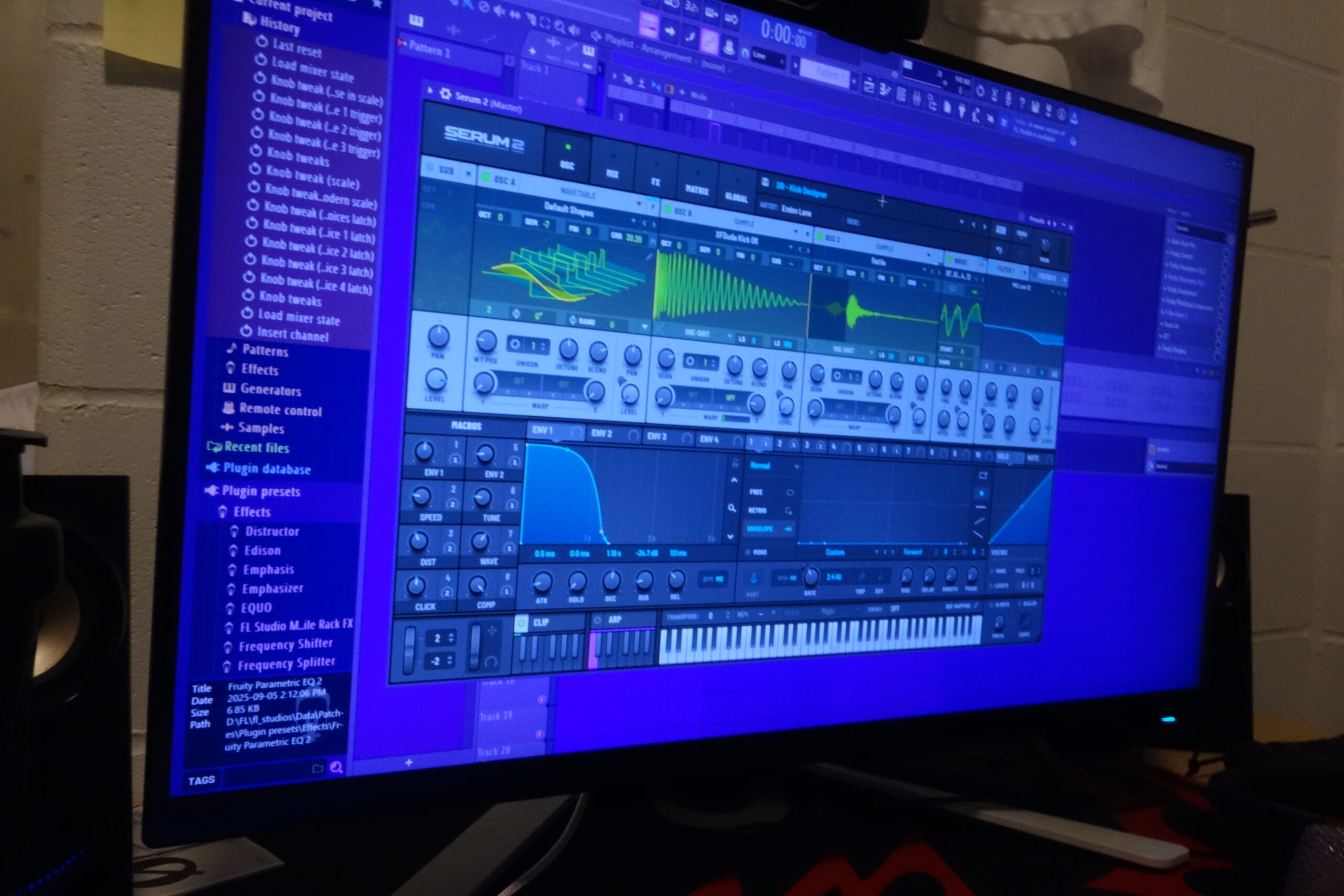
Farrell said that early on, he would use BandLab, a free audio studio, which limited his creative options. Through social media, Farrell said he also realized other artists were gaining popularity with limited tools.
Farrell referenced the self-produced indie artist “bunii,” who has more than 300,000 monthly listeners on Spotify, saying he was a major source of inspiration.
“I realized this guy is only like a year younger than us, and he’s doing pretty well making music,” Farrell said. “So I was like, ‘Why can’t I do this kind of thing?’”
Seeing smaller artists on TikTok get views by posting their songs, he felt encouraged to experiment with his own music, with no previous experience other than singing occasionally.
Sharing stories through music
Before releasing “someone,” Farrell said that being in a cramped dorm, he kept his feelings to himself – until he saw that others were finding catharsis in song.
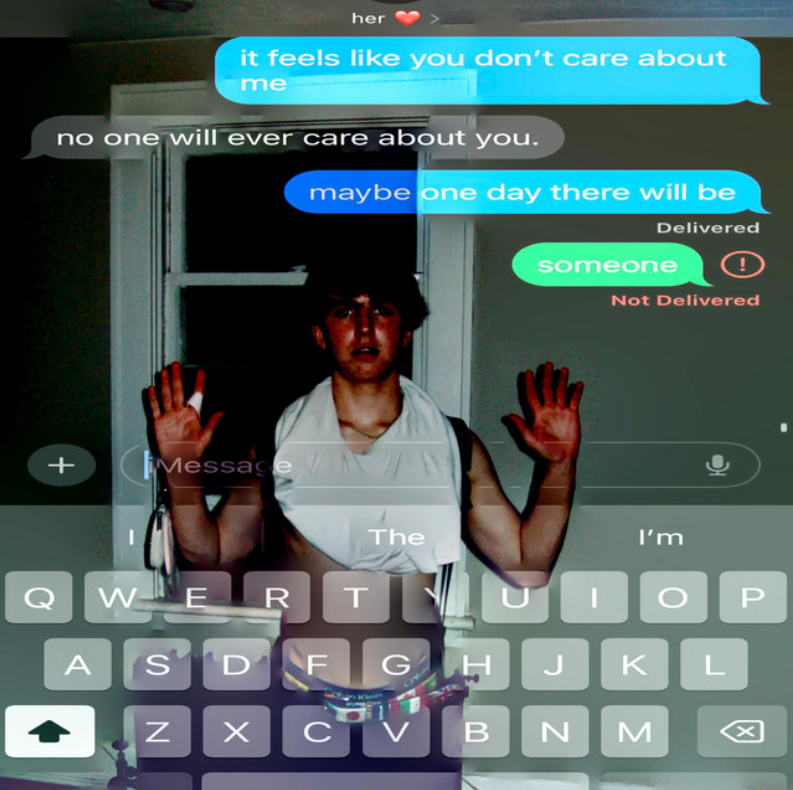
After “someone,” Farrell recalled being in a “flow state” mingled with issues in school and his personal life that allowed him to release his EP, “you’re back.”
His mixed feelings are clear in the different themes of “you’re back.”
“I wanted a little more of a happy vibe, but to still get a sad message through,” Farrell said.
The song “getaway,” which he said is inspired by bunii’s “their thoughts,” describes taking “a plane to L.A.” just to avoid someone.
“the end” is about a years-long high school relationship that ended abruptly. Farrell said the song is about coping with the feeling of saying goodbye to someone.
He said “the end” marked these experiences as a milestone in his life.
After the EP “you’re back,” hudy continued to release singles, including “skin” in January, and “hell” in February.
Out of all his songs, “skin” is Farrell’s favourite, as he said he put the most effort into producing its elements like the background vocals.
Both “skin” and “hell” tell stories that aren’t personal to Farrell, he said, but include elements he relates to.
“The first thing I even think of is the name of the song, and usually I kind of creatively think of a situation,” he said.
With his newer songs, Farrell shifts between storytelling and recollections of his past feelings. He said making songs has become a “verbal journal” for him.
“I found it was easier just to share my thoughts through music,” he said. “So whenever I feel a certain way, I just make a song.”
Gaining the confidence
Farrell said that through music, talking about difficult topics becomes indirect and easier as a result.
“People have busy lives, and I just feel like … It’s just better to say, ‘Yo, if you listen to my song, then you’ve listened to me, you’ve heard me,’” he said.
Becoming confident with his own voice is one of the greatest strengths Farrell gained from music, he said. He attributed his confidence to TikTok commenters supporting him early on and his roommates, who appreciated his music before his first release.
Mendel Azucena, a second-year computer science student who roomed with Farrell since his first year, recalled that a joke between roommates freestyling led to Farrell sharing his music with another person for the first time.
“When he showed me that, I was astounded that he actually had that sort of talent,” Azucena said.
“I just started believing in him. He’s really passionate about what he does, and I don’t see him slowing down anytime soon.”
Farrell said before that moment he hadn’t shown anyone his music, making it a significant turning point for his confidence.
Another early listener of Farrell’s music and his longtime friend, Kells, who now produces tracks for him, said Farrell shared one of his songs with him in 2024. Both were previously unaware of each other’s interest in music.
“He sent me that song … and then from there we started working together and influencing each other, creating a motivation that we both kept pursuing,” Kells said.
“Before it didn’t really seem to me like I was going anywhere, but now there’s more of a vision,” Farrell said. “There’s more of a feeling that I can do it, and I have way more freedom.”
Featured image by Brendon Poste/the Charlatan
This article, and all of the Charlatan’s work, is brought to you by an independent student newspaper dedicated to informing, uplifting and entertaining the Carleton University community. We are a levy-funded organization which plays a role in the broader, vibrant student culture on campus. By reading this article, you are supporting our efforts.