


Gwen Stacy — her personhood often reduced to “Spider-Man’s girlfriend” — dies very suddenly in The Amazing Spider-Man 2.
Her story ends there, only to become a memory that motivates Peter later in the movie. Stacy echoes many other women in modern film, providing a shocking death that only serves to motivate a male protagonist.
The last decade has given way to a rise in feminist media as commentary on the male-centred world in which we often find ourselves. Movies like Barbie, Women Talking and Lady Bird have earned critical acclaim for challenging dominant male perspectives in cinema.
Even with these significant strides towards a more inclusive atmosphere, women’s suffering and death often serve as little more than a plot device for male character’s personal growth, enabling the objectification of women in broader society.
As Oscar Wilde once suggested, “Life imitates art far more than art imitates life.”
Films and TV shows often leave women with little to no agency within the confines of the story. She is there to give a male character a reason for his journey, but she often plays a little part in this story herself.
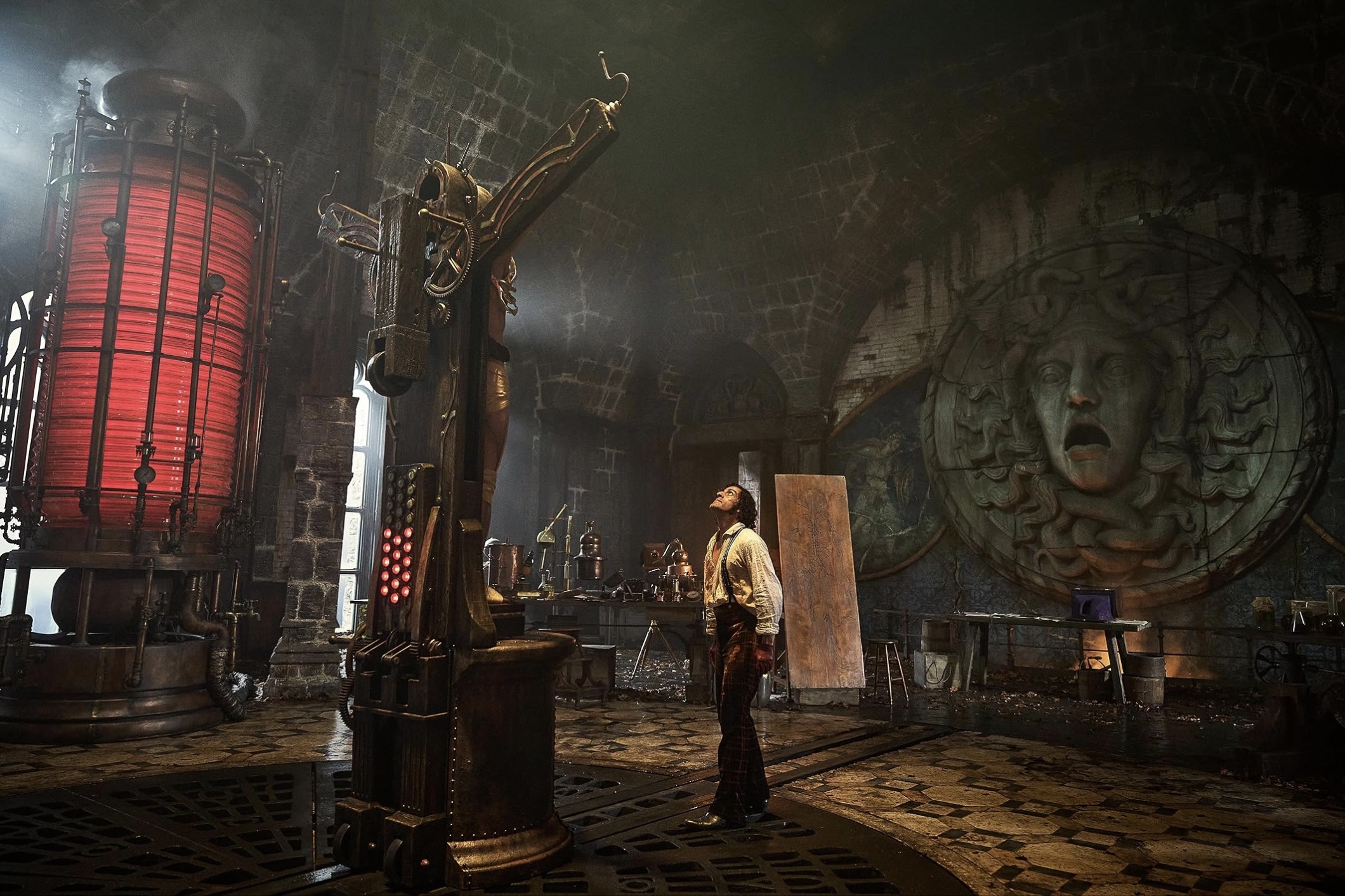
A recent example is the modern retelling of Mary Shelly’s Frankenstein, directed by Guillermo del Toro. Mia Goth plays both Victor Frankenstein’s mother and his love interest. That creative decision is very telling, showing just how much Victor worshiped his mother as he fell in love with her look-alike. Still, Goth’s character is left with nothing more than tragic deaths to push Victor further in his story’s pursuit of controlling mortality.
Goth’s character, Elizabeth, is not presented as a typical “damsel;” She is very open about her opinions on scientific studies and politics, sharing them throughout the movie with Victor to contest his ideologies. Still, her character’s deaths are still brushed off as a necessity for Victor’s own growth. Her death is only considered to be Victor’s loss.
He is the true monster, yet the audience feels more for the creature’s pain than for Elizabeth herself.
This trope, often used in media for a male character’s story, is called “Women in Refrigerators.”
That’s a phrase initially coined by Gail Simone in 1999, used for comic books to discuss women characters’ lack of agency. Their deaths are used for a moment of realization or a push for the male superhero. Countless superhero movies embody idea, like Deadpool 2, with its graphically portrayed death of Wade’s girlfriend, Vanessa.
Comic books, a traditionally male-centred medium, are often home to sexist material. Women superheroes’ costumes (or lack thereof) and the sheer minority of women superheroes are just a few examples of common criticisms. Yet “fridging” as a concept often goes unnoticed as it enters media, spreads to a larger audience and becomes more normalized.
Another example is the highly-anticipated final season of Stranger Things. In the finale, one of the show’s main characters, Eleven, played by Millie Bobby Brown, disappears as the upside-down crumbles. Her fate is left a mystery.
Eleven’s disappearance at the end of the first season also leaves her waiting for Mike to find her — the female character requiring the male character for the story to continue. She had little agency within the story to begin with, her story always leading back to a cycle of scientific violence she cannot escape.
Her fate at the end of the show isn’t much better (spoiler warning!) — leaving her either dead or isolated forever. This decision is framed as Eleven’s decision to die to “end the cycle of abuse” she suffered. But framing her sacrifice as a choice tells victims of violence that they are forever doomed to be stuck in this cycle of suffering. It shows how directors use the pain of women just to move a story along, enforcing abuse as necessary.
This idea of loss feels closer to that of an object — a plot device — than that of a human being.
The forced death or suffering of women within these contemporary stories could be considered a rebrand of the damsel in distress trope. They’re providing slightly more opportunities, but they cannot change their own stories.
These depictions of women’s suffering and abuse continue the cycle of abuse for an audience. One step forward is to call it what it is — sexism.
The suffering of female characters follows the path of misogyny, as they are stripped of choice, and forced into the background until they need to die to provide emotional turmoil for the male character.
The rise of feminist media is not just about stories featuring women; it also allows women to be active participants in the stories.
This normalization of a problematic mindset is a reminder of how even today’s media can still fall into old patterns.
Featured image from IMDb.
This article, and all of the Charlatan’s work, is brought to you by an independent student newspaper dedicated to informing, uplifting and entertaining the Carleton University community. We are a levy-funded organization which plays a role in the broader, vibrant student culture on campus. By reading this article, you are supporting our efforts.