
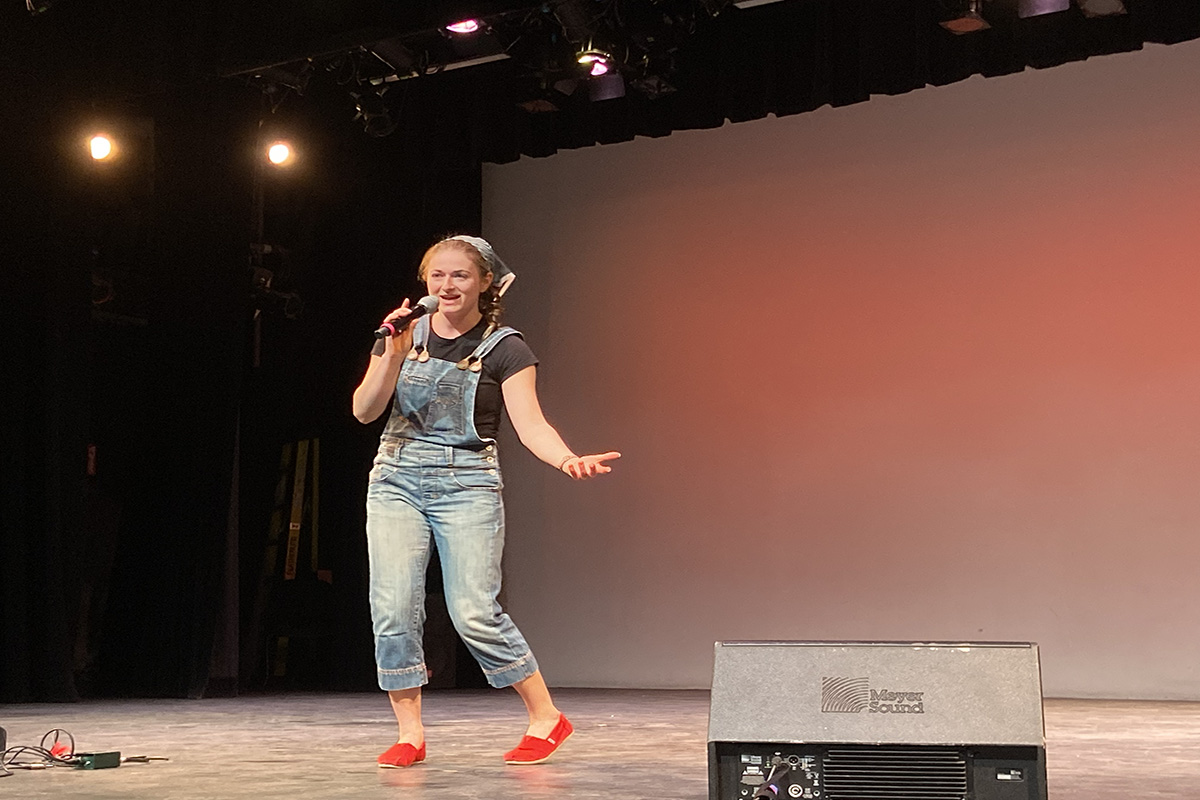
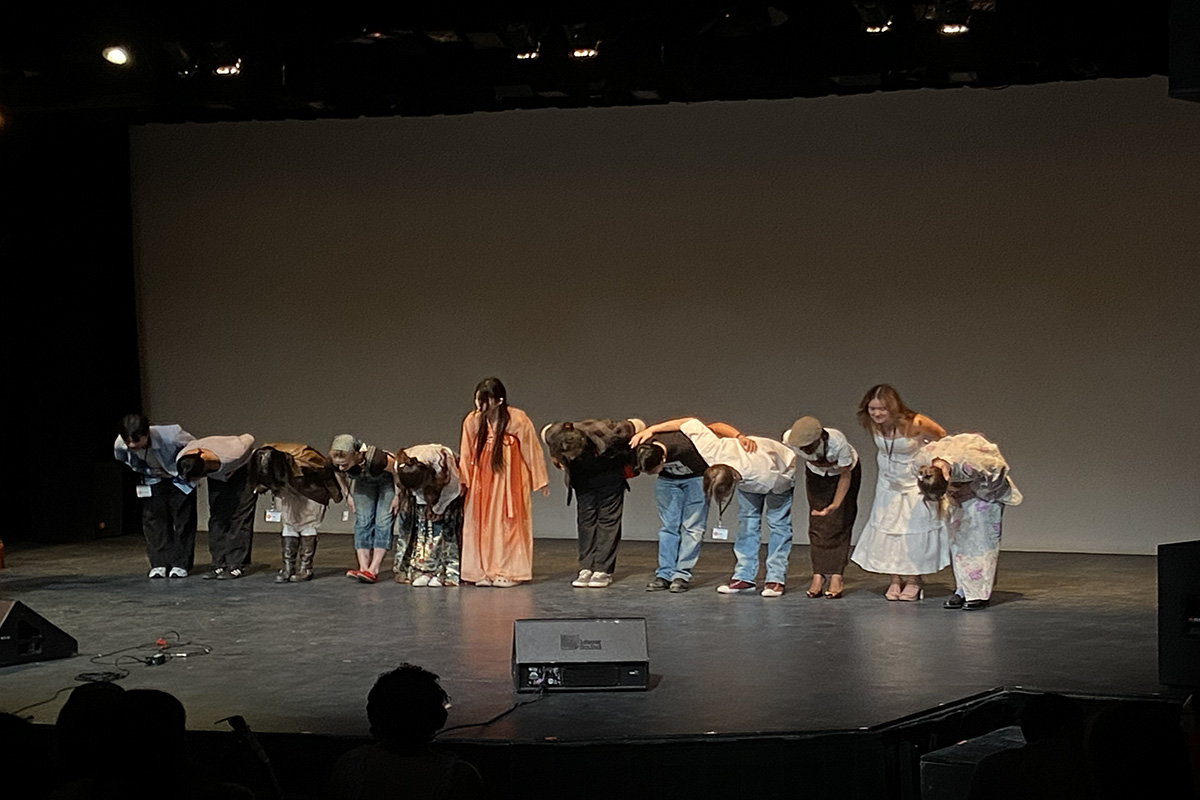
It was a full house at last Tuesday night’s Linguavision, Carleton University’s annual singing competition for its language learning students. The competition showcased the universality of music, creating a space for the campus community to learn about a language’s culture through its music.
Students sang in Spanish, Japanese, Korean, Italian and Mandarin, which are all taught at Carleton’s School of Linguistics and Language Studies. Students also sang in French, taught in the French department. For a second year, the event included a performance from ASL students.
The competition featured contestants from disciplines across the university, organizer Mike Barker said, with musically experienced students and those who pushed their boundaries.
“Music is a way for students to participate in the language and get something cultural out of the experience,” he said. “The act of learning a language encourages students to take interest in the world outside of Canada and connect with different cultures and ideas.”
They critique stage confidence, audience engagement, voice tune and key, song choice, lyric memorization, accurate pronunciation and accent, Barker explained.
Chloe Paturel had the audience singing along to her Italian performance of “Bella Ciao,” which won her an honourable mention from the judges and a $75 cash prize.
Paturel, a second-year global and international studies student learning Italian, said her song preparation taught her the historical and cultural connotations behind the lyric choice.
“‘Bella Ciao’ is an anti-facist song that dates back to the early 19th century,” she said. “It’s a song of resistance that has allowed me to learn about the history of Italy through its language.”
Paturel will be going on exchange to Italy next year and said she is grateful for the knowledge she gained from her Italian classes at Carleton.
“You can only truly understand someone’s culture if you know the language,” she said. “If you immerse yourself in the language, you can learn about the music, the food and the dances.”
Judges awarded second place and a prize of $200 to Sophie Jimenez, a first-year business student learning Spanish. She sang “Reliquia” by Rosalia.
While her first language is French, Jimenez said the competition helped her to better connect with her parents and their culture, who are Chilean and lived in Spain.
“I got to combine what I’m learning in class about Spanish culture with the knowledge I have from my parents,” she said. Her parents, along with Spanish classes, helped her with the pronunciation of the lyrics, Jimenez added.
ASL students performed three stories and introduced themselves to the crowd in the language.
Aleena Zaman introduced herself to the audience in sign, with an interpreter telling the crowd she is a fourth-year law student minoring in ASL.
Zaman told the Charlatan her presentation was to spread the language of ASL and support Deaf culture.
The performances were “to show that ASL is a language, just like the other language performances,” she said.
Zamon said her ASL classes have shifted her perspective and knowledge of the Deaf community.
“It’s not just a language that you’re learning, there is an entire culture and history behind it,” she said.
“You’re learning about the people and the community — that’s what we want to bring here.”
Featured image by Claire Collee/the Charlatan
This article, and all of the Charlatan’s work, is brought to you by an independent student newspaper dedicated to informing, uplifting and entertaining the Carleton University community. We are a levy-funded organization which plays a role in the broader, vibrant student culture on campus. By reading this article, you are supporting our efforts.
Editor’s note: A previous version of this article incorrectly stated that French is taught at Carleton’s School of Linguistics and Language Studies. In fact, it is taught in the department of French. The Charlatan regrets the error.