

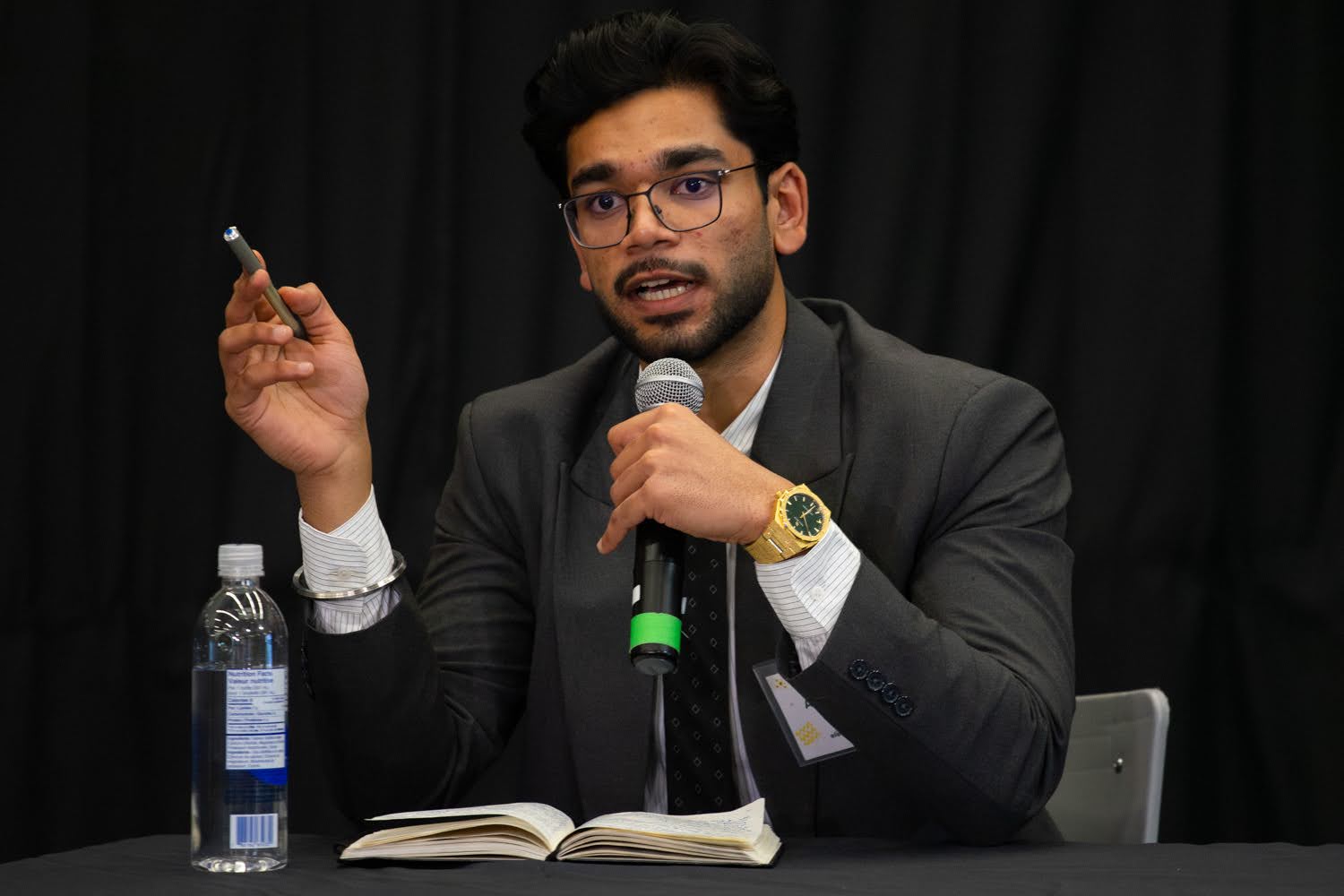
Aryan Singh is a fourth-year systems and computer engineering student who is one of the two candidates running to be president of the Carleton University Students’ Association.
He’s running on a platform of reviewing CUSA’s finances, creating an emergency travel fund for students and advocating for subsidized housing and greater community and cultural representation on CUSA’s council.
The Charlatan sat down with both presidential candidates before voting began today to discuss their platforms.
The Charlatan (TC): To start, why are you running for CUSA president?
Aryan Singh (AS): When I joined CUSA, I enjoyed learning from people in different faculties and making decisions that impact students. I feel like the president role would give me the best platform to give back to the community.
TC: What would your top priorities be as CUSA president?
AS: One of my biggest priorities would be balancing our audits because right now, they have discrepancies with our current finances. More accurate audits would give us better data, so CUSA’s businesses can run more smoothly.
Another top priority would be properly using The Wing because though we don’t spend money on its operations. The rent is so high that it’s slowly bleeding the organization.
TC: You have some interesting points in your platform about supporting students finding housing and creating an emergency travel fund. Tell me more about those.
AS: Many past presidents have discussed subsidized student housing with not-for-profit organizations. I think we can actually pursue that and make it a reality.
For the travel fund, there are a lot of students who don’t live with their loved ones. In times of crisis, CUSA should be able to provide support and financial support.
People often ask me how this would be funded. I’m proposing reallocating money from CUSA’s conference budget for executives. While it’s important to network, allocating those and similar funds to the welfare program is probably a better return on investment.
TC: How would you balance giving students privacy about the emergencies they’re asking money for but also making sure the system isn’t being abused?
AS: The priority should be to help students in crisis. We shouldn’t be putting up barriers for the many students who need support just because some students are abusing the system.
We can add some resistances to discourage abuse of the system. For example, if a student has an outstanding campus parking ticket, they don’t get their degree until they pay it off. We could have a similar structure.
TC: Interesting. So moving on, one of the key roles CUSA plays is that of advocating for students. What would be your top advocacy priorities?
AS: Right now, councillors represent faculties, but that represents the academic background of students, and not cultural or ethnic backgrounds. I’m proposing committees formed by people from the same communities who will work in parallel with CUSA council to advocate and make statements on international issues.
TC: Another key role of CUSA is supporting the more than 170 clubs on campus. How would you support campus clubs?
AS: Students come across CUSA through its clubs. We can make life easier for clubs by making renewal and funding processes a lot easier. If we consolidate everything into one online platform, it would be a lot more convenient. Software solutions like this don’t require a lot of investment.
TC: Despite improvements to CUSA’s finances, Ollie’s is still experiencing financial challenges and The Wing shut down again this year. What changes would you make to CUSA’s finances?
AS: As I mentioned before, having better projections and breakdowns of the finances in general.
For Ollie’s, if we do menu engineering, we can get better data on what costs the least to make. If we get ingredients with a longer shelf life, less is wasted. If we have more competition for suppliers, we can get better deals.
TC: So, Bill 33 will allow the provincial government to make some student levies optional, and it could come into effect next academic year. If CUSA’s levy is made optional and that brings revenue cuts to the association, how would you handle the fallout?
AS: There’s a saying that goes: “Hope for the best, but prepare for the worst.” So, we should have a committee to discuss our response, so if a crisis actually hits, we’re prepared. If some revenue is lost, we can figure out which expenses to cut down.
TC: Shifting gears, what actions would you take to get students engaged with CUSA?
AS: This year’s breakfast program really got students engaged with CUSA, but it also solved a problem for students. We should have similar events and continue those events. New initiatives take time, so it’s best to just continue using a model that’s already working.
TC: How do you imagine CUSA’s future?
AS: I want students to think of CUSA as an organization that makes their lives easier. Students seeing CUSA as something they can rely on and trust is something I would like to see in the coming years.
This interview has been edited for length and clarity.
Featured image by Simon McKeown/the Charlatan
This article, and all of the Charlatan’s work, is brought to you by an independent student newspaper dedicated to informing, uplifting and entertaining the Carleton University community. We are a levy-funded organization which plays a role in the broader, vibrant student culture on campus. By reading this article, you are supporting our efforts.