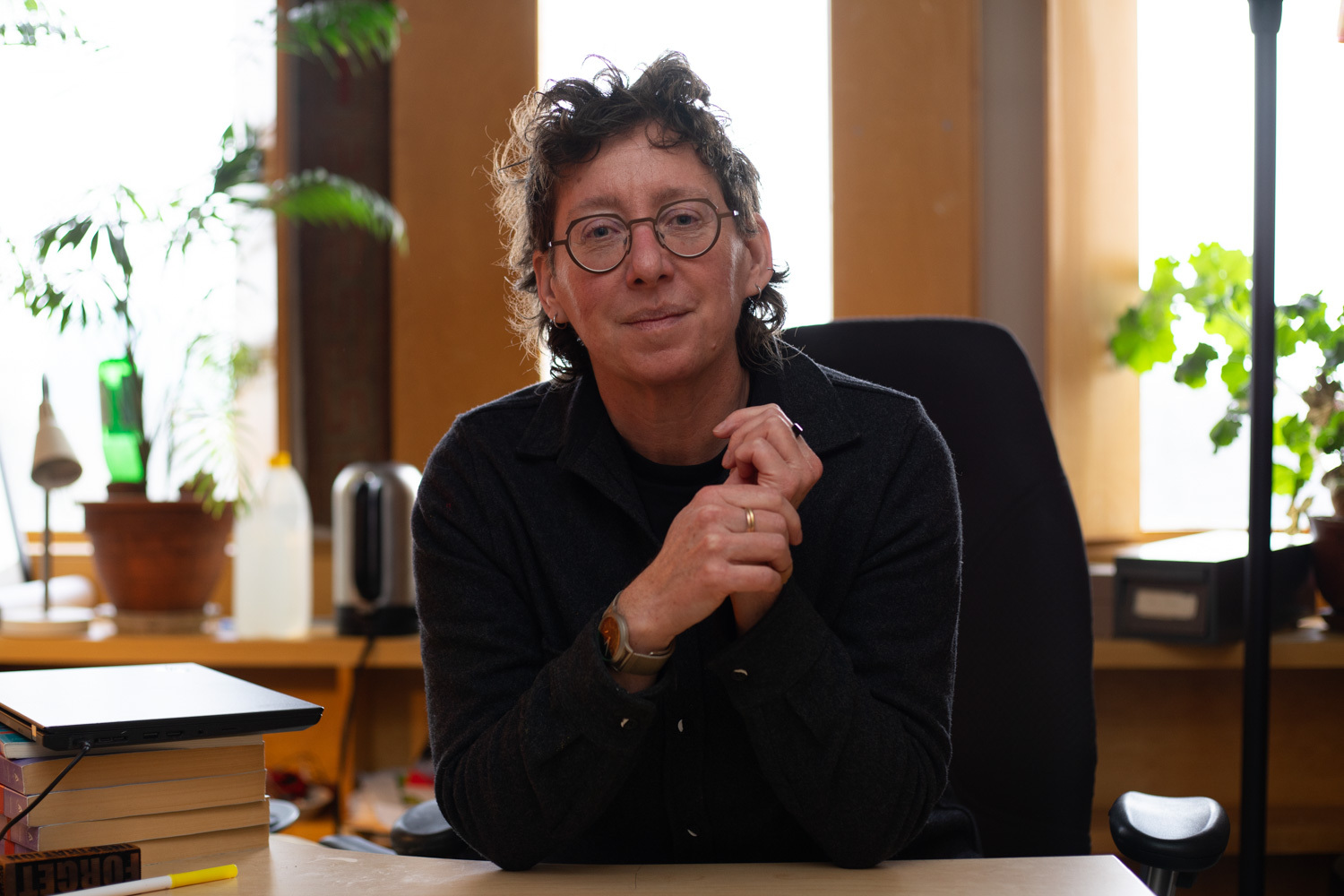
Alexis Shotwell, a Carleton professor, philosopher and a disabled woman, has spent years exploring how toxicity spreads through society, workplaces and even human bodies.
In a recent lecture titled, “Working with toxicity: Disability, pace and anti-productivism,” Shotwell spoke to Carleton students and lecturers about how fears about disability breed toxicity.
The Charlatan sat down with Shotwell to discuss that intersection and how it comes to affect everyone.
The Charlatan (TC): How did you start researching the intersection between toxicity, work and disability?
Alexis Shotwell (AS): Before living in Ottawa, I was in Sudbury, Ont. I had miner friends there who got these horrible lung conditions and cancers that appear to only exist in Sudbury and in the lab. These cancers were partly due to drinking contaminated water from the mining tailings. That’s when I started thinking about work as something that kills us by poison and how everyday work slowly grinds people down.
But I’d also been working on studying disability. I began to think about how disability is used as a threat to avoid being poisoned. For example, when people advocate for workplace safety, they say you don’t want someone to lose an arm or a leg.
Disability isn’t a warning we should leverage to oppose the toxic.
TC: How do work and disability intersect?
AS: If we say work is the thing that kills you, we could just say, let’s have no one work. But taking care of each other always takes effort, and people need care.
A definition of being disabled is that you can’t work because under our current capitalist system, not everyone with disabilities can be productive. We must stop justifying our existence by being productive.
Our current system makes it very demeaning to be disabled. Disability isn’t in a circuit of productivity, and we need spaces, including work, for collective joy and flourishing that don’t rely on people being easy or likable.
TC: Why is it important that people are aware of the intersection between disability, work and toxicity?
AS: We need to think about disability all the time because there’s no space we are ever in where there aren’t disabled people. Disability is one of the most beautiful places to think about collectivity because no one’s disability is the same as anyone else’s. We can ask ourselves how we work together when our needs are different and conflict with others, but that’s not the end of the story.
By thinking about how to make things accessible for all members of society, everyone’s life becomes much better.
For example, when I have a student in class who can’t have artificial light because they are photosensitive, having a room with windows as a natural source of light makes the learning environment more accessible for other students, too.
If we don’t understand the political stakes of opposing toxicity using oppression, we’re going to replicate some really worrying patterns. We talk about all of these ways that the workplace is toxic, and people are going on stress leave or they’re getting sick.
What would it be like to turn toward those as a way to change them?
TC: How is the disability studies program at Carleton helping students think about this intersection?
AS: At Carleton, we have an accessibility specialization at the graduate level that is profoundly interdisciplinary. It has people from architecture, industrial design, sociology, all over. They’ll ask, “How do you build a better building that’s accessible to everyone? How is access something that we can study, cultivate, and build in this interdisciplinary way?”
It’s so inspiring to be in these spaces.
This interview has been edited for length and clarity
__________________________________________________________________________________________
Featured image by Simon McKeown/the Charlatan
This article, and all of the Charlatan’s work, is brought to you by an independent student newspaper dedicated to informing, uplifting and entertaining the Carleton University community. We are a levy-funded organization which plays a role in the broader, vibrant student culture on campus. By reading this article, you are supporting our efforts.