
What started as a class assignment turned into one of Carleton University student Devang Ghosh’s biggest accomplishments.
Ghosh, a third-year industrial design student, made history in June as the first Canadian to win the Student Design Award at the 2025 International Forum Design competition with his adaptive snowshoeing device — one he hopes can change the winter-sports landscape.
Ghosh and “Snow Stride” were awarded “Best of the Year” at the award show, where he was celebrated on stage in Bilbao, Spain. While Ghosh said anyone can use his device, it looks to address a lack of adaptive equipment for people with disabilities or those who require mobility aid in sports.
In June, Ghosh competed against over 7,000 people from around the world and was recognized for his prototyping and creative approach.
For Ghosh, receiving the award was especially meaningful as the only Canadian to do so.
“The concept itself addresses the idea of why people haven’t considered a fun way to address recreational therapy,” he said.
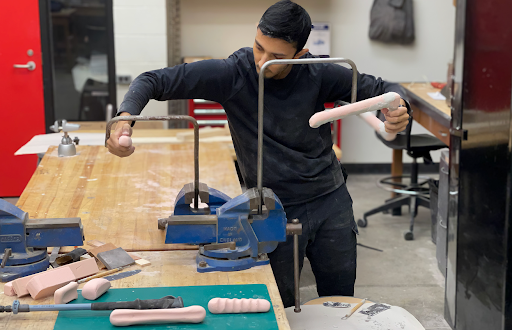
Ghosh had four months to create a project for his industrial design class, and while conducting research, he discovered an overlap between people who go through lower-leg injury recovery and snowshoeing.
He originally considered adding skis to a walker to help people walk on snow, but realized that this wasn’t feasible, as the user’s legs would still be sinking into the snow.
Ghosh concluded that mimicking natural human movement with the device was crucial to ensure rehabilitation.
“If you’re not mimicking natural human walking movement, then all this is redundant because the patient is not walking how they normally would,” he said.
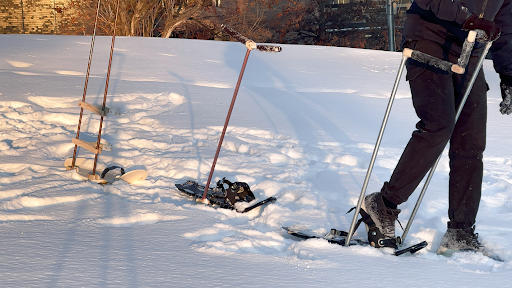
The device uses spring-loaded poles connected to snowshoe bases, allowing users to push and pull in a motion similar to an elliptical. Adjustable tension allows them to control how much assistance they get, aiming to help them safely build strength.
Ghosh said the market for adaptive devices remains limited in niche sports.
“For something like hiking on snow, there’s nothing that exists like this.”
Snow Stride also doesn’t require special facilities, like a groove track or stadium, to function.
“All you need is land and snow,” Ghosh said.
Ghosh encouraged Carleton students to enter their projects into competitions and share their innovations with the international community.
“The worst thing that can happen is you just don’t win,” he said. “The best case scenario is you get to be flown down to Spain … and represent your country.”
While Ghosh says the product is far from being ready to hit the market, he said the product is still a great way to raise awareness about the lack of adaptive sporting equipment out there.
“This essentially helps even the playing field for people that have those mobility aids, and it allows them to take part in this activity that they once could not have taken part in.”
Featured image supplied by Devang Ghosh