

It’s a rainy day in New York City, and Times Square is packed.
Marvel characters hound tourists for overpriced selfies, NYPD cops pose for photos with unassuming kids and people pour into souvenir shops to seek refuge from the drizzle.
Call me a local, but I’m sick of Times Square.
I’ve seen its flashing lights and crowds so many times that the novelty has just worn off. But only a few steps away and around the corner from the shiny billboards is my Broadway destination for the next two and a half hours: the Hudson Theatre on 44th Street.
Making my way up the stairs to sit in the cheapest balcony seat I could afford, the lights come down some seven minutes after the time posted on my ticket.
The orchestra kicks into a bright and springy overture as Jonathan Groff takes centre stage. He wears a sullen, focused expression and a crisp white dress shirt. He hasn’t even spoken a word before I find myself quietly shaking and sobbing into my hands.
“Are you okay?” the polite, middle-aged stranger sitting beside me leaned in to ask.
In that moment, my face probably turned a deeper shade of red than that of the robes Groff wore as King George in Hamilton. But the stranger just handed me a handkerchief and turned back to the stage. Around two and a half hours later at curtain call, she was sobbing too.
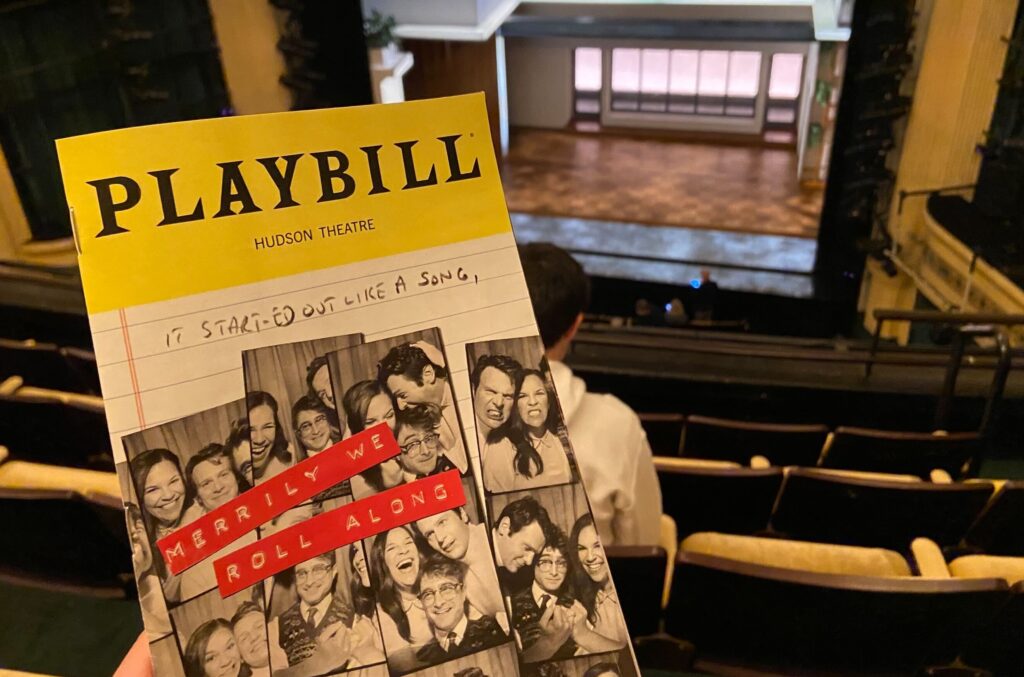
It was a matinee performance of Maria Friedman’s Merrily We Roll Along revival in October 2023.
Between April 2023 and October 2024, I had the privilege of seeing 20 Broadway shows in New York City. To this day, Merrily remains one of my most favourite musicals — and the most meaningful moment I’ve ever experienced in a theatre.
It’s worth noting that I’ve cried at the opening note of every single Broadway show I’ve seen. I’ve been moved to tears by a King Arthur satire, stories of Gutenberg’s printing press and flesh-eating plants in a flower shop. In the darkness of the theatre when the murmur of New York City streets die out, I tend to get overwhelmed with feelings of gratitude, incredulity, happiness and sadness.
But there was something different about the cascade of emotions I felt during Merrily.
I’ve had time to think since then and I’ve shed many tears listening to the soundtrack, reflecting on those hours in the Hudson.
What sticks with me the most about the show, I’ve decided, is not only its unconventional story, but the special place it holds in the world of theatre.
Let me back this up.
Merrily is a musical with a book by George Furth and music and lyrics by Stephen Sondheim. I like to describe Sondheim as someone who’s as artistically respected as Paul Thomas Anderson, but with Steven Spielberg-level fame. Sondheim is known for his intricate, deceptively difficult to sing lyrics and shows with overlapping themes. He wrote famous works like West Side Story, Sweeney Todd, Into the Woods and one of my personal favourites, Company.
In short, he’s brilliant.
The caveat with Merrily is that it flopped. When it originally ran on Broadway in 1981, audience members walked out, The New York Times described the show as in “shambles,” and it ran for a mere 16 performances. Numerous reiterations in the decades since the Broadway disaster also tanked.
It shouldn’t be all that surprising, because Merrily’s story already seems difficult to wrap your head around, let alone sit through a musical about it. It follows the tragic demise of a friendship between three writers over the span of 20 years. Franklin Shepard, Groff’s character, is at the centre, abandoning his friends, passions and music composing talents for big bucks found in film producing.
But the show is told in reverse chronological order, and it’s difficult to elicit a thoughtful, emotional response when the main character is so easily detestable from the start.
So it was unlikely, special and unforgettable when Maria Friedman’s 2013 West End revival of Merrily somehow left audiences in tears and received critical acclaim. She managed to make the main character somewhat likeable and tell the reverse chronological story in a way that made sense.
It was almost like Sondheim got to reclaim what was destined to fail. It meant even more when Friedman’s version ran off-Broadway in 2022, and moved to the Hudson in 2023, just two years after the famed composer died.
It’s probably the journalist in me, but I love when the art I consume has a story behind it, and there’s nothing more story-esque than Merrily’s journey.
There’s a common goal (make the show good), a central conflict (the show has a troubled history), a loveable hero (Friedman, multiple Laurence Olivier Award winning director), notable sidekicks (a brilliant, famous cast), and a legacy to uphold (Sondheim’s storied failure).
It’s typical for musicals to take a number of arduous years to come to fruition. Hamilton took Lin-Manuel Miranda about seven years to write, and Jonathan Larson wrote an entire show — Tick, Tick… BOOM! — about how hard it is to break into Broadway success. But Merrily’s story is unique and unlike any other show that I can think of.
Not only did Friedman’s revival rewrite a part of Sondheim’s history, but it introduced me to what is now one of my favourite musical stories. Helmed by Broadway darlings Groff, Lindsey Mendez and Daniel Radcliffe (yes, Harry Potter is a theatre kid, look it up!), I’ve never seen a story more tender, caring towards its artist characters, or simply as emotionally destroying.
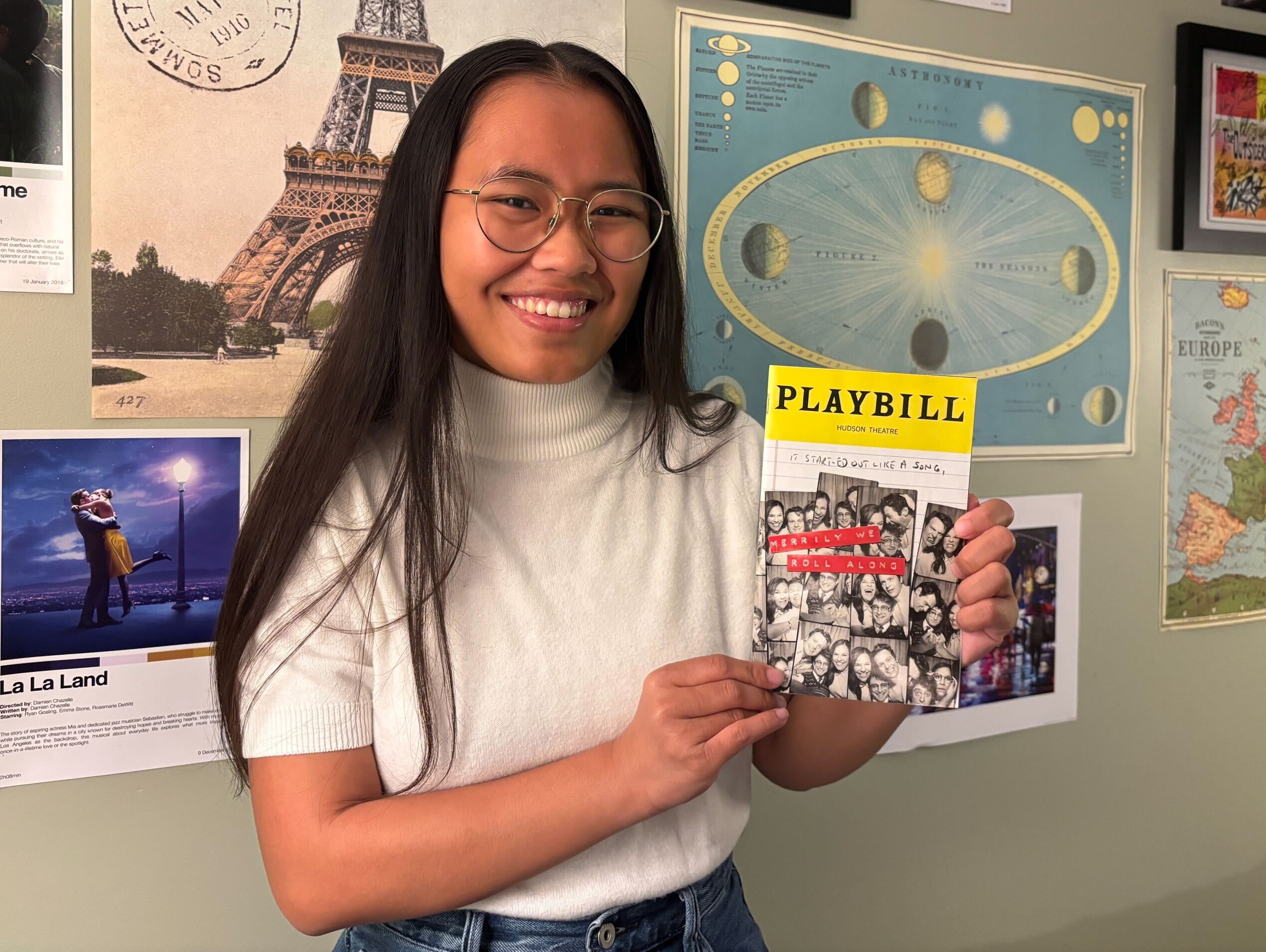
I left the Hudson with tears in my eyes, like everyone else at that matinee. I spent my entire trip’s food budget on a $200 donation to Broadway Cares for a second Playbill signed by the entire cast on my way out.
But as I stepped back into the rainy hellscape of Times Square, protecting my Playbill purchase under my raincoat, I couldn’t help but smile and shed a couple more tears of joy.
I knew that on that random October day, I had just witnessed a storied part of theatre history.