


Who’s afraid of the big bad performative male?
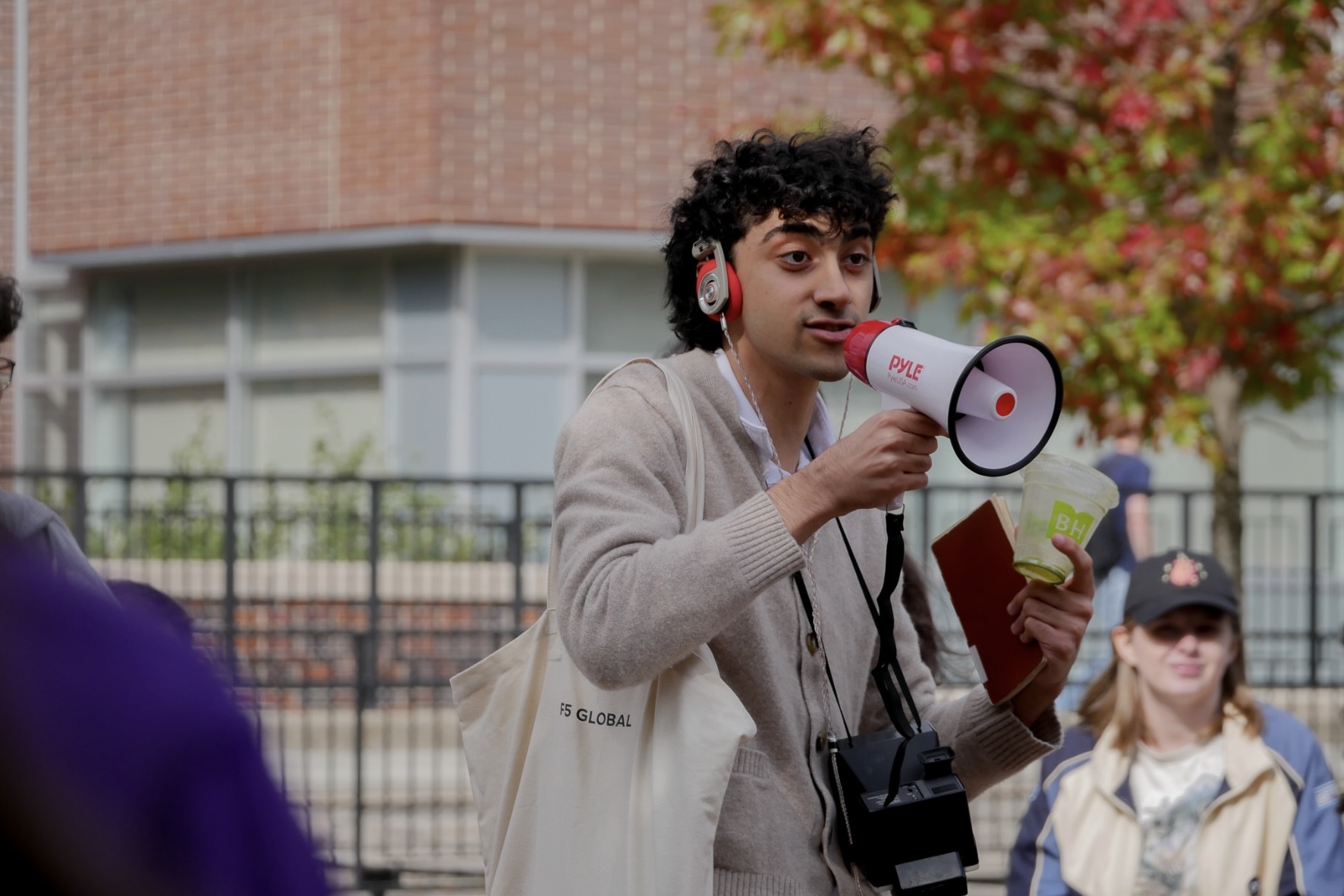
Carleton University students enthusiastically attended a student-led performative male contest that saw self-identifying performative males compete against one another in early October. Contestants held matcha, brought physical vinyl records, sported baggy layers and softly coloured knit sweaters, touting feminist literature and labubus attached to tote bags.
Such competitions have been happening around the world since this summer. The concept of a performative male has spurred mood boards, outfit inspiration and “starter packs,” which show the necessary inventory of the proper performative male (usually an iced matcha latte, a grandpa sweater, a Clairo vinyl, a labubu and a Sylvia Plath book).
But where exactly did the concept come from?
A performative male is an internet meme of an emotionally sensitive man who has all of the above esthetic items.
But ultimately, the emphasis is on the “performative” in “performative male:” a theatrical critique of an archetype of man who only participates in these esthetics, opinions and interests to appeal to women.
The trend is fueled by comedy and the truth that, sometimes, when we want someone to like us, we get a little more interested in things they might like than necessary.
But the performative male checklist on the internet has become excessive, as it delegitimizes genuine self-expression and interest in feminine hobbies or topics.

Performative male is not the first term coined regarding dishonest attempts to appeal to women.
If you flashback to 2020, “simp” was a definition for something very similar. Eventually, “simp” took on a crueler tone when men were labeled one for simply being nice to women.
And yet, something about the performative male seems lighter than its predecessor.
The new label digs deeper. Sure, he’s performing, but in order to perform he actually has to study. He buys the drink, the tote, the book and he has an actual favourite song off of Charm, even if it does just happen to be the popular “Juna.”
And maybe — just maybe — it’s because the cultural entrance or exposure of the performative male isn’t all that bad.
For one, it’s certainly caused a culture shift in how men talk about women’s interests.
Two years ago for Fashion Journal, writer Maddy McKeown asked if there was a “gender hobby gap” after noticing that her and her female peers’ interests weren’t taken as seriously as hobbies preferred by their male counterparts.
In the same year, the University of Zurich published a study finding that men are increasingly leaving occupations dominated by women.
Many conversations through my teenage years and into university with my female best friends involved frustrations over not being taken seriously by our own male friends for our interests.

The problem of feminine interests being trivialized or dumbed down is not a new one, but strangely, the social media fascination with the performative male problem helped drive actual attention to what society considers feminine hobbies, interests and literature.
Repeated exposure is real. If you pick something up satirically and commit to the bit enough to learn about it, you might end up subconsciously liking it. Enough teen boys trying to go viral on TikTok for having the funniest performative male impressions might actually open up the books they posed with.
One ironic result of the trend is it’s caused men to face as much scrutiny about if they actually like a niche indie artist “for the girls,” the same way women have notoriously faced scrutiny about if they actually like male-dominated interests like Star Wars or certain video games.
This isn’t to say there aren’t truly performative males lurking in the weeds who will play the long game just to play your heartstrings. But this can happen with literally anyone and any interests (It wasn’t long ago we were all unpacking the pick-me girl).
And if you’re still petty that your ex stole your underground music taste, I hear you and I see you.
The problem itself is brought on by the mockery of the trend, and it poses as much harm to men as it does to women.
Calling a teenage boy a “simp” five years ago could be enough to dissuade him from being kind to his female classmates. Calling someone performative for reading a book or listening to a new artist might have the same effect.
The TikToks and reels satirizing these interests, attacking men and accusing them of “faking it” will bring us closer back to where we started: devaluing men who participate in the same settings and hobbies as women.
The influence of toxic masculinity already shamed men into what they can and cannot like.
Shows like Emmy Award-sweeping Adolescence highlight how toxicity can detrimentally affect teenage boys and heavily distort their understanding of how to perceive women and themselves.
Cultural awareness of misogyny and broader issues within the manosphere is at an all-time high.
Vogue is writing titles like “Is Having A Boyfriend Embarrassing Now?” about how being single as a woman is a bragging point. The movement of South Korean women swearing off men due to their participation in political systems oppressing women has gone overseas and reached America.
The political gender divide is real, and it’s here. It manifests in surreal situations like American men complaining that women won’t date them because they voted for Donald Trump, oblivious to the fact that for many women, politics and dating cannot be separated.
So is now really the time to mock those who have taken the time to engage in interests that have been criticized within women’s spaces for so long?
The winner of Carleton’s unofficial performative male contest said he was just “being his true self.”
Maybe authenticity is a marker of the real non-performative performative male.
Featured graphic by Alisha Velji/the Charlatan