
Hamilton Tiger-Cats CFL player Keaton Bruggeling has been playing sports since he could walk, but he never imagined he’d be at the Olympics racing for Team Canada.
While some athletes might walk away after Team Canada’s disappointing bobsleigh showing in Milano-Cortina, Bruggeling is pushing forward with his heart set on qualifying for the 2030 Winter Olympics.
Five months out of the year, Bruggeling is a wide receiver for the Tiger-Cats in the CFL.
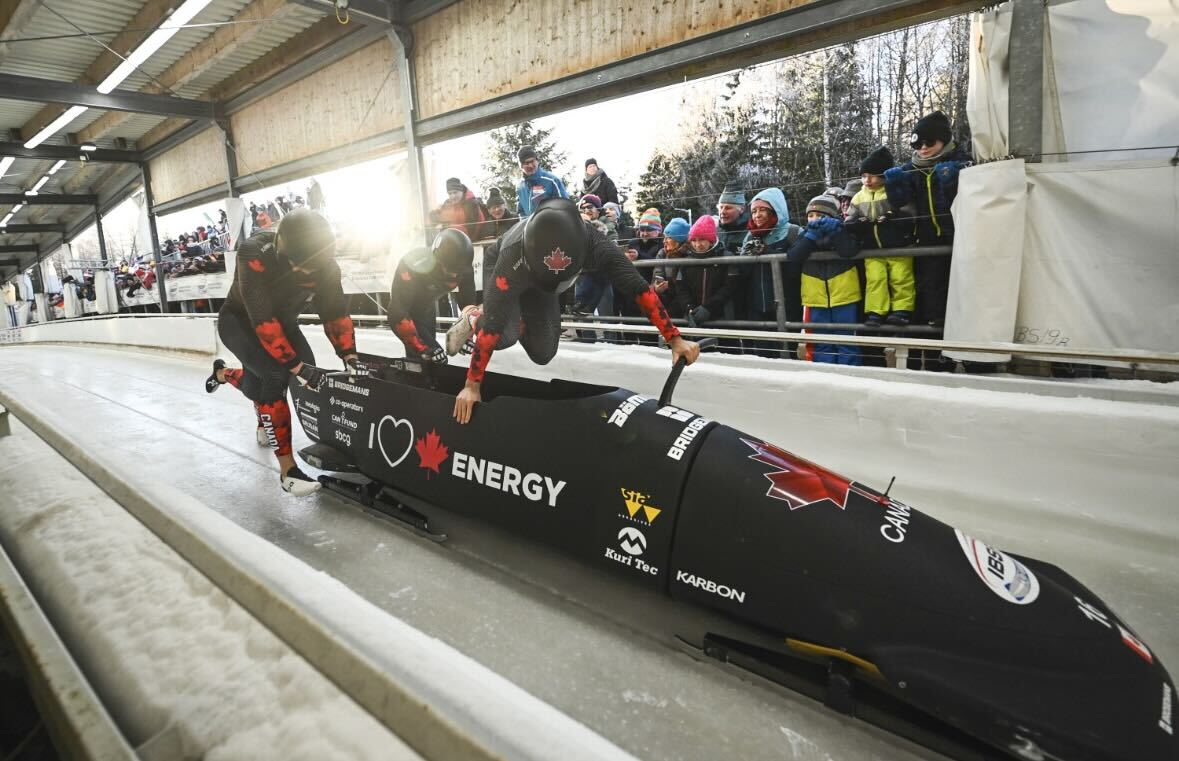
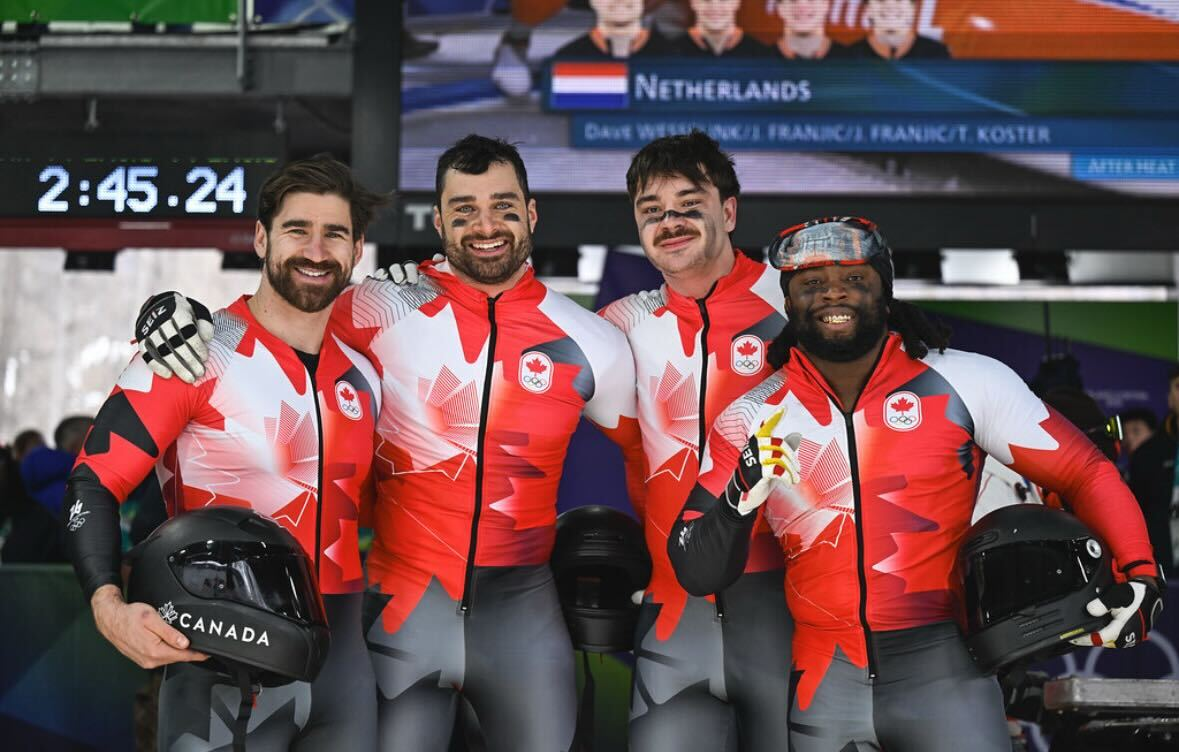
For another four months, he’s the brakeman for Canada’s skeleton bobsleigh team. Bruggeling’s Olympic debut at Milano-Cortina placed him 14th in the four-man event alongside teammates Taylor Austin, Mike Evelyn O’Higgins and Shaq Murray-Lawrence.
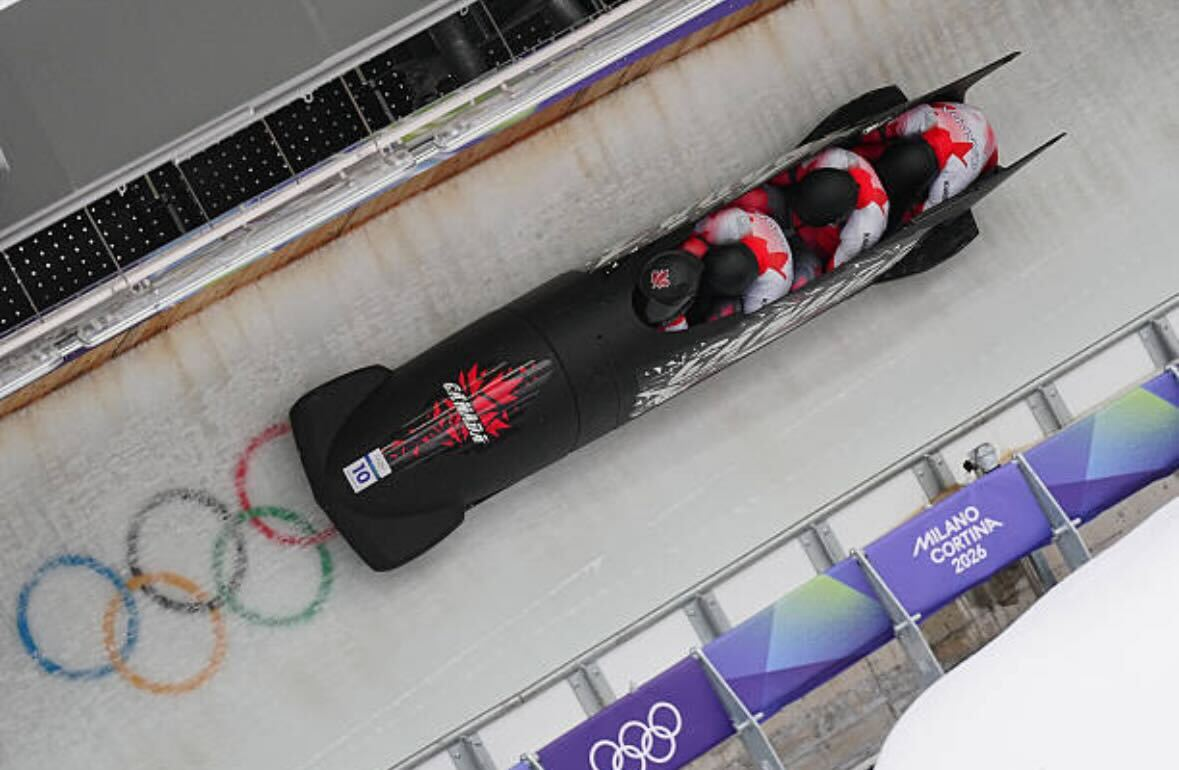
This marks the first time in 24 years Team Canada missed the Olympic podium in bobsleigh. While disappointing, the loss is only motivation for Bruggeling, he said.
“I did it. I did my very best, so I can sleep at night,” Bruggeling said. “It adds a lot of fuel to the fire for 2030. Cause now I’m just a little mad. I’m just a little mad that we didn’t get where we wanted to be and do what we thought we could do.”
An Olympic experience to remember
While Bruggeling returned to Canada without a medal, the experience in Italy is one he’ll never forget. Opening ceremonies, cheering crowds, delicious Italian foods and endless support made the experience memorable, he recounted.
“It was absolutely stunning walking out in the streets of Cortina where they walked so many years ago. The same path,” Bruggeling said. “There were so many fans, packed streets, and balconies full of people. Everyone cheered for Canada — I feel like we’re a country people can cheer for. It was just a fantastic experience.”
While it was easy to be caught in the excitement of the Olympics, Bruggeling said he had to remember to put the blinders on and drown out the noise.
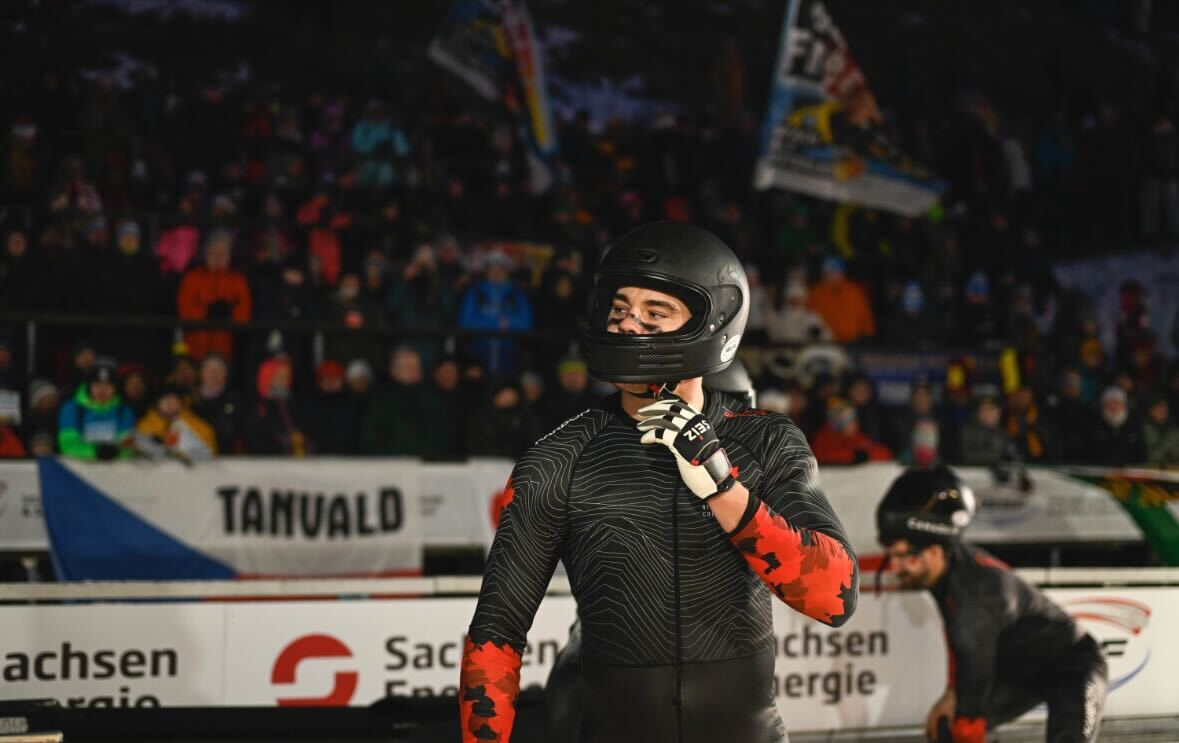
“You got to focus on your job, and you hit the tunnel vision moment. It’s just you and your teammates that exist in that world, in that moment,” he said.
He said his moment on the Olympic stage taught him to “be resilient and take the sport one run at a time.”
“We didn’t get the results we were looking for. It was slowly slipping away from us,” he said. “We’ve got to stay calm as a team and you got to execute what you can do on every breath.”
Teamwork: A crucial piece
In bobsleigh, teamwork is critical. Brakeman or pilot, everyone has to work together to ensure the run goes smoothly.
Shaq Murray-Lawrence, a fellow Sled 2 crewman, said he appreciates Bruggeling’s “dog mentality” that he brings to the team.
“Anytime you’ve got a dog such as Keaton, you know you’re going to do some good things,” Murray-Lawrence said. “It’s just a mentality. It’s being able to walk the walk, talk the talk when you step into the room. It’s having that attitude that ‘I’m the best in the world, the best at what I do, and I’m here to show it.’”
Mark Zanette, Sled 1 brakeman on Canada’s four-man bobsleigh team, enjoys the light-heartedness that Bruggeling brings by being a “goofy guy” and cracking jokes.
“There’s a lot of pressure in the spot for sure. He can be a goofy guy at times and crack jokes, and it makes it light. He is a phenomenal athlete and extremely gifted. To be able to have that side of him is really nice,” he said.
From football to bobsleigh
An accomplished athlete both on and off the ice, Bruggeling was a standout wide receiver for Carleton University’s varsity football team. He was drafted to play with the Ottawa Redblacks in 2022 and signed with the Hamilton Tiger-Cats in 2025.
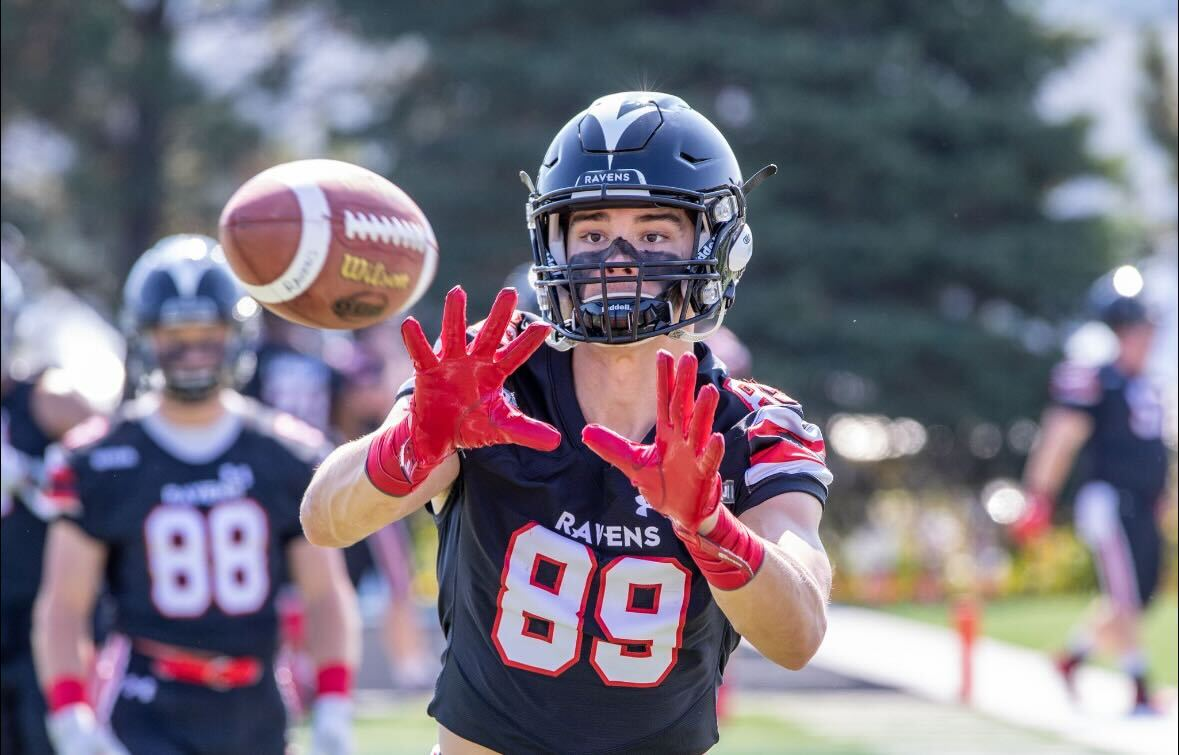
Bruggeling was preparing for the CFL draft when he first became interested in bobsleigh. While training at CAN-AM strength and conditioning gym, he was approached by Olympian Patrick Norton, who believed Bruggeling would excel in bobsleigh due to his explosiveness as an athlete.
“I got strung out there in Whistler, and after a couple times [down the track] it was exhilarating. It’s like skydiving,” Bruggeling said. “There are no seat belts or safety harnesses in the sled. You just hold on for dear life.”
Bruggeling notes that his first race was the most memorable. He recalls having no idea how to push a sled and barely knowing how to put on spikes.
“I remember the first race when they gave me a Team Canada suit, I didn’t take it off for four hours. I just walked around in my little speed suit cause I was so excited to have a Canadian flag on my back for the first time,” he said.
Bruggeling says every sport he played led him up to his Olympic moment. For him, football has been “the ultimate shape maker,” building his teamwork mindset and strong work ethic needed for bobsleigh.
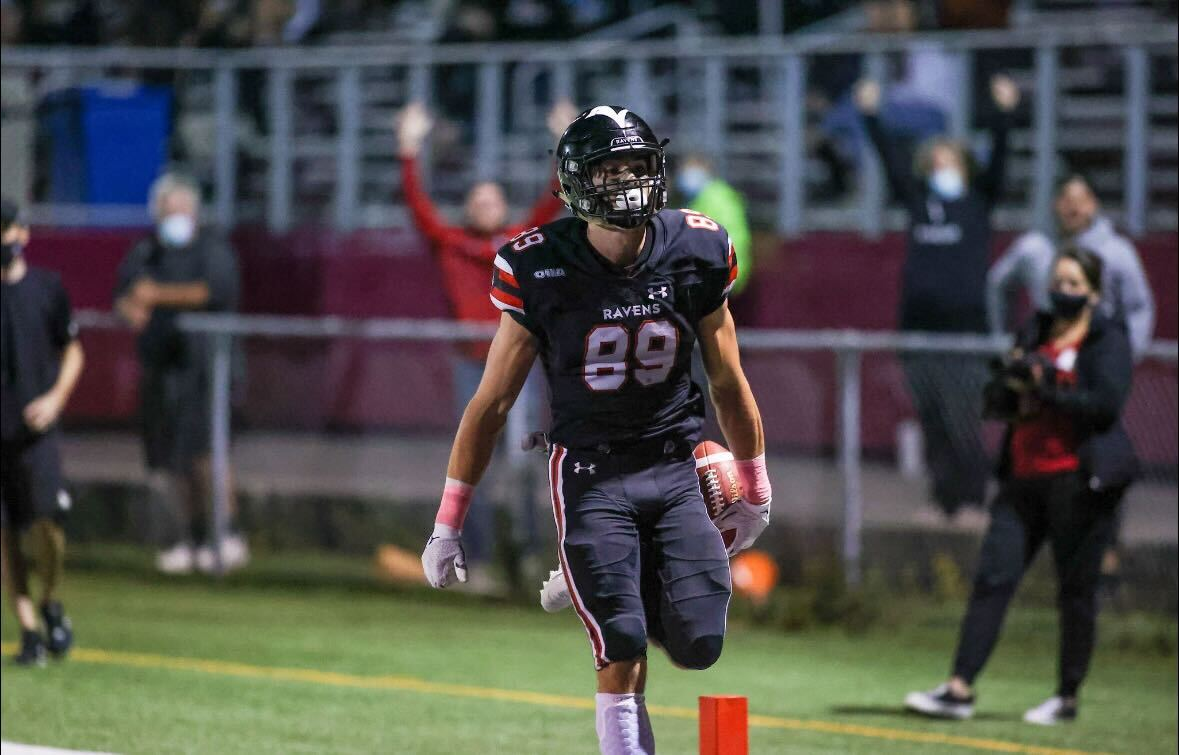
Naaman Roosevelt, receiver coach for the Tiger-Cats, says Bruggeling has always been an athlete with character.
“That’s a big thing with an athlete like that, is just being coachable,” Roosevelt said.
“Being able to hear something one time and applying it in the field or in a bobsleigh. He has the ability to learn, process it and go out there and do it.”
Roosevelt said Bruggeling is willing to put his body on the line to give it all for the team.
“That’s the one thing about Keaton. He’s going to get the extra work in. He’s not going to just do the normal stuff. He’s going to go above and beyond.”
“He’s one of those guys that wants to do everything for his teammates,” Roosevelt said.
Community response to lack of funding: “It took a village for me to get here.”
Community support is one of the major reasons why Bruggeling was able to race in the Olympics.
A lack of funding in the sport is a major barrier for Canadian bobsleigh hopefuls — athletes are required to pay $25,000 to be part of Canada’s skeleton bobsleigh team before even qualifying for the Olympics.
“If you can’t afford it, you can’t play it,” Bruggeling said. “That’s just a simple issue for 90 per cent of people who want to bobsleigh.”
Bruggeling encountered some of these struggles himself, starting a GoFundMe page to help pay for the burden of team fees.
“The support I received was absolutely outstanding,” he said. “I got friends with mortgages and kids giving me twenty bucks, and it all adds up. It’s an absolute immense sense of gratitude to be able to have that kind of community behind me.”
Role models and family: “I couldn’t have done it alone.”
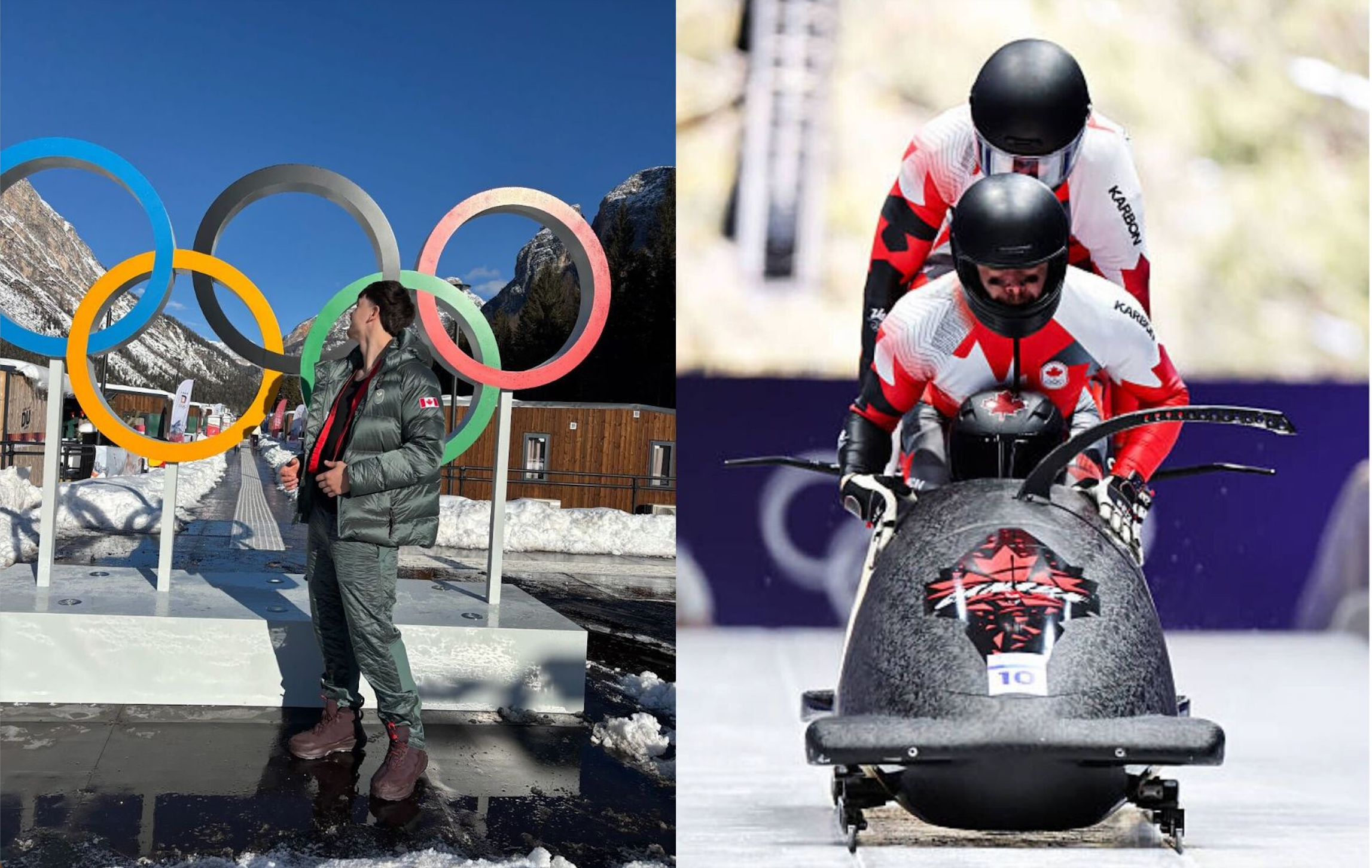
Bruggeling credits his athletic career and Olympic achievements to his parents. His father was a major role model, providing him with every opportunity to pursue sports, he said.
“I was six years old doing hockey school. After that, I was playing Timbits soccer. Every door that I’ve had opened has been opened by my parents,” Bruggeling said.
Gilbert Bruggeling, Keaton’s father, added that his son was a dominant figure in sports from a young age.
“He was always on the cutting edge of wanting to be competitive,” Gilbert said.“He dominated from a young age when he played hockey. His leadership is passion. He’s always motivating his teammates. We’ve always witnessed that.”
Since Keaton has competed in the Olympics, Gilbert said he has never been prouder to be Canadian.
“It’s very cool to say my son’s an Olympian, I’ve said that probably 50 times while I was in Italy,” Gilbert said. “I’ve never worn my Canadian gear so proudly and he made me do that.”
Gilbert said he believes Keaton will be successful in the next winter Olympics.
“He didn’t get what he wanted this time around and he’s looking at the next opportunity. I think he’s fired up for the next opportunity.Whatever we can do to help him, he knows we’re going to have his back,” Gilbert said
Bruggeling says he plans to take every step he can to work towards racing in the 2030 Winter Olympics.
“Run by run, play by play, rep by rep. Every time you do something, it’s an opportunity to do it better. 2030 in France, we’re going to go to the French Alps, and we’re going to do our best there once again.”
Featured image provided by Keaton Bruggeling