
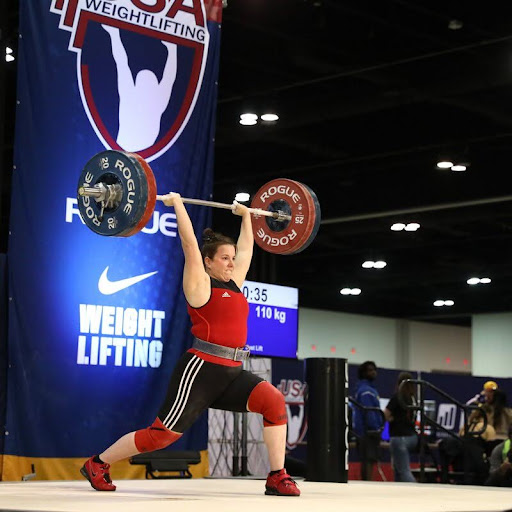
After more than a decade of Olympic weightlifting competitions, Julia Ryan has stepped away from the barbells and into the office.
Ryan became the president of the Ontario Weightlifting Association in September after retiring from competition.
Up against challenges such as changes to qualification processes and international doping scandals, she says she wants to “contribute to seeing continued growth and momentum.”
“I was also ready to retire from high-level competition after having done it for over a decade,” Ryan said. “I was ready to use my energy and commitment to the sport and other skills that I have to contribute in a different way.”
While Ryan describes the transition from athlete to admin as enjoyable, it has also given her more time to appreciate the vital role volunteers play in the sport.
“I knew athletes made a lot of sacrifices, I knew coaches made a lot of sacrifices, but I more deeply appreciate now just how much work goes on behind the scenes to run and regulate the sport and keep it growing in Ontario,” Ryan said.
“A lot of sport runs on volunteerism and the passion that everybody has for sport, which makes me feel like we can do this.”
Weightlifting is an individual sport, but Ryan says that community is a big part of what keeps athletes going.
“Community is what really gives you strength, day in and day out,” she said. “There’s a lot of ups and downs, but you still show up and your teammates know exactly what you’re going through.”
Ryan says one of the biggest challenges she’s faced has been with athletes stepping up from the provincial to national level.
“I’m kind of realizing I’m a go-between different levels of sport in the country, I didn’t necessarily appreciate how complex this would be.”
Athletes qualify for national competitions based on their lifts, but international competitions use a national federation to select athletes from these qualifications — outside of provincial control.
Ryan noted that athletes entering the international circuit for the first time often have challenges breaking into competition at that level.
Along with weightlifting involvement, Ryan is a clinical director at a psychology clinic, Julia Ryan Psychology. She says that her career and sport have been intertwined for a long time.
“I became really interested in how sports can have a positive impact on youth mental health resilience,” she said. “Sports have always been a really important part of my mental health and work life balance. It’s good to have something that’s not just school or my career to focus on.”
Ryan also acknowledged that her career helps put her in the shoes of the athletes that she works with.
When asked what her favourite lift is, Ryan said her, “best results were from the clean and jerk, and I have to say, there’s something about the heaviest weight feeling like it’s floating in the air when you nail it right.”
Even after retiring, Ryan said weightlifting remains a great passion, one she hopes to instill in athletes in her role as president.
Featured image provided by Julia Ryan
This article, and all of the Charlatan’s work, is brought to you by an independent student newspaper dedicated to informing, uplifting and entertaining the Carleton University community. We are a levy-funded organization which plays a role in the broader, vibrant student culture on campus. By reading this article, you are supporting our efforts.