
Sock ‘n’ Buskin’s website describes it as “Hamlet from a worm’s eye view.”
It calls into question how innocent people get caught in greater conflicts, and its two titular characters effortlessly blend tragedy and comedy as they do their very best to understand their world.
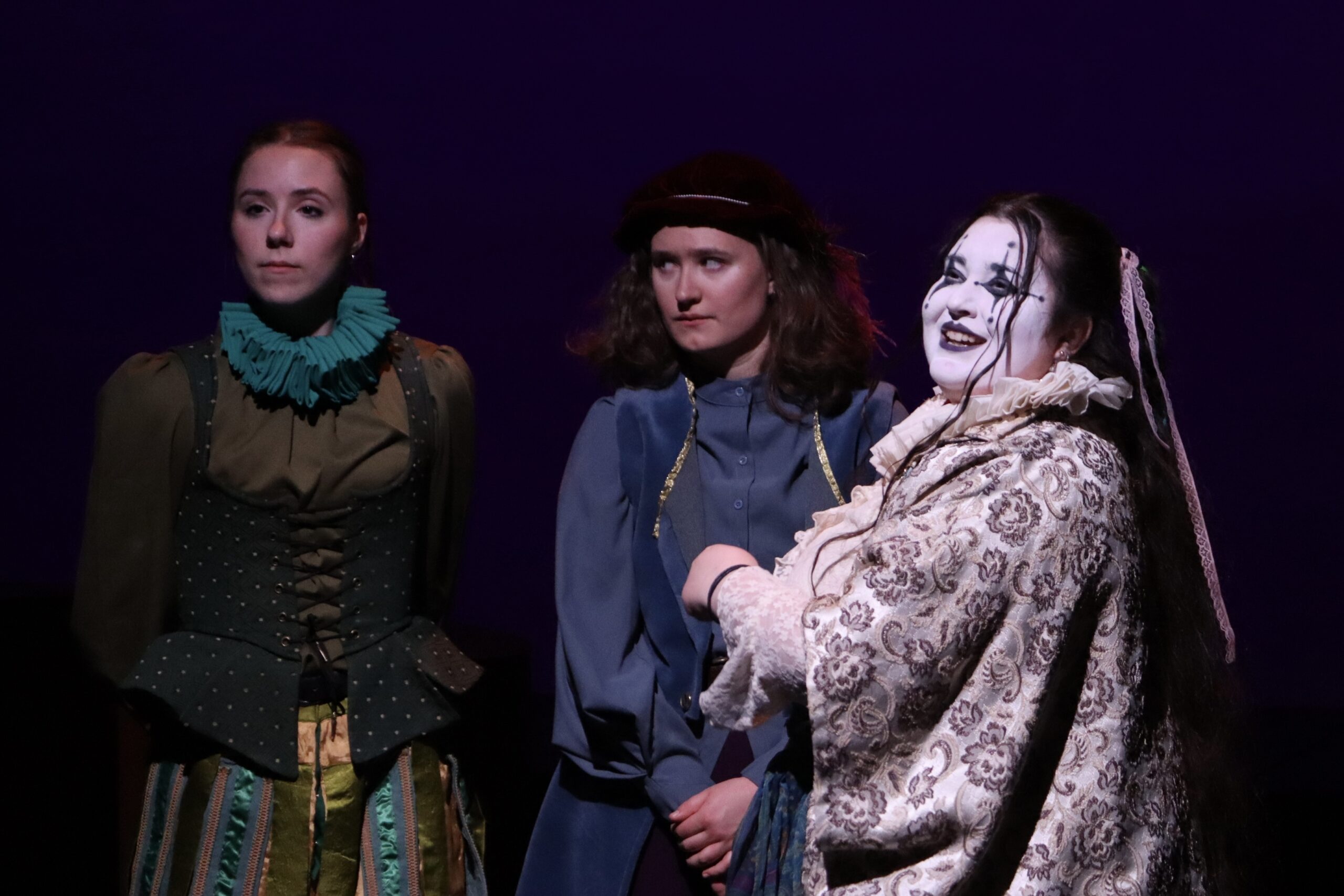
Thursday marked the opening night of Sock ‘n’ Buskin Theatre Company’s second show of their 82nd season, Tom Stoppard’s Rosencrantz and Guildenstern are dead, which ran until Jan. 25 at the Kailash Mital Theatre. Directed by Naomi Badour*, the plot entertains the perspectives of its titular characters: two of Hamlet’s childhood friends sidelined in the original Shakespearean classic.
Emma Parrell and Anneli Sheridan play Rosencrantz and Guildenstern, respectively. In Stoppard’s version, the two are transported into the events of Hamlet and Hamlet’s uncle, King Claudius (Owen McGowan), tasks them with getting to the bottom of Hamlet’s erratic behaviour.
In the original Hamlet, we know why.
The prince is seeing ghosts, discovering the plot behind his father’s murder and feigning madness to avoid suspicion. Unlike a Shakespeare-knowing audience provided with a Playbill of background context, Rosencrantz and Guildenstern never find out the truth and must search for some other culprit for the prince’s ailment.
Rosencrantz is likeably unaware, often forgetting important details when they matter most, like what she was doing earlier that day and if she’s Rosencrantz or Guildenstern. But despite her shortfalls, she’s a passionate and enthusiastic character that Parrell portrays seamlessly.
Guildenstern is not as entertaining to watch as the bumbling Rosencrantz in the original play — but Sheridan’s performance as the more reasonable, slightly more clever Guildenstern is just as effective.
Sheridan and Parrell never missed a beat, letting their inquisitive expressions and reliable mannerisms do the talking in the rare moments they aren’t. The pair’s dynamic was the beating heart of the show, relying on non-stop dialogue for lengthy scenes. The two showed no signs of missing lines or neglecting any aspects of their characters’ plentiful quirks, from humour to carefully positioned line delivery.
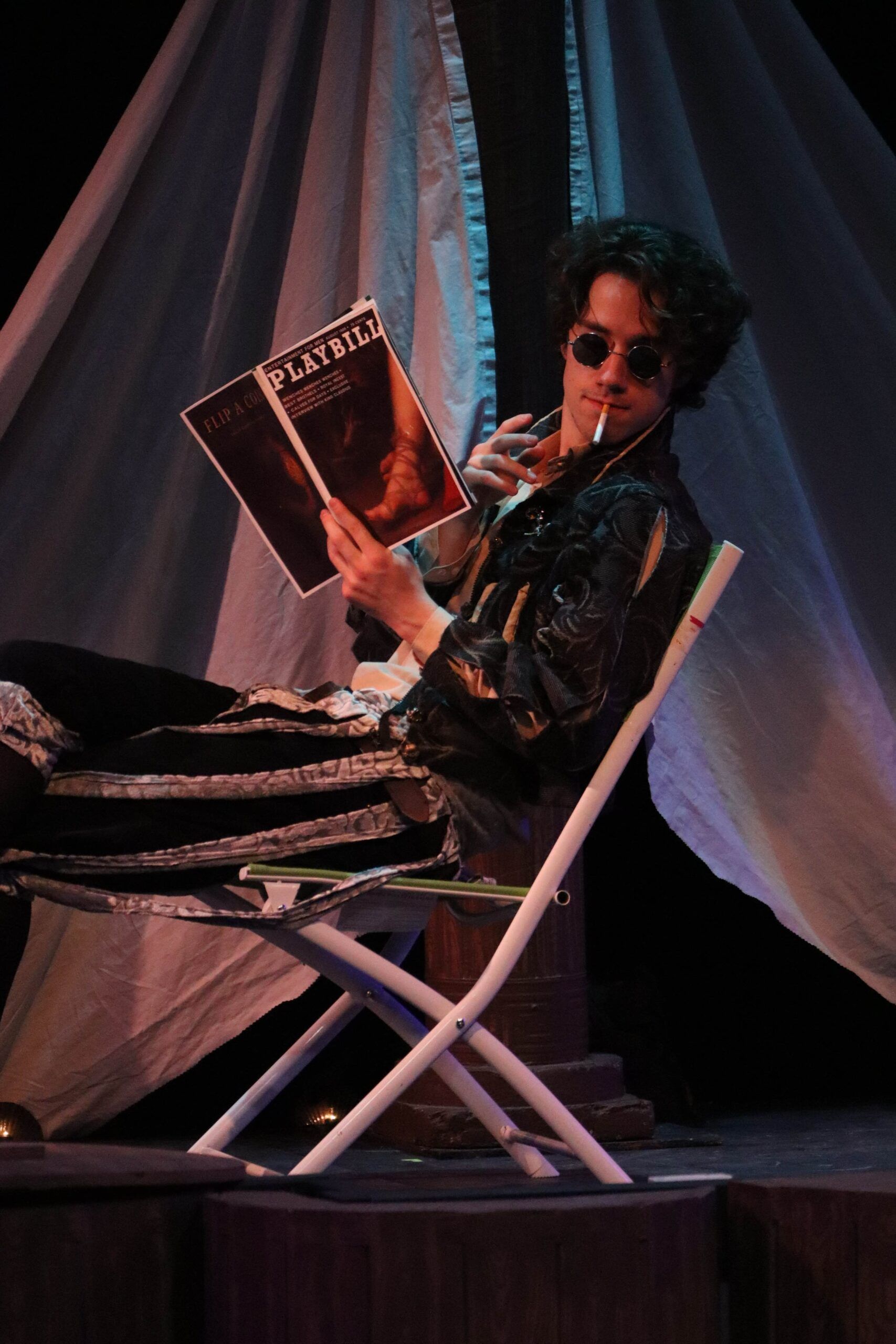
Archer Malloch’s Hamlet didn’t have as much stage time as Rosencrantz and Guildenstern, but commanded presence with every appearance. From getting a little too close to a skull to lounging on a ship with a cigarette and a magazine, Malloch played the prince with the perfect amount of bold confidence and cunning.
The Players — a group of performers hired by Hamlet to perform a particular play provoking his uncle — had a pivotal part in the story, often directly contributing to Rosencrantz and Guildenstern’s debates on free will and predestination.
Julia “Jules” Graham was the lead Player, bossing around the rest and tying together the story’s actions.
Alina Haddadd excelled between brief scenes as Hamlet’s love interest, Ophelia, and Alfred of the players, with shy and meek mannerisms garnering her notice and sympathy from Rosencrantz and Guildenstern.
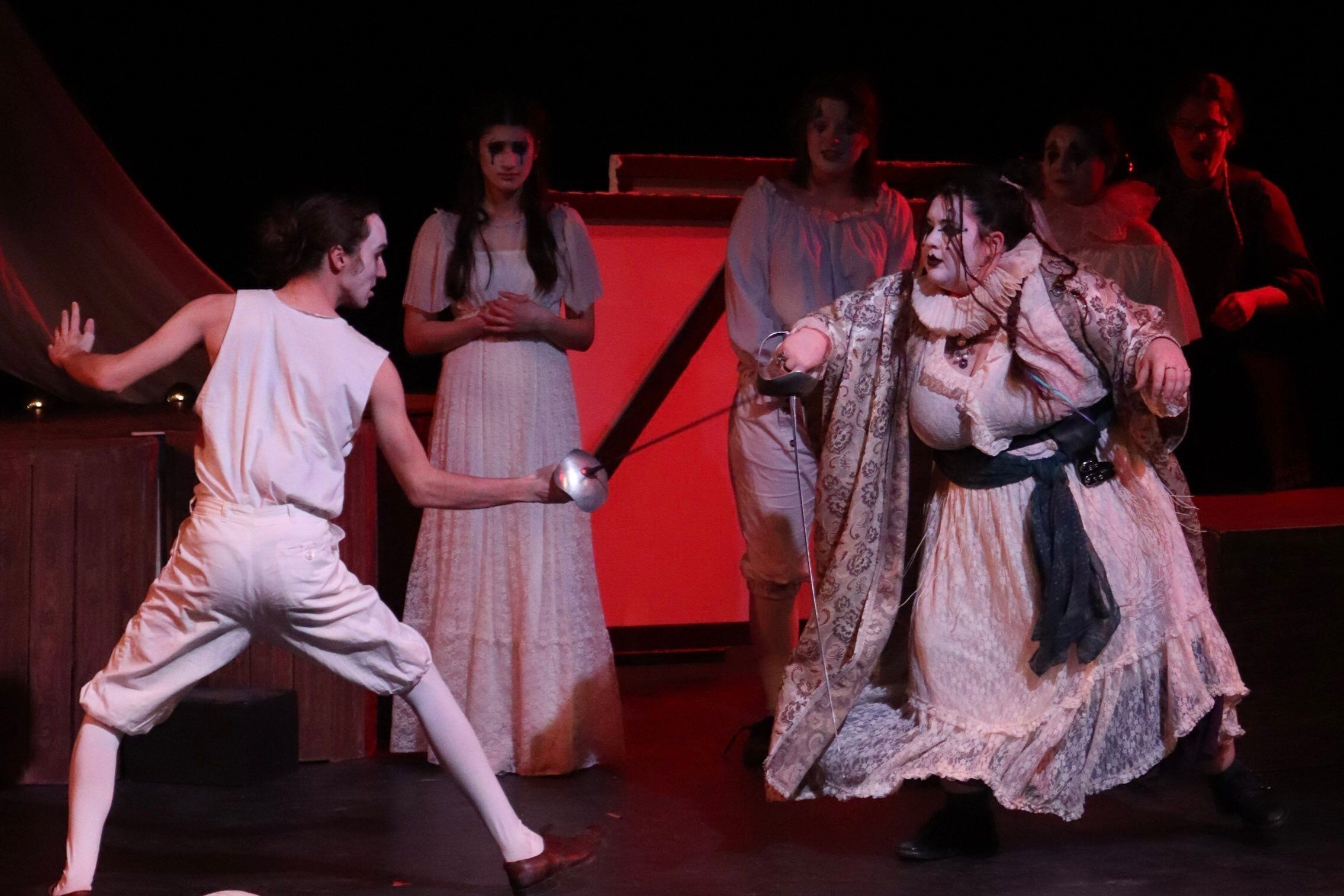
The rest of the players (McGowan, Sam Tinajero-Alvarado,* Michael Hart, Perla Zarif, Kim Kile and Danny Gordon-Boyd) played dual roles by seamlessly sneaking off for quick changes between the bright colours of Hamlet’s court and their humble white.
Their acting and Owen Feather’s glamorous lighting design made the distinction very clear. Fourth wall breaks from the players, Rosencrantz and Guildenstern steered the show’s comedy on course along with modern references, clever innuendos and fast-paced dialogue (or, to be specific to some scenes: rhetoric).
Breanne Williams and Mikaela Cotter’s humble set design with white sheets as decoration avoided distractions beyond the flamboyant characters, but white boards to the sides of the stage accommodated for shadow-puppet shows.
Onstage, the wardrobe reflected the characters’ stark contrast.
Costume designers Audrey Van Delst and Glenys Marshall decked Rosencrantz and Guildenstern out in vibrant garbs, Hamlet in a swaggish purple and The Players in white and black face paint adorned in unique white outfits, each suited for their personality.
Ultimately, Sock ‘n’ Buskin took on a tall order with vigour and success in Rosencrantz and Guildenstern are dead. The play demanded entertainment and comedy at every turn, blended with questions around death and fate that haunted the main characters.
*Naomi Badour has previously contributed to the Charlatan.
*Sam Tinajero-Alvarado was the Charlatan’s Social Media Manager in the 2024-2025 publishing year.
Featured image by Megan Brooks/Sock ‘n’ Buskin Theatre Company
This article, and all of the Charlatan’s work, is brought to you by an independent student newspaper dedicated to informing, uplifting and entertaining the Carleton University community. We are a levy-funded organization which plays a role in the broader, vibrant student culture on campus. By reading this article, you are supporting our efforts.