
Ottawa’s Halloween spirit is palpable: Ghost and witch decorations hang from porches, costume stores are increasingly busy and candy fills store shelves.
For horror movie fans like Carleton University sociology professor Laura Hall, there’s no better time to sit down and get spooked. But Hall is also shedding light on the horror genre as a tool for oppression and resistance.
Hall’s new book Bloodied Bodies, Bloody Landscapes: Settler Colonialism in Horror, unpacks the effects of colonialism and Indigenous resistance in the horror genre.
Hall argues many classic horror tropes are based on racist stereotypes of Indigenous peoples, stoking fear instead of inspiring understanding and collaboration.
The Charlatan met with Hall to discuss their book and hopes to see for the future of the horror industry.
The Charlatan (TC): What drew your attention to the horror genre?
Laura Hall (LH): It started when I was younger and watched movies like Pet Sematary that had tropes and stereotypes about Indigenous Peoples, like the “Indian burial ground.”
I was also really interested in how these movies about suburbia like Nightmare on Elm Street or Night of the Demons disappear Indigenous peoples. I was interested in how these movies focused on white families being in peril and Indigenous families just being erased.
TC: What was your book writing process and what inspired it?
LH: I started writing it when The Descent came out. I was really interested in the fact that I was watching a movie about cannibals in the Cherokee homelands that came out so late into the 2000s.
I started reading horror theory and found the academic side was also excluding Indigenous people and de-colonial analysis.
One example is the way the American professor Carol Clover talks about The Texas Chainsaw Massacre being about class — while burying contemporary Indigenous people in the script. Subtexually, there are cannibal monsters with feathers and animal bones. These movies were burying Indigenous peoples in subtext.
TC: How do you think these stereotypes affect the viewer, Indigenous and non-Indigenous?
LH: For Indigenous Peoples, seeing the erasure of Indigenous Peoples is a tool of harm.
For non-Indigenous people, seeing Indigenous erasure or the stereotyping of Indigenous cultures feeds the daily ongoing reproduction of the settler colonial project. It’s a project of destruction of land and human lives.
It’s not good for anyone. Ongoing colonialism is something we need to dismantle.
TC: What are tropes that come to mind related to stereotyping Indigenous people in the horror genre?
LH: Tropes with the idea of land. The “Indian burial ground” trope is not just about the idea that dead “Indians” haunt colonial society, it’s about the idea that Indigenous Peoples didn’t take care of the land.
The way Pet Sematary unfolds is even worse when you really dig into it. It’s about the idea that the Mi’kmaq did bad medicine that toxified the land and called an entity that haunts the “white settler family.”
There’s also the idea of the symbolic Indigenous object or gift. It could be a wicker basket or a Mayan knife. These things tell the viewer that something spooky or evil is about to happen. I think this has an effect in terms of both relegating Indigenous sacred objects — which are real — to stereotypes, objects and symbols.
TC: Can you think of some horror movies that better represent Indigenous Peoples?
LH: Slash/Back is my favourite. It shows the land not as a source of horror, but a source of protection. These northern Indigenous youth are saved by their land-based skills and their culture — one that’s about cooperation and not competition.
Whereas The Thing, which this movie is an homage to, shows you this group of men in an outpost turning on and being unable to trust each other. Slash/Back shows you what happens when Indigenous youth combine their efforts and resist the bad.
TC: Do you feel the horror industry has gotten better over time in terms of the mistreatment of Indigenous Peoples, or has it become more subtle and codified when it comes to stereotyping?
LH: I don’t really think it’s become better or worse. I think it’s stayed very consistent.
There are great things that Indigenous actors did during the silent era, and there are great things that Indigenous actors are doing now. I think more of it as an analysis of a systemic problem than a time problem.
This interview has been edited for length and clarity.
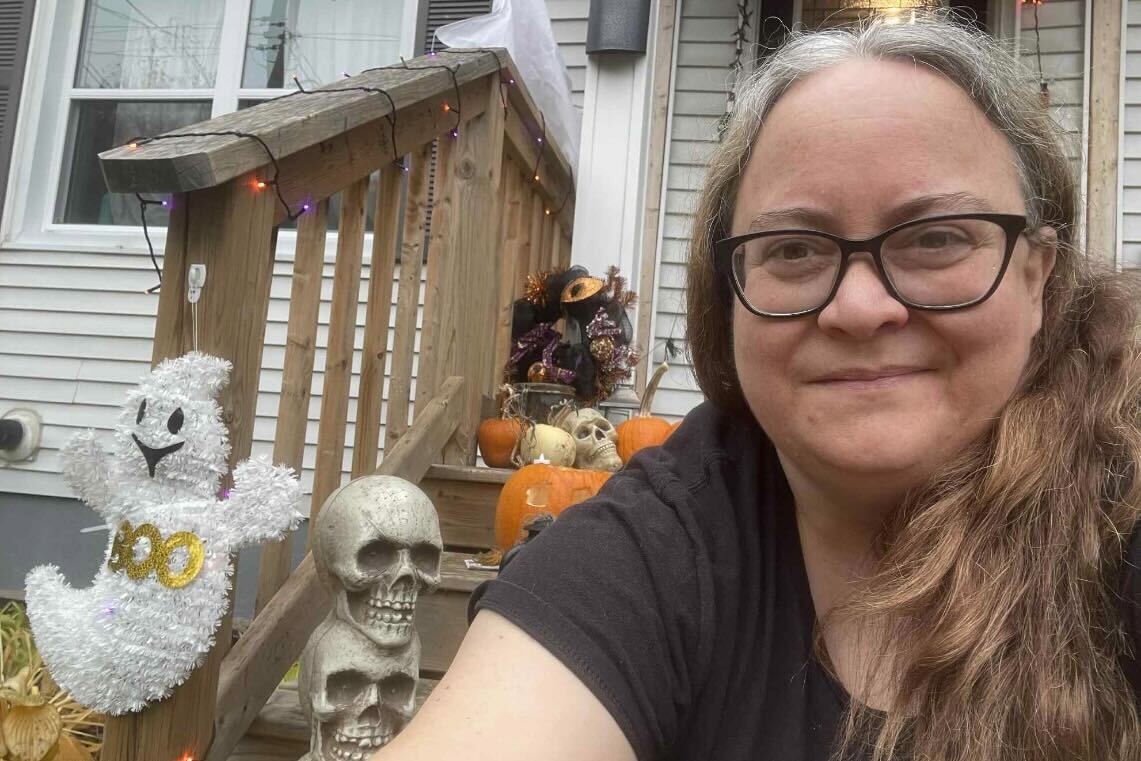
Featured image by Laura Hall