
The journey of a thousand miles began with a single look.
Heather Anderson, interim director at the Carleton University Art Gallery (CUAG), was captivated by Sukaina Kubba’s work after discovering it online.
Anderson made the trip down to Toronto to a small café where Kubba showed an art exhibit, a visit that inspired Anderson to create the Material Journeys showcase at CUAG.
As part of the showcase, CUAG is hosting multidisciplinary, visual and interdisciplinary artists until May 3. Each textile, sculpture, film and painting uses different materials that encourage onlookers to embrace the unknown and find a sense of belonging, according to the exhibit’s excerpt. The showcase is dialogically curated, a method that encourages viewers to self-reflect.
“I was really captivated by the way [Kubba was] translating archival material,” Anderson said.
Kubba is a Toronto-based Iraqi artist whose work stems from cultural research on textile archives.
With a mix of modern technologies and drawing techniques, Kubba creates delicate patterns inspired by North African and Middle Eastern archival rugs. When using a 3D printed filament pen, Kubba goes back and forth reinterpreting patterns in sections and by hand, creating a colourful and textured fine line drawing.
“Each piece has a different process,” Anderson said.
Some of Kubba’s other 3D printed works seen in the exhibit, like Afterfeather I, involved a machine to create lines that Anderson describes as “freeform” and “looser.”
Kubba lived in Baghdad, London, Abu Dhabi, Montreal, Dubai and Glasgow before settling in Toronto, according to her online portfolio, but a piece of home always followed.
Her family brought an Iraqi rug to every new home.
“They’d unroll it, creating this sense of home, and so there’s this literal kind of material journey,” Anderson said.
Kubba often uses industrial materials like everyday packaging — or as Anderson describes them, “materials that travel.”
Her textiles are hoisted in the high gallery and on the walls of the main gallery, accompanied by sculptures, film and paintings crafted by her peers.
For the first time, CUAG has included curator reflections on each artist’s didactic placards, labels that inform the viewer about the artist and their work.
Material Journeys curator Katherine Desplanque created these questions, designing each as a discussion prompt for viewers to think deeper about each work.
“I just really kind of absorbed [the artist’s] words about their own work and let myself steep,” she said.

Marisa Gallemit is one of the artists whose work is on display.
Gallemit has been a professional visual artist since 2009 and studied film at Carleton and the New York Film Academy.
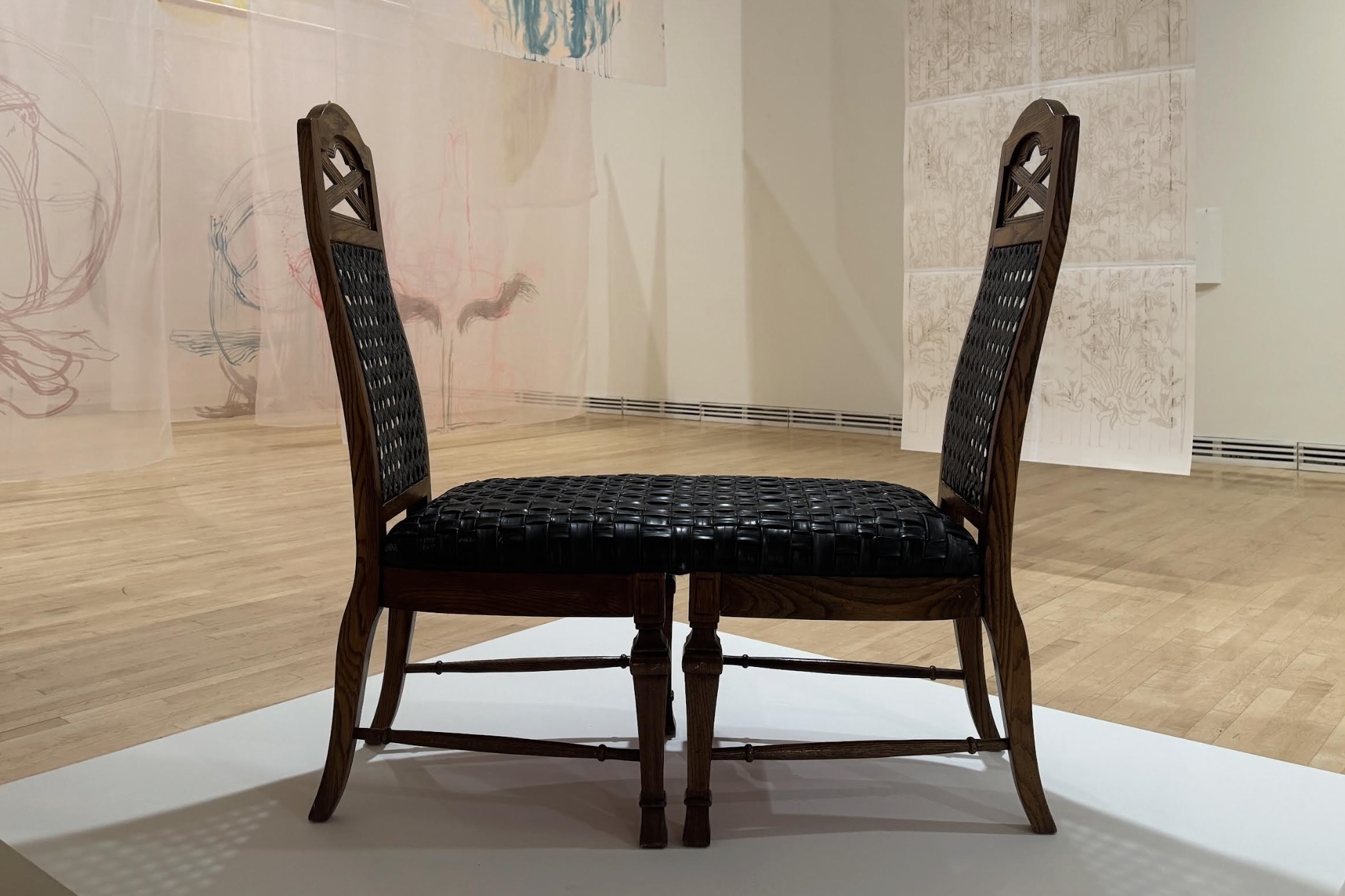
Naghalog/Embracing by Gallemit depicts two dining room chairs with the seats woven together through bicycle tubes. This mirrors the backrests of the chairs which have open-weave rattan, a pattern that originated in the Philippines.
The piece is a nod to Gallemit’s Filipina identity and lived experience.
Gallemit’s love for sculpting started when she spent an entire spring in her bike shop, throwing out countless flat tires. These flats would hang on a tire hook.
“I just remember thinking, ‘Oh my god, this is such a waste,’” she said.
With no way to recycle the rubber, Gallemit decided to collect it, take it home and create.
Many of Gallemit’s sculptures are made of discarded items. She uses everyday materials to encourage the viewer to bring their own interpretation to each piece.
“The best dance is the dance to the song that you know,” she said.
Gallemit’s sculptures in the exhibit stem from third culture, an identity formed by a parent’s culture and the culture of where the child is raised.
“The timeline of me making these pieces sort of coincided with me clearing out my deceased parents’ family home,” Gallemit said.
She described the process as a “heavy undertaking” and “overwhelming.”
The items she kept gave rise to Material Journeys.
Both Anderson and Desplanque strived to create a connection between the viewer and the artwork.
“I felt like creating an opportunity for privacy might allow people to kind of relax into their bodies in ways that they don’t normally get to do in a gallery,” Desplanque said.
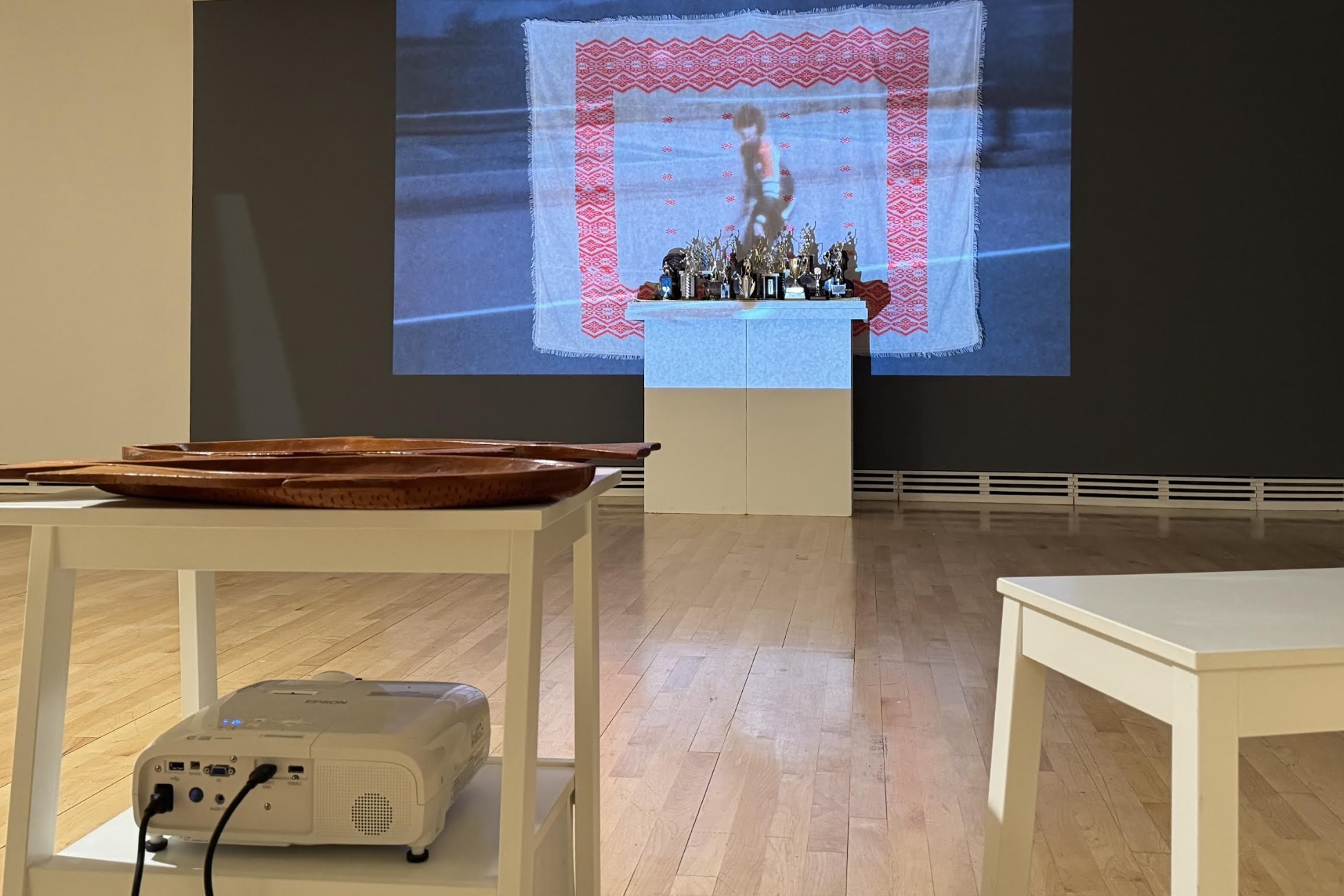
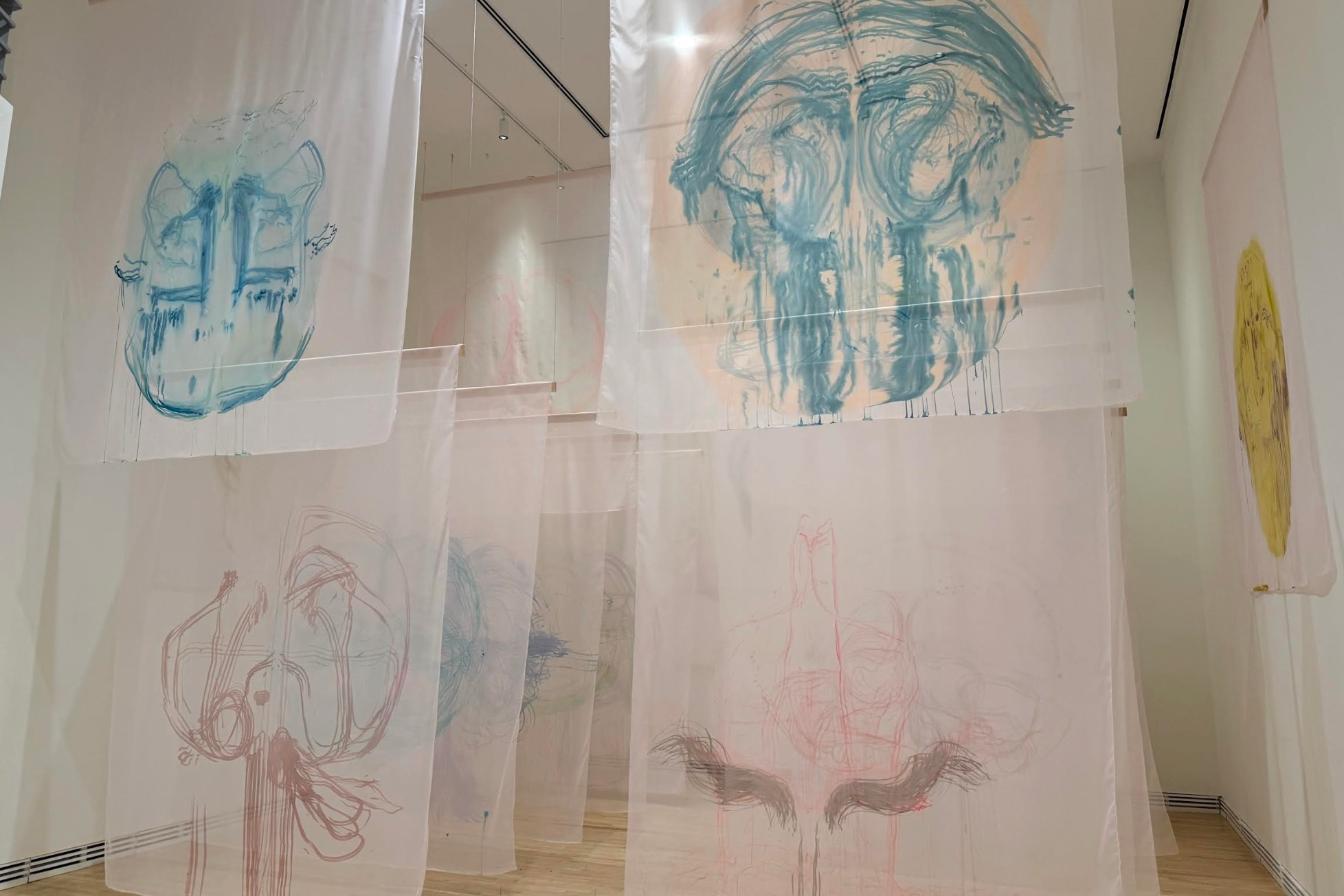
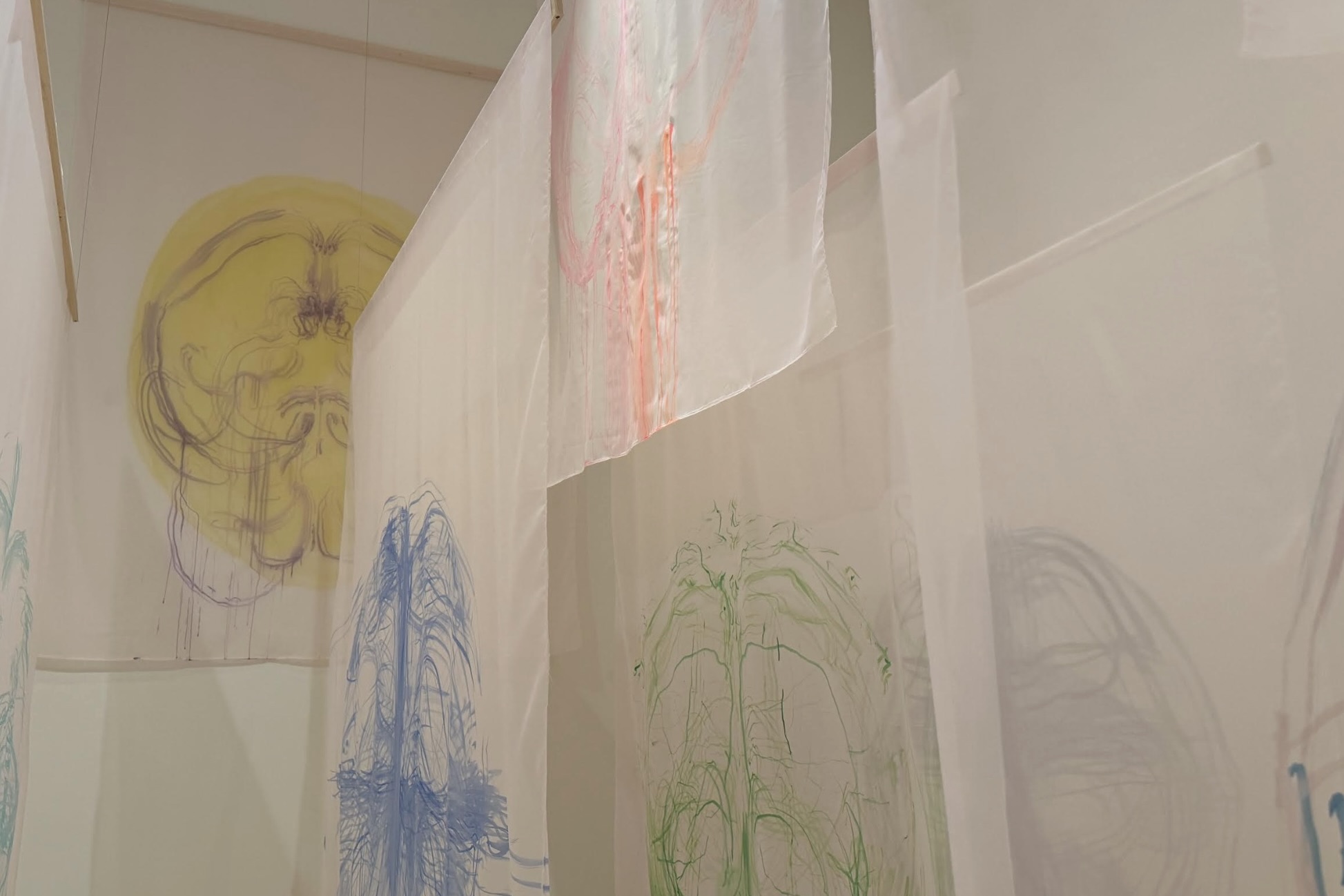
Works like Tennis Family by Gallemit and Seventeen Energy Paintings: Fields by Zoe Kreye were installed to create enclosed spaces.
Seventeen Energy Paintings is hung in high rows, inviting the viewer to walk through the piece and move their body as they navigate the work.
From bright colours to the abstract figures, Kreye’s work became “an expression of the unseen.”
Kreye began creating palettes and paintings with her eyes closed seven years ago after her technical training at art school left her feeling disembodied.
“I’m closing my eyes and tracking internal sensation, emotion and energetic worlds, and as I’m doing that, the colours start to become visible to me,” she said.
Kreye’s work focuses on moving away from disembodiment teachings, which she said she noticed during her master’s degree in public art and new artistic strategies at Bauhaus University Weimar in Germany.
“I think we judge ourselves even when no one is looking,” Kreye said.
She found herself moving away from technical training: “What would it mean to paint or sculpt only from a sensation?”
Kreye borrowed techniques from dance and somatics, relying on expression instead of appearance.
“I think my goal is to move in a way that feels truly authentic to myself.”
Featured image by Elina Ellis/the Charlatan.
This article, and all of the Charlatan’s work, is brought to you by an independent student newspaper dedicated to informing, uplifting and entertaining the Carleton University community. We are a levy-funded organization which plays a role in the broader, vibrant student culture on campus. By reading this article, you are supporting our efforts.