
It’s hard to imagine what a walk through Carleton University’s humid and dimly lit tunnels would be like without the vibrant, handpainted murals brightening its walls.
The tunnel art stretches underneath popular buildings like Nideyinàn and the Canal Building, all the way to residence buildings like Grenville, Stormont and Dundas.
There are about 100 club and campus-focused murals, and an additional 68 murals that have been added in the residence precinct since Housing and Residence Life Services launched an in-house painting initiative in 2023, according to a statement from the university.
For the club and residence-living artists creating the murals, the art marks the legacies they hope to leave behind.
Last November, the Carleton Applied and Theoretical Linguistics Society became another society to add its own vibrant contribution: a mural featuring a polyglot cow on a soft pink background.

The image features a small bird known as a wug perched on the society’s cow mascot. The wug is a popular symbol for linguistics-based societies across the world, as a made-up word created by psycholinguist Jean Berko Gleason to test if children can correctly create the plural of words they don’t know.
“They’d draw a picture of these random things and then [researchers would ask], what’s the plural of wug?” said linguistics society president Georgia Anderson, a second-year linguistics student.
“That just kind of became a symbol.”
The CATL mural increased interest in the society, according to Anderson.
“When I tell people about the club, they’re like, ‘Oh my gosh, you’re that mural in the tunnels, and I’m like, “Yes, we are!’” Anderson said.
“I feel so famous … and we’re really proud of it.”
Anderson was a club member when the mural was painted by graduated society executives, but says she is still “so happy” to see it every time she passes through the tunnels.
“Even if I wasn’t a part of the actual painting of it, I feel like this is part of my legacy at the school, and I’m very, very proud of that,” Anderson said. “I feel like a lot of the mural represents, again, that aspect of community.”
Hillary Inglis, a third-year humanities and political science student lived on the second floor of Grenville residence during the 2023-2024 academic year and helped paint a mural with her floor members to commemorate their time together.
The Minecraft themed mural came to life through pixel art of the video game’s iconic grass block logo, with different shades of browns and greens.
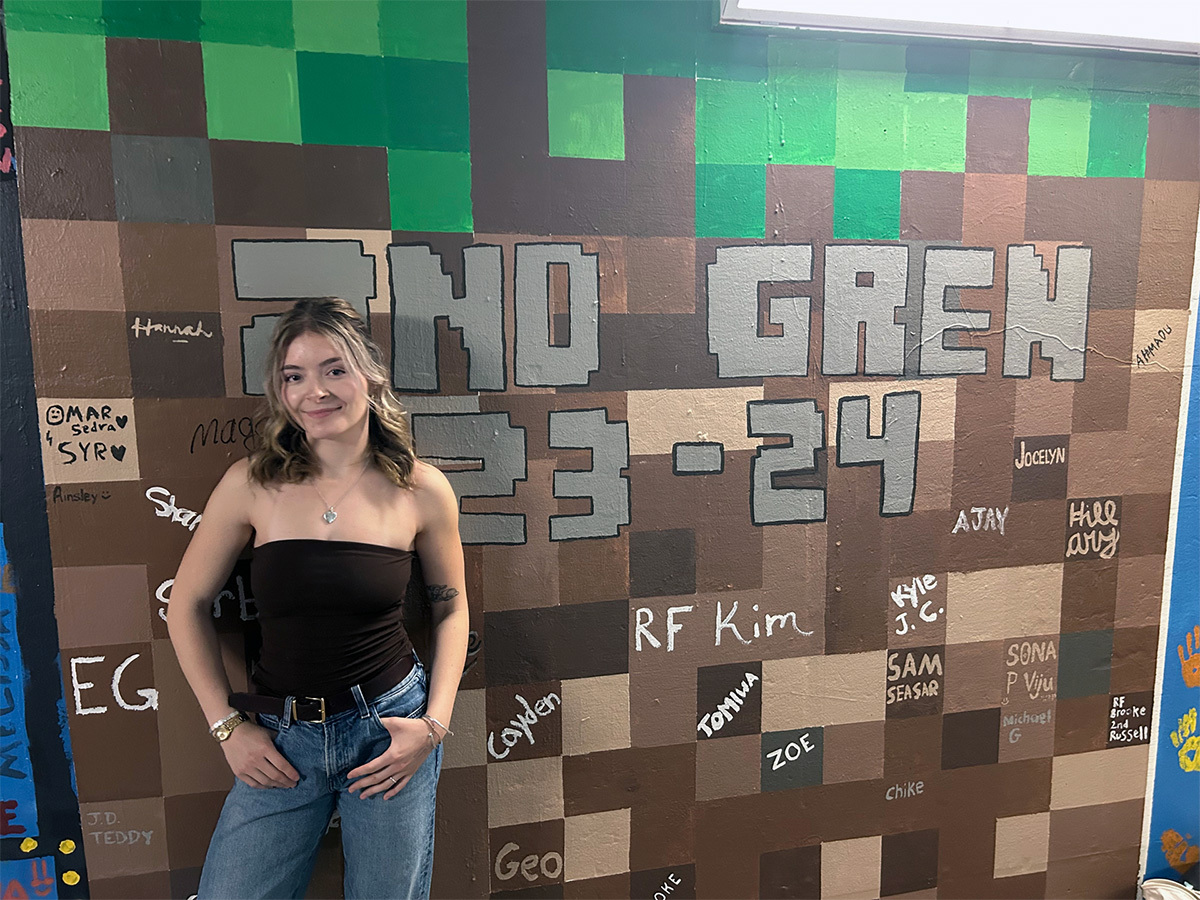
Though Inglis said she wishes she had more time to paint the mural, she thought it was a cool experience.
“I also [would] like to come back in a couple of years and still be able to see that [and] have that memory,” Inglis said.
“Having that experience brought our floor together and gave us something to do and helped strengthen that relationship and meet new people. I ended up talking to a lot of people on my floor that I previously hadn’t really talked to by doing it.”
Beyond societies and residence memories, some murals bring attention to advocacy and support groups on campus like the Carleton Disability Awareness Centre.
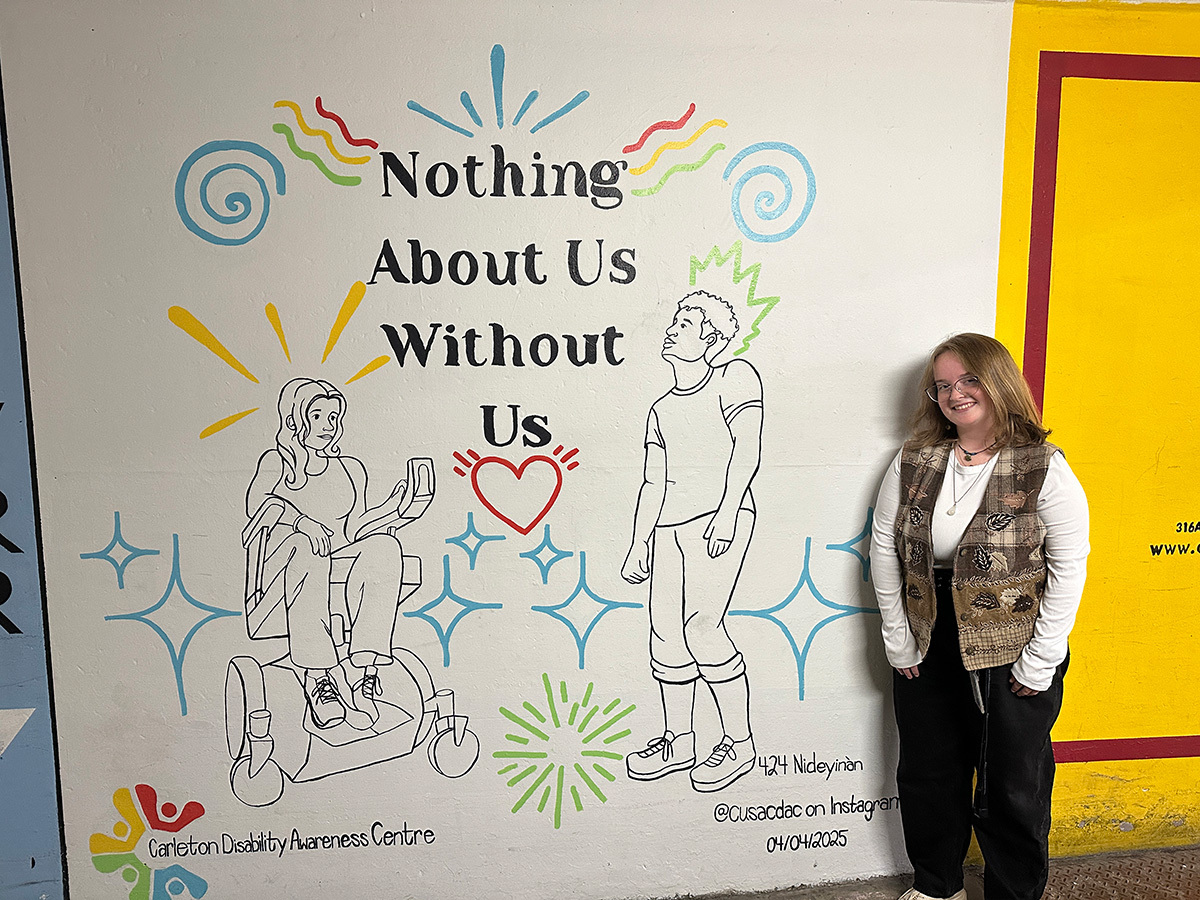
Carys-Anne Starling was a student who used the centre when they helped paint the centre’s mural in April 2025. Now, having become the space’s administrative coordinator, they feel the mural is important for raising awareness.
“People can see it and get the information they may be looking for that they didn’t know was out there just by being on campus,” Starling said.
Starling says they encourage anyone in an advocacy group at Carleton who is interested in making a mural to do it.
“[Everybody] in the community had some part to do with that mural, but it definitely is really cool seeing art I helped make and knowing the importance it has,” Starling said. “I had fun, but it’s rooted in something much more important than having fun.”
Featured image by Sophia Laporte/the Charlatan