
Costly rent and grocery prices. High youth unemployment. A university running a significant financial deficit.
Carleton University students have every right to be worried for their wallets right now.
Prime Minister Mark Carney’s first federal budget looks to provide some federal support for student jobs and housing but introduces international enrolment cuts that could hit Carleton hard.
New funding increases work placements, youth employment programs and federal housing construction near campus. But reduced international study permits and existing provincial tuition caps are expected to tighten Carleton’s budget and limit its financial options.
Here’s what the Carleton community needs to know.
How will the federal budget affect Carleton students?
Ottawa Centre MP Yasir Naqvi said one focus of the budget is supporting youth employment.
“The budget talks about investing over $600 million over three years that will support 55,000 work-integrated learning opportunities for post-secondary students,” Naqvi said.
Hundreds of millions of dollars will go to programs like the new Youth Climate Corps, the Canada Summer Jobs Program and the Student Work Placement Program in an effort to decrease youth unemployment.
Naqvi said the government is also taking steps to address housing for young people.
“Housing is a big part of this budget, and we’re building Build Canada Homes, which is a new agency to help build as much housing as possible, as quickly as possible, especially by leveraging federal loans,” he said.
“I think from a perspective of Carleton, that’s good news because you look at Confederation Heights, which is next door to Carleton University, all that federal land is slated to be developed,” Naqvi said.
Aidan Kallioinen*, the Carleton University Students’Association’s vice-president of student issues, said the focus on housing is positive.
“I think one of the really good things we’re seeing is that for the first time since practically the Second World War … the federal government is directly invested in doing things that will tackle the housing crisis,” Kallioinen said.
“Build Canada Homes is going to address a common issue we get among a lot of students.”
However, Kalloinen said he still has mixed feelings.
“As a student union, we’re going to continue to advocate on things that matter to students,” he said.
“It seems to be that the housing piece, the affordability piece and international students tend to be some of the top concerns.”
How will the federal budget impact the university?
The budget also emphasizes research, with tens of millions of dollars laid out to recruit top international doctoral and post-doctoral fellows.
It also provides $400 million over seven years to fund research infrastructure at universities.
However, international study permit targets are being slashed by 49 per cent in 2026.
Ian Lee, a Carleton business professor, said the international student reduction will hurt the university.
“The reduction in student visas has created the situation where many universities … and mine is one of them … where we have fairly large deficits,” Lee said.
“It really set us back, and not just us — universities across Canada have been set back.”
Carleton University is facing a $32-million deficit, citing international student caps and provincial tuition freezes as primary factors.
Despite representing 11.8 per cent of Carleton’s student base, international students account for nearly a third of the university’s tuition revenue.
Lee said he expects layoffs because of the struggles universities are facing.
Kallioinen added Carleton has few options after this budget.
“Any cuts to international tuition and international enrollment thereby hurt Carleton in the long run.”
*Aidan Kallioinen has previously contributed to the Charlatan.
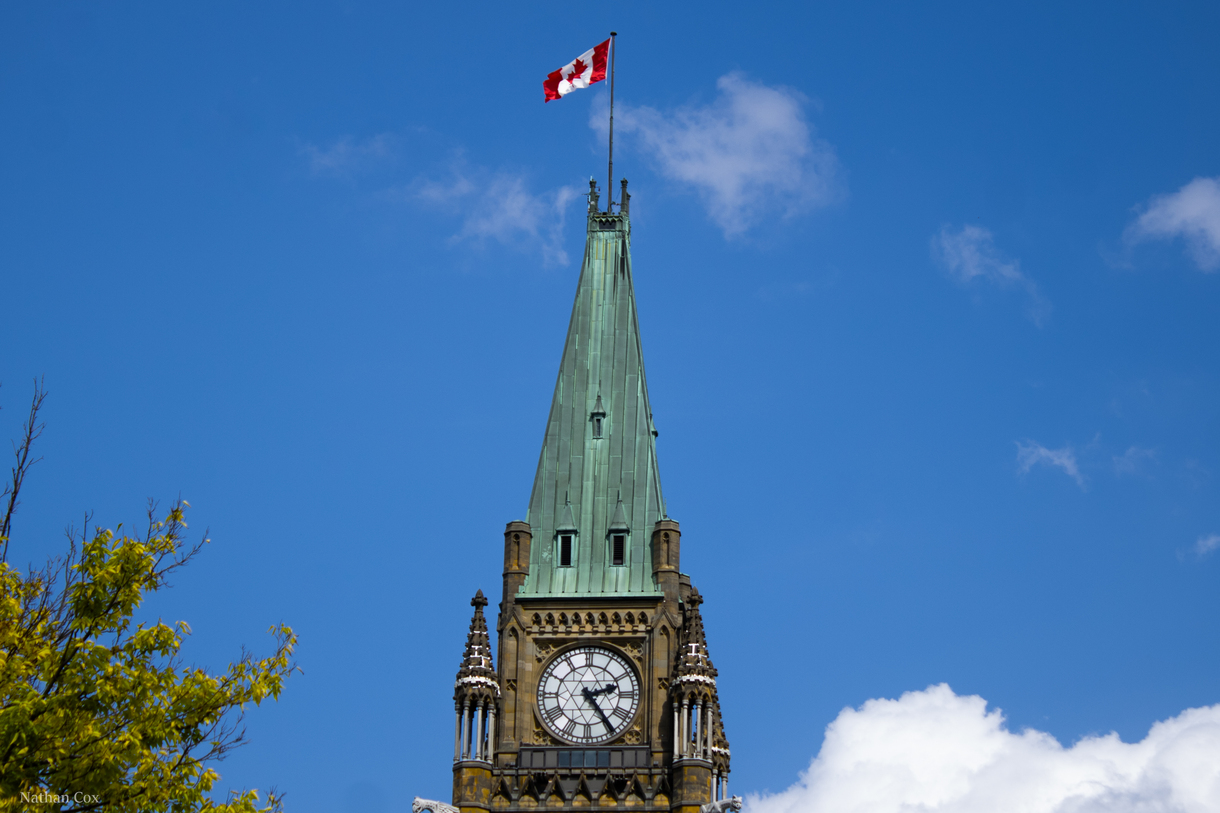
Featured image by Nathan Cox/the Charlatan