

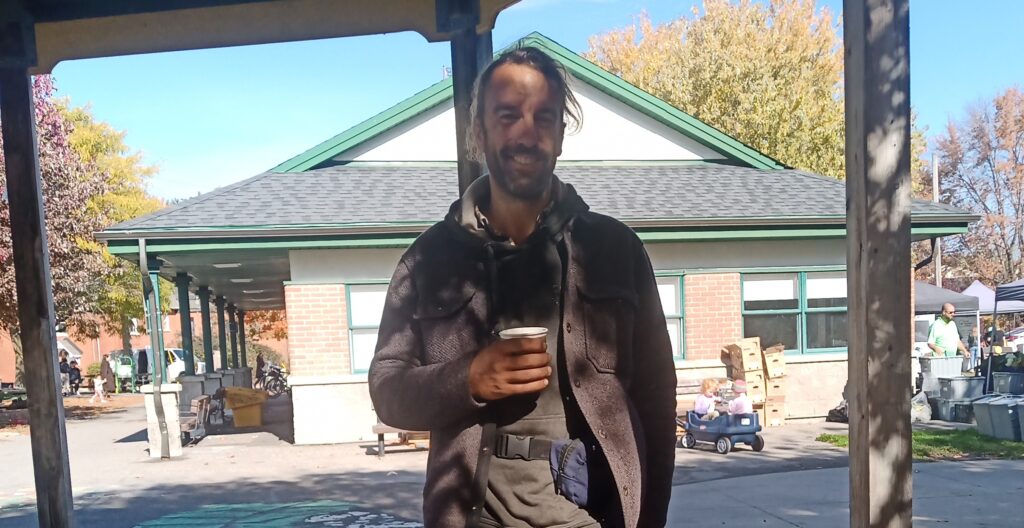
Eric Perron has been farming his five acres of land in the Gatineau Hills for six years now.
His farm, La marmaille-Ferme maraîchère bio, grows and sells more than 40 different vegetables, catering to more than 340 families, Perron said.
Perron was a vendor at the Beechwood Market, which wrapped up its annual season in New Edinburgh Park at the end of October.
Although the summer brought in revenue for Perron from farmers’ markets, it also brought unpredictable climate conditions, which he said are making it hard for his low-mechanized farm to keep growing its produce.
The unpredictability of the changing climate is threatening farmers’ ability to produce enough crops to sell at farmers markets like the one at New Edinburgh Park. Combined with the rising cost of maintaining a farm, these farmers’ livelihoods are increasingly precarious.
Heavy rain in the summer of 2024 made his crops rot, Perron said. This summer, the problem was the opposite.
“We ran out of water,” he said. “The pond where it was just dried. We just had to be creative on how we are going to irrigate.”
In June and July, most of the crops he wasn’t able to water simply died, Perron said.
“Usually, if it doesn’t rain for two weeks, crops don’t die. They just grow slower and it can affect the taste of the vegetables,” he said. “Now it’s dying.”
New climate predictions suggest the coming years will continue to be a challenge for farmers, according to Scott Mitchell, an associate professor at Carleton University who studies the impact of climate on farmers.
“Several of these bad news events for the crops are predicted to increase with the weather patterns that are expected in the future,” Mitchell said.
Many factors influence the predictability of growing produce, Mitchell said — including the game of chance.
“Farmers could get lucky, or they could get very unlucky. It depends on the crop,” Mitchell said.
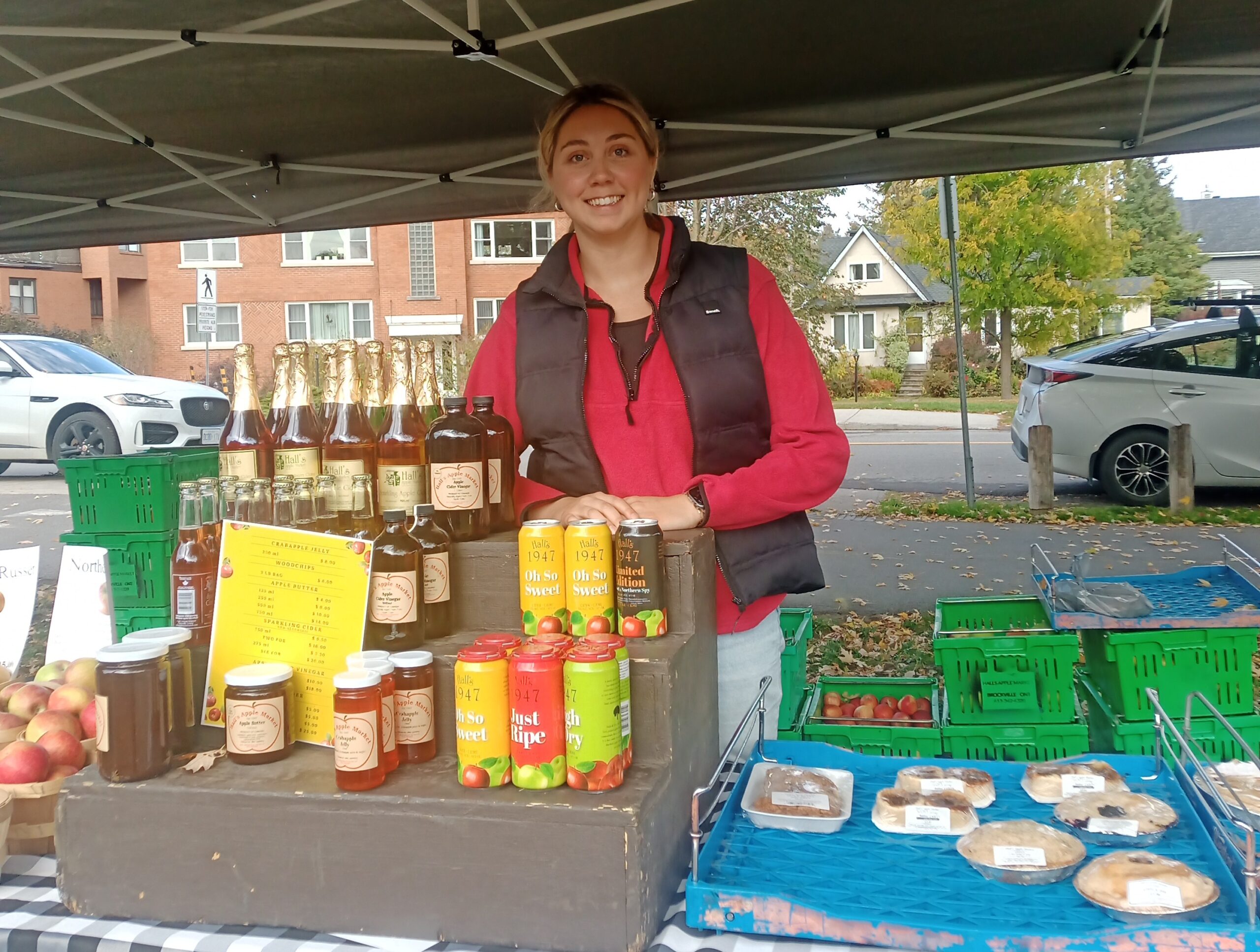
At Halls Apple Market, their farm’s signature apple trees in Brockville, Ont. have also felt the impacts of climate change, said Sydney Hall, who has been helping with her family’s market stands since she was seven years old.
“It really depends on how the apples are treated as they’re starting to develop. So before blossom (May), depending on the weather, will depend on how well our crop is. Luckily this year we had a good crop,” Hall said.
Because of temperature fluctuations, sometimes the family has to make fires at night to keep the apple trees warm, Hall said.
There are ways to make crops more resilient to extreme weather events, Mitchell said, adding there’s evidence suggesting more energy and water is becoming available for crops in Ontario.
However, the changing climate isn’t the only challenge farmers face — the cost of running a farm itself is on the rise.
“For the seedling, the tray, everything doubled in price. It was 50 cents, it’s now one dollar,” Perron said.
“The price of fuel we burn every day, the truck, the tractor, everything. It went up,” he said. “It’s a farmer’s income that gets cut at the end of the week.”
The apple farm also had to raise their prices because of inflation, Hall said. Luckily, it has yet to take a toll on their business.
“(Customers) just appreciate the local produce and they’re willing to pay the price for it, which is really great,” Hall said.
Featured image by Melissa Moore/the Charlatan