
If one word could be used to describe the 2020s, “accountability” should be a leading contender.
Social media’s integration into the fabric of our daily lives has bred a culture of scrutiny — whether it’s doomscrolling through arguments on X or filming strangers’ meltdowns for TikTok clicks.
In the name of accountability, regular people are seemingly held to higher standards than rich, powerful and influential celebrities.
In other words, folks with predatory landlords and long commutes are expected to be more virtuous than mansion-owning private jet flyers.
But as long as the public continues to shout at itself to “do better,” celebrities with the means to make an impact are left unscathed.
Sure, some celebrities lose career momentum when called out for distasteful behaviour, but typically for expressing the “wrong” opinions.
Take a look at Sydney Sweeney’s controversial American Eagle jeans ad. With a play on the words “jeans” and “genes,” the ad was deemed racist by critics over its arguably eugenicist undertones. The actress was asked to respond to the criticism in an interview with GQ, and her response was curt: “I think that when I have an issue that I want to speak about, people will hear.”
Three days after the interview was published, Sweeney’s film Christy made its theatrical debut, and the film now holds the dreaded record for the largest second-weekend box office drop for a wide release in history.
On the other hand, nothing at all seems to work just fine for megastars like Taylor Swift.
Social media discourse criticizing the pop singer’s private jet usage and relative silence on human rights issues is rampant. Nonetheless, her latest album, The Life of a Showgirl, continues to make sales and chart history.
Although silence is the easiest choice, it isn’t the best one.
Cancel culture begs the question of whether celebrities ought to use their status to call for change, even if it means leaving the haven of “unscathedness.”
The short answer is yes. The world is burning. If you have been awarded a platform, why shouldn’t you use it for good?
The long answer is still yes, but there is nuance.
How much good can celebrities really do?
In September 2025, musician Brian Eno’s Together for Palestine fundraiser concert raised around $2.8 million for Palestinian charities. Celebrity appearances included Billie Eilish and Florence Pugh, with performances from artists like Bastille, Damon Albarn and Leigh-Anne.
The money and attention the campaign received point to a tangible benefit from celebrities taking a stand.
But if positive change were guaranteed, the question of whether celebrities should speak up would not be for debate. The 2024 United States presidential election opens this side of the discussion.
Several celebrities endorsed then-presidential Democrat candidate Kamala Harris, including Beyoncé, Bruce Springsteen, George Clooney, Stevie Nicks and a rarely vocal Swift.
Despite some predictions of a Democratic Party victory, Harris did not become the 47th president. Are voters simply unbothered by what singers and actors have to say about politics?
These are questions that cannot realistically be answered, though the election indicates not all forms of celebrity activism are successful, no matter their status or access to millions of eyeballs.
Even if the ultra-rich can make substantial political donations and encourage millions of social media followers to vote, their social status likely keeps them from understanding the public’s desires and conditions. Celebrity endorsement shouldn’t be the only place for the public to turn to for political endorsement — but it doesn’t hurt to be aware of who your favourite artists support.
This is all to say, if the capacity for positive change is indifferent, the question of whether celebrities should speak up remains.
The logical place to turn, then, is to those consuming celebrity activism – the public, but specifically, fans.
Fan culture and the power of mobilizing an audience
Fan culture is largely ignored in the political realm, one reason being its affiliation with women and the imagined “fangirl.” But apart from painting passionate women as hysterical, this thinly veiled sexism ignores the reality of art consumption.
Whether it be music, film or other forms of expression, art draws on emotion and experience, allowing creators to connect with their audiences.
In this vein, it is normal for consumers to invest in the people behind the art, especially when it offers asylum for emotional vulnerability.
It is here celebrities gain platforms of dedicated fans, as well as a responsibility to speak up.
In October 2023, a group of public figures formed Artists4Ceasefire, calling for a permanent ceasefire and protection of civilians in in Gaza and Israel. One of the most popular celebrities to sign onto the group is Ariana Grande.
Seven months after Artists4Ceasefire’s call to action, Grande also shared a donation link for the Palestine Children’s Relief Fund on Instagram. The charity reportedly earned an additional $40,000 after Grande’s post, illustrating the power of a platform and fan mobilization.
A platform is hard to earn but easy to lose, creating a natural incentive for celebrities to stay silent. The key, though, is reframing the power of speaking up.
As long as celebrities view activism as a career-ending move, they will hesitate to cross that line. But framing it as a powerful union between celebrity and fan, rather than a static, unchanging commitment to an agenda, may incentivize celebrities to use their platforms for good.
The motivation for a celebrity to mobilize their platform should not be to satisfy the internet’s critical eye, but to demonstrate the power of coming together and fighting for good, as Grande has.
The simplest way for celebrities to do this due diligence is not by pandering to politicians, but by collaborating with their most dedicated audiences.
Only then can the pressure to “do better” shift from everyday people onto those with the platforms to dramatically incite positive change.
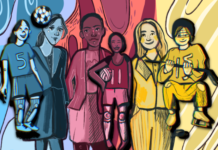
Featured graphic by Alisha Velji/the Charlatan