

As LGBTQ+ History Month draws to a close, I’ve taken a closer look at one of the most famous fictional queer love stories of the 21st century: Call Me By Your Name.
It’s hard to talk about queer literature without mentioning André Aciman’s 2007 novel. Critics loved it, and it currently sits at 4.1 stars out of 5 on Goodreads. In 2016, it was adapted into an Oscar-winning film directed by Luca Guadagnino, starring Timothée Chalamet and Armie Hammer.
However, upon re-reading, it’s obvious to me that this is not a great love story. Rather, it’s a creepy and exploitative six-week situationship that should serve as a cautionary tale.
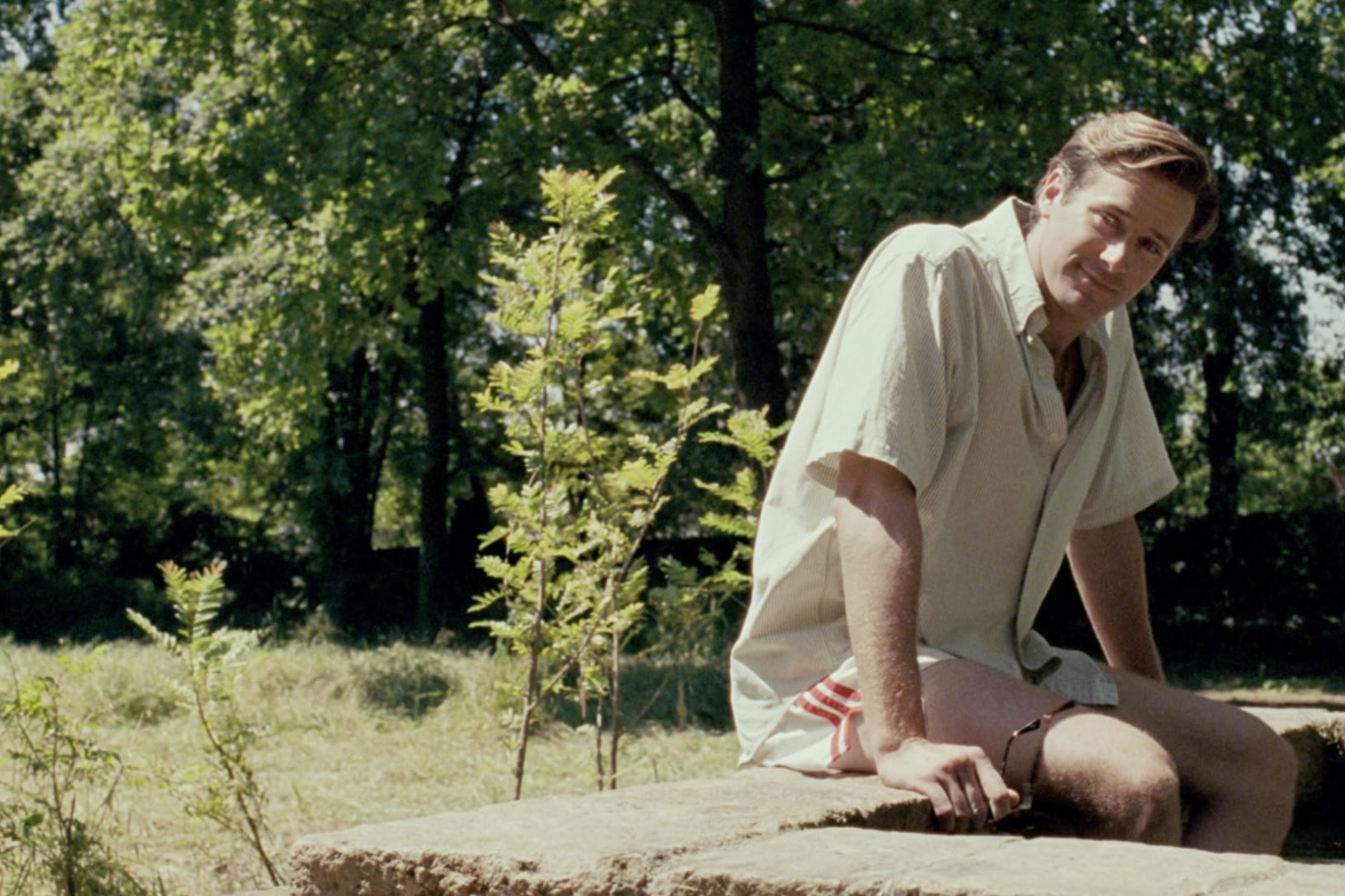
The story takes place in the summer of 1983, somewhere in northern Italy. Elio, 17, spends his days transcribing classical music until he falls for his father’s assistant, 24-year-old Oliver, who stays in their secluded Italian home for six weeks while visiting from the United States.
The story follows Elio’s perspective as he falls under Oliver’s spell and the two become romantically and sexually intertwined.
To address the elephant in the room, the two characters have a large age gap. By Italian law, the relationship would have been legal — but it’s distasteful.
Their relationship in and of itself is not inherently a problem. The problem is the idolization of this story as a tragic, could-be romance when the characters are toxic for each other.

Lack of communication
In both the book and the movie, Elio and Oliver are never fully together. Their time together was short-lived, with the couple becoming physically intimate four weeks into Oliver’s six-week stay, and the two admitting their feelings for each other after they shared their first kiss.
Part of this lack of communication is because Oliver is aware that the relationship is socially taboo. After all, it was two men sleeping together in the 1980s — with an obvious age factor at play.
Oliver avoids Elio after their first kiss, until Elio caves and slips a note under Oliver’s door asking to speak.
Oliver’s response? “Grow up. I’ll see you at midnight.”
That phrase is a loaded one. The conjunction of “grow up” implies an overreaction, while the midnight invitation, which ends with the two sleeping together, is stark.
One of the most glaring issues of Elio and Oliver’s lack of communication is when Oliver returns home and an ocean separates the couple. While Elio is in a whirlwind of passion, still believing himself to be madly in love, they communicate sparsely.
In the book, they meet again over Christmas. Oliver tells Elio that he has planned to marry an American woman without so much as mentioning her name the entire time that Elio and Oliver were together in Italy.
In the film, this revelation occurs on a phone call, closing the story with a four-minute-long scene to Sufjan Stevens’s “Visions of Gideon” with Chalamet’s teary, forlorn stare into the crackling fireplace.
Mixed signals
One issue shown time and time again is a continual hot-and-cold mood shift Oliver displays towards Elio.
“I became aware of the keenest glance coming from my left. It thrilled and flattered me; he was obviously interested — he liked me,” Elio’s account details early in the novel. “But when, after taking my time, I finally turned to face him and took in his glance, I met a cold and icy glare.”
Oliver’s best attempt at expressing sexual or romantic feelings towards Elio is an unexpected shoulder massage. Oliver takes this startled response as an outright denial and then goes cold towards Elio.
After they kiss for the first time, Oliver once again flips to ignoring Elio’s existence.
“A few days ago his foot was on mine,” Elio details mid-way through the novel. “Now, not even a glance.”

The problematic Oliver
Elio is not the only younger person whom Oliver expresses interest in during his six-week stay.
Early on, we’re introduced to Chiara, an Italian girl roughly Elio’s age. Oliver and Chiara shared a flirtatious relationship with sprinkles of romantic kisses, while Elio’s family cook remarks that she is too young for him.
It is clear Oliver shows a slow escalation of his predatory feelings towards Elio. Again, while it is a legal relationship, the age difference is stark between school-aged Elio and Oliver, the university professor.
Even after their relationship ends, Oliver visits over the Christmas holidays and kisses Elio — despite having a fiancé at home.
Once more near the end of the book, Oliver and Elio meet up roughly 20 years later, Oliver looking to Elio for absolution for the past.
He knows he affected Elio, however he has been able to move on. Meanwhile, Elio is a skeleton in his closet, a “ghost spot”’ as the book suggests.
Elio’s naivety
Despite Oliver’s creepy behaviour being best described as predatory, Elio’s account of events is also unsettling.
Elio is blindly devoted to Oliver. His emotions hit breaking points where he details thoughts of murder, but overall, worships a man he barely knows.
Right after Elio and Oliver share their first kiss, Elio thinks: “Give me a blindfold, hold my hand, and don’t ask me to think — will you do that for me?”
This blind trust of a much older man is not a hallmark of true love, but naivety.
Many young people misinterpret situationships for true love because the possibility of what could have been is a tough thing to grieve.
Although Call Me By Your Name can at times be beautiful, to call it a love story is a gross overexaggeration.
Oliver is a harmful figure in Elio’s life. There is an undeniable power imbalance between a 24-year-old university professor and a 17-year-old boy. Where Elio is unable to ever truly get over Oliver, the latter marries quickly, settles into his life and fathers two sons.
It is still an important piece of queer literature, including supporting older family members and documenting teenage LGBTQ+ heartbreak, but should not be regarded as anything besides a tale of youthful naivety.
My alternate recommendations for queer literature are History is All You Left me by Adam Silvera or We Are The Ants by Shaun David Hutchinson.
Featured graphic by Alisha Velji/the Charlatan