
Sara Valentina says Toasty Arepas, the Colombian restaurant in Ottawa where she works as a server, is usually bustling on a Saturday.
However, her Jan. 3 shift started off unusually quiet.
Hours earlier, Venezuela’s president Nicolás Maduro was captured by U.S. forces and flown to the U.S. to stand trial for drug-related charges.
Valentina, also an executive member of Carleton’s chapter of the Humanitarian Organization of Latin American Students who is of Colombian descent, said the restaurant serves a large demographic of Venezuelans.
“I think everyone was just kind of sitting at home, pondering and thinking about everything that was going on,” Valentina said.
However, the solemn tone shifted later in the night, she said, as customers began flocking in. Excitement filled the restaurant as families and groups of friends gathered, many wearing traditional Venezuelan clothing, she said.
“They told me, ‘We’re here to celebrate that this is finally over.’”
The day’s events caused a whirlwind of emotions.
“It was shocking,” Laura Arenas*, a third-year Carleton student, said.
Arenas, who is from Colombia, said she crowded around a radio with her mother and her 73-year-old grandmother.
“We’ve always known Venezuela as a dictatorship, my whole life, and my mothers as well, and my grandmother too,” she said.
Maduro was in power since 2013, taking over the office of presidency from Hugo Chávez after he died that year. In 2024, Maduro was proclaimed the winner of the country’s presidential election, which many governments, including Canada and the U.S. described as unfair.
Political instability has intermittently rocked Venezuela since the early years of the Cold War, and the relationship between the U.S. and Venezuela has been under increasing tension over the past two decades.
Venezuelans hope that these developments mean they can safely return home, Arenas said. “Despite it being a weird, complex situation, I think that the people from Venezuela do hope that they can go back, and they hope that they can see their families.”
In the past decade, nearly eight million people have fled from Venezuela into neighbouring countries like Colombia, according to the UN Refugee Agency.
“We never thought it would get this far, and now we’re here. It’s like: now what? Colombian and Venezuelan students feel uncertainty about what’ll happen,” Arenas said.
Celebrations over Maduro’s capture clash with concern over U.S. President Donald Trump’s increased interventions in the region, said Matheus Modesto-Nelson, a third-year Carleton student who was visiting family in Brazil while the crisis unfolded.
“I think having Maduro out of power isn’t necessarily a bad thing, (but) the way it was achieved was the real issue,” Modesto-Nelson said. “Breaking into a sovereign nation and changing their leadership is not a good thing.”
Modesto-Nelson said half of his family was celebrating, while the other half was concerned over the closeness of the strikes and what it would mean for the region.
He added he feels Canada’s government should do more to call out Trump’s actions on the international stage, as Trump continues to threaten Canada.
Threats against Canada as well as action against Venezuela, which had been building for months with U.S. strikes on alleged drugboats in regional waters, is part of Trump’s “imperial presidency,” said Aaron Ettinger, a Carleton political science professor.
“The United States intervening militarily in an otherwise sovereign nation is basically the story of the United States,” Ettinger said, adding that Trump’s intensified attention to the Western Hemisphere is evidence of a return to older forms of imperialism.
The U.S. and emerging powers are starting to assert influence and force over countries outside of the traditional postwar order, Ettinger said.
“The world is fragmenting into different spheres of authority, but they are overlapping.”
“This time around, they’re intervening in Latin America, which is a very 1980s or very 1880s thing to do,” Ettinger said.
*Laura Arenas has previously contributed to the Charlatan.
__________________________________________________________________________________________
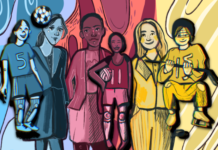
Featured graphic by Alisha Velji.
This article, and all of the Charlatan’s work, is brought to you by an independent student newspaper dedicated to informing, uplifting and entertaining the Carleton University community. We are a levy-funded organization which plays a role in the broader, vibrant student culture on campus. By reading this article, you are supporting our efforts.