

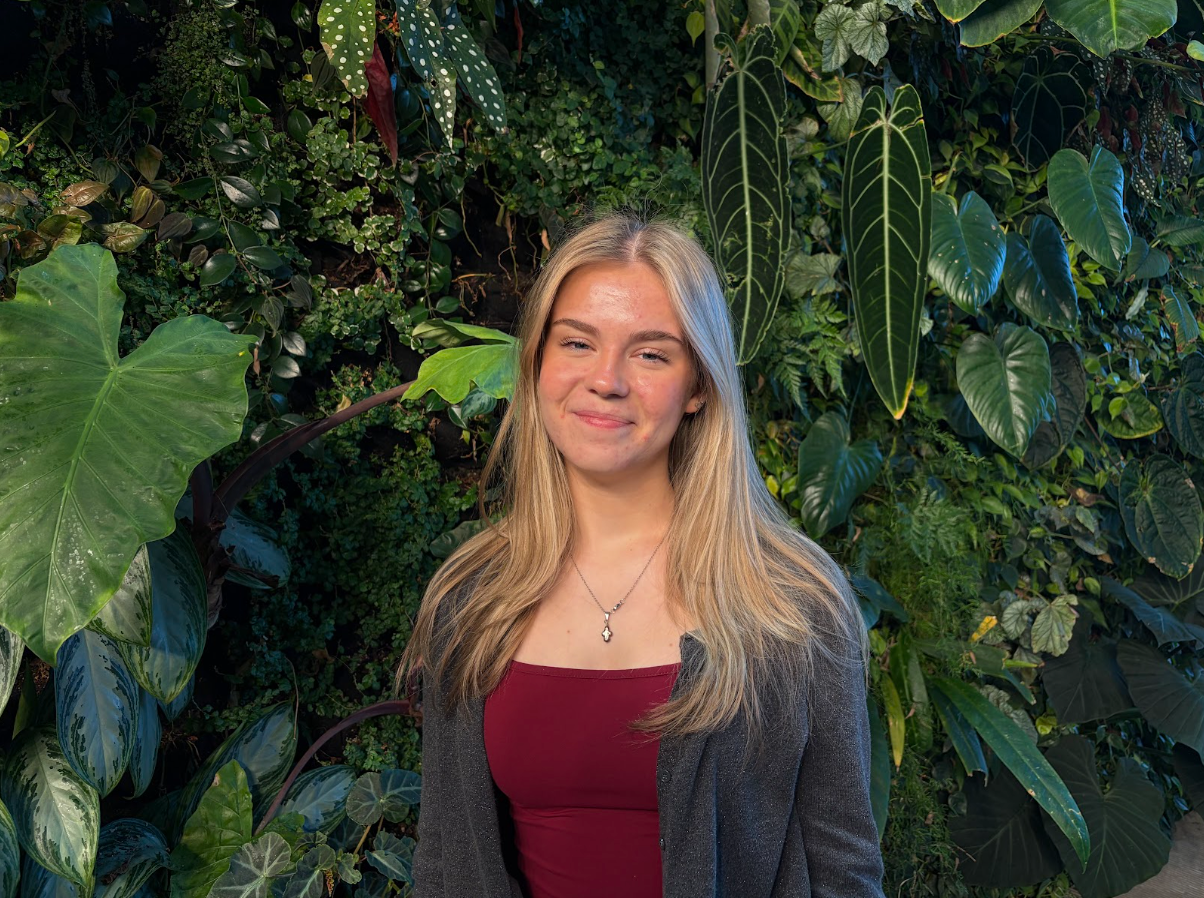
As a dual citizen living in Canada, Owen Feather once dreamed of returning to the United States to study medicine at Johns Hopkins University. That dream was squashed by the pressures from the U.S. political climate and swiftly transformed into what felt like a nightmare.
“With the way the political climate was going, the U.S. didn’t feel like somewhere safe for me to be,” said Feather, who is currently studying at Carleton University. Instead, Feather abandoned her aspirations of becoming an emergency and military doctor and chose to study journalism.
Still, she said she faces challenges due to U.S. politics, even in Canada, as tense Canada–U.S. relations influence others’ perception of her as a dual citizen.
“America and Canada are perceived as two (opposing) countries rather than neighbours,” she said. “That played into me wanting to go (to the U.S. in the first place.”
Feather is one of millions caught between the strained relations of neighbouring countries, both of which she has called home.
Students find the idea of going to the U.S. “terrifying”
The United States, under President Donald Trump’s second term, has seen drastic changes in the country’s global affairs and policy.
One of which includes the tightening of international student policy last year, leading to the revocation of thousands of student visas.
The Department of Homeland Security later repealed the decision following strong opposition from higher education experts, but the move was cause for deep anxiety and wariness among international students in the U.S.
In another contentious decision that was later overturned, the Trump administration revoked Harvard University’s ability to enrol international students. This was especially concerning to Canadian students, who are a top demographic of Harvard international students.
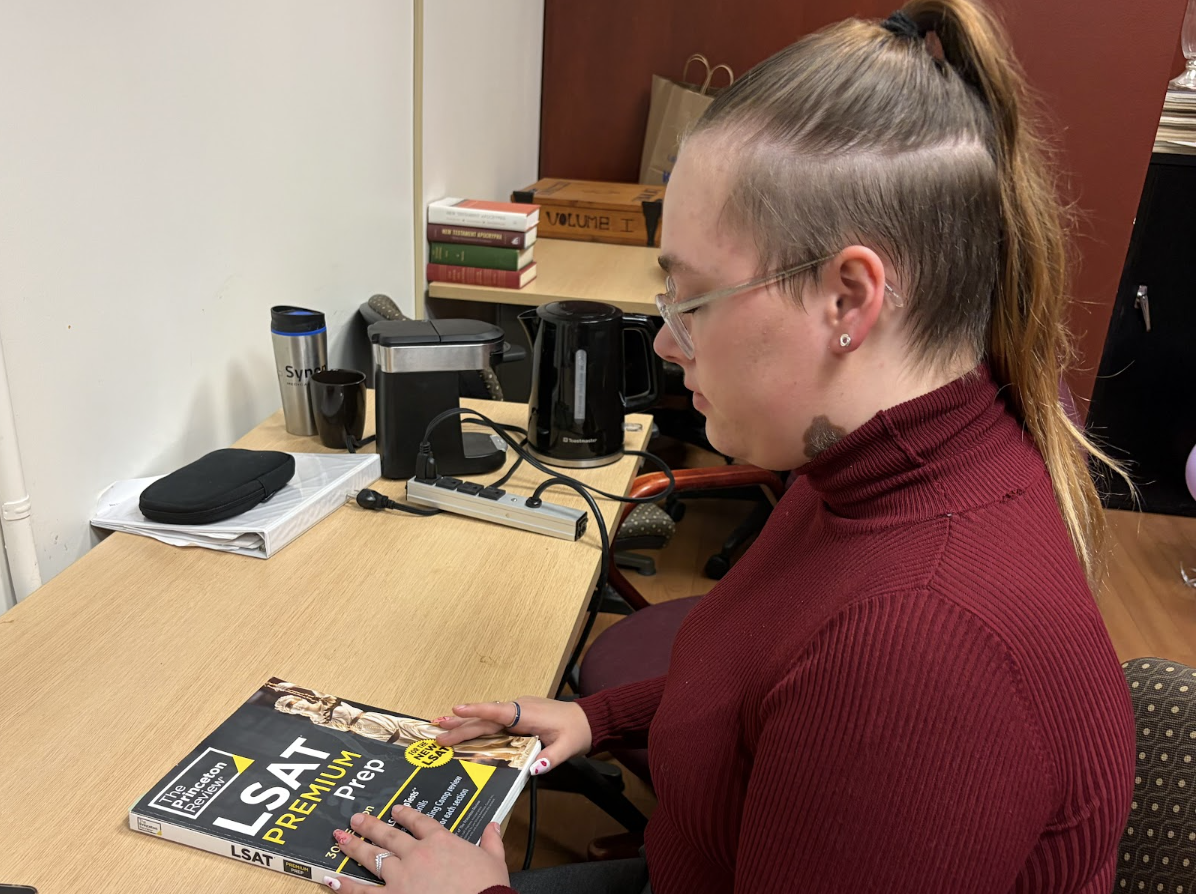
Carleton humanities student Charlotte Lotter is among the students changing their post-graduate education plans due to the U.S. political climate.
Lotter said she had initially wanted to attend law school in the U.S., where she said many of her dream schools are located.
But her plans pivoted after Trump’s re-election.
“The idea of going to the U.S., in general, is terrifying to me now. Then, studying there full-time is petrifying,” she said.
Lotter cited the deployment of ICE — the United States Immigration and Customs Enforcement agents — as solidifying her decision to stay in Canada for graduate school.
“I saw a video of (ICE) showing up at a school in Minnesota and throwing a child to the ground,” Lotter said. “That was the moment when I said, ‘No, that’s definitely not happening.’”
Human rights threats push students away
Carleton applied linguistics student Kate Minter, an American citizen from Raleigh, N.C., said she applied to universities in both Canada and the U.S.
The political climate and the 2024 U.S. presidential election — including policy changes outlined in the far-right policy plan Project 2025 — were reasons for her applying to Canadian universities.
“I was thinking: ‘Where do I want to spend my next four years if it’s potentially going to be under Trump?’” she said.
Her friends and family are all back down south but Minter said she plans to spend her summer breaks in Ottawa.
As a queer woman, Minter said the political climate in the U.S. deeply affects her. She pointed toward attacks on women’s rights and LGBTQ+ rights as especially impactful.
“Everything happening in the U.S. makes me more hesitant to return,” Minter said. “Potentially losing a lot of my rights makes me not want to be there when it happens.”
U.S. still attractive to many students
While some students — domestic and international — report apprehension toward U.S. politics and global affairs, the country remains an appealing destination for studying abroad.
The U.S. remains home to many prestigious higher education institutions.
In fact, the number of international students in the U.S. has reached an all-time high, according to statistics from the 2024-25 Open Doors Report on International Educational Exchange by the Institute of International Education.
The report found a slight increase in Canadian students in the U.S., a trend also reflected in a Statistics Canada report showing the number of Canadians crossing the border for education has remained consistent.
From 2000 to 2024, the number of Canadian students enrolled in U.S. postsecondary institutions has fluctuated between 21,500 and 27,400, with the lowest numbers in the 2020-2021 academic year.
Though these findings may not reflect a change in sentiment or attitudes towards cross-border studies, available statistics only run until the 2023-24 year, so there’s no publicly-available data showing how Trump’s second term and the ensuing political shifts might impact cross-border studies.
Long-term data still needed
Because of the political changes, Carleton political science professor Aaron Ettinger said he expects fewer Canadians heading south to pursue higher education. Still, it’s unlikely cross-border studying will stop completely, he said.
“Timing matters. There might be a long tail of (academic) activity pre-Trump that carried over into 2025,” he said. “We should check how (the numbers) work out in the long run.”
Ettinger explained that the Canada-U.S. tensions due to Trump’s second term, such as tariffs and threats to Canadian sovereignty, have helped solidify a sense of national identity in Canada.
“There is a much more unified sense of purpose in this country — a sense that we, as a nation, are under threat and need to do something about it,” he said.
“Trump is strengthening Canadian nationalism in ways that I’ve never seen in my lifetime and probably haven’t existed for a long, long time.”
He added economic and political threats from the U.S. have diminished Canadians’ view of its southern neighbour.
“Canadians are voting with their feet and their pocketbooks,” Ettinger said. “The number of trips to the U.S. is down, and people are deliberately trying to avoid buying American products … Canadians don’t want to be as close to the U.S. as they once were.”
Future of cross-border exchange uncertain
Ettinger said he thinks the end of Trump’s second term and a Democratic president succeeding could improve Canada-U.S. relations by ending the “hostile political environment.” Yet, he added that relations won’t go back to the way they once were.
Minter said she’d feel safer going back home when the current administration isn’t in power. She added much of her life remains in Raleigh, and she still cares about the U.S.
“Trump and JD Vance would have to not be in office anymore,” for her to return, she said. “Maybe after this presidency I’d reconsider, but for now, not really.”
Meanwhile, Feather said she would love to study across the border alongside her cousins, adding that she’s interested in potentially practising journalism in the U.S.
However, she can only dream for now, since she said there would need to be changes in the leadership, immigration policy and electoral process for her to consider returning.
“A lot would have to change,” Feather said. “To the point where I don’t think it’s possible that I’d be interested in going back to school.”
Featured image by Zayn Daureeawoo/the Charlatan
This article, and all of the Charlatan’s work, is brought to you by an independent student newspaper dedicated to informing, uplifting and entertaining the Carleton University community. We are a levy-funded organization which plays a role in the broader, vibrant student culture on campus. By reading this article, you are supporting our efforts.