


Last month, more than 200 chess players from 23 universities packed into the Hart House in Toronto, glued to chessboards and eager to compete at the Canadian University Chess Championship.
When Dana Van Loon entered the Great Hall for the opening ceremony, she peered around, curious to track down how many women were there.
But she said she was unable to count more than 10.
“I was happy there were other women around, but of course, the representation overall is lacking,” she said.

This tournament was Van Loon’s first. Other players, like Banan Abulaila, played one other tournament in Jordan, but this was her first in Canada. This was also the second tournament for Bemi Igban.
Playing board four for the Carleton A team, Stefaniia Shevtsova was one of just three women competing in the tournament’s crown section.
She competed in tournaments in Russia and Canada and was returning to this tournament for her third time.
Sophia Currie was the highest scoring player at the tournament out of 21 players in the reserve section.
“This level of representation for women is extremely uncommon for women at the university level, with the vast majority of universities sending either zero or one female players,” Currie said.
This was the fourth time competing at the tournament for Currie. She is also an executive member of the Carleton Chess Club and said she has watched “significant” growth in female membership.
“When I first joined the club, it was only me. I was the only female player from Carleton at the tournament in 2023,” Currie said, adding that this year, she felt less stressed attending since there were more women on the team.
Currie eventually ended up running for club president, where she served for two years. One of her main goals was to involve more women.
“Sometimes it’s scary being a girl and showing up to a new club,” she said. “Having other women in leadership positions, or as players, helps them feel more comfortable getting into the club.”
“I feel like now, we can finally see the effort pay off.”
Abulaila, Igban and Van Loon joined the club after developing a general interest in chess but were drawn to stay and progress after seeing how “supportive” and “inclusive” members were.
“I feel like there’s more of a support system [at Carleton], and there’s a lot of community, and I think that makes a difference, because it’s not like that everywhere. And I feel like it should be,” Currie said.
She added that her goal for the club moving forward is to make the male to female ratio close to equal. Van Loon pointed to the more competitive teams within the club as a place where there is particularly room to grow.

Stephen Wright, a national chess master based in British Columbia, wrote in a study that historically, chess was exclusively played by men, and women were discouraged from participating.
In Canada, Wright said women’s chess “lagged far behind … women’s chess elsewhere in the world,” noting that the Canadian women’s championship wasn’t held until 1975, compared to Britain’s first in 1904.
Wright attributes the delay to a lack of female players.
“The situation has improved lately with the rise of youth competitions to nurture and develop young female players,” he said. “But even now, Canadian women’s chess often seems to be an afterthought or of secondary importance.”
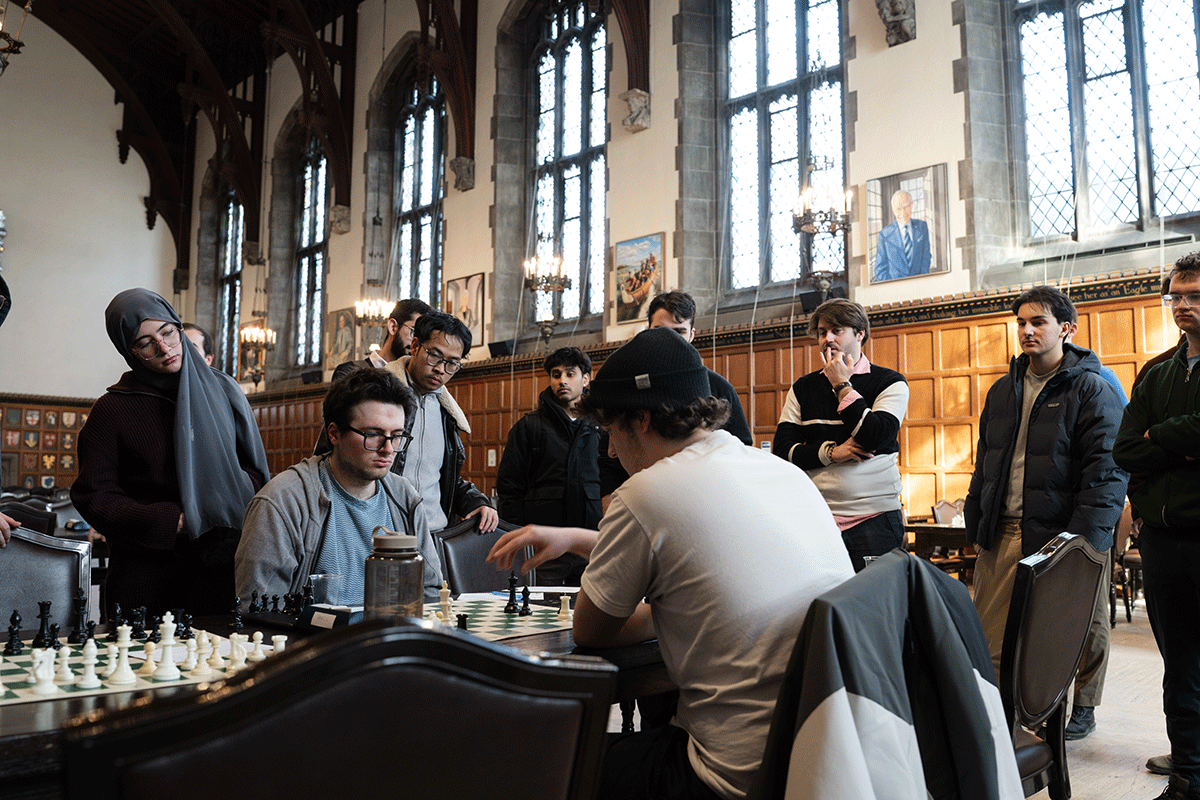
“I hope that chess across Canada can keep growing and we can have a record number of women participating each year,” Matai said, adding that they hope Carleton’s record-tying appearance this year will bring more women to future tournaments.
Matai said increasing the number of women in chess can also help highlight an area where men and women can compete at the same level.
“Chess, specifically, is in a very good position where it’s not a sport that needs to be segregated by gender,” Matai said.
Abulaila said it’s important to include women in chess because it’s more than just a board game.
“It’s something that teaches you how to think, not only in the game, but also in your life,” she said. “Thinking in a certain way should not be limited to one gender.”
Without the support of four other women alongside her, Van Loon said she would have felt “alienated” by the low percentage of female players at the tournament.
“I can’t imagine how tough the mental pressure must have been for [Currie] and [Shevtsova] in previous years with less women around.”
After a few games, Currie said male opponents told her they “underestimated” her before playing.
“I have the highest score, so they’re saying that because of my gender or appearance instead of my chess skills,” she said. “There are other women at this tournament that have great chess skills and deal with similar problems.”
For Igban, she says she feels as though she stands out in tournament spaces as both a person of colour and a woman.
“Sometimes, I do think people might underestimate me a little because of all the attributes to my appearance.”

“Even if [some players] are beginners, they shouldn’t have to deal with being stereotyped for being a woman. It should be good enough that they showed up, and they have the opportunity to play to develop their skills without being judged,” Currie said.
Van Loon said she felt relieved after her opponents treated her with kindness and respect, but that this isn’t always the case.
Shevtsova said although members of the team have experienced sexism at the tournament, having her team’s support makes all the difference.
“If you go with a team who will support you, and if you know that you have friends behind your back, you should go.”
Van Loon added although the chess environment isn’t yet very welcoming to women, she believes as more women become visible in clubs and tournaments, it will become less intimidating for others.
“You [wouldn’t] have to represent women, and you [would be] allowed to be bad,” she said.
The Carleton Chess Club returned to Ottawa with successes across the boards. Iassen Pelev defeated Dario Martinez, Ryan Fu was awarded Carleton’s top unrated player, “with a ¾ score and a 1605 performance rating on team D’s third board,” and Currie earned Carleton’s top scorer “with ⅘ points on team B’s fourth board.”
For Currie, helping to grow the representation of women in the club has been the most meaningful part of her experience. She said she’s proud of the effort her and others have put towards bringing people, including women, together in chess.
“I encourage other women to continue showing up to the club, to develop skills and to reach out to other women in the community.”
“I’ve heard some horror stories … but once the tournament got started, I didn’t think much about gender past feeling flashes of satisfaction when I saw a woman winning,” Van Loon added.
“My advice not just for chess, but also for life, is like, ‘Screw em.’”
Featured image provided by Derek Ma
This article, and all of the Charlatan’s work, is brought to you by an independent student newspaper dedicated to informing, uplifting and entertaining the Carleton University community. We are a levy-funded organization which plays a role in the broader, vibrant student culture on campus. By reading this article, you are supporting our efforts.