
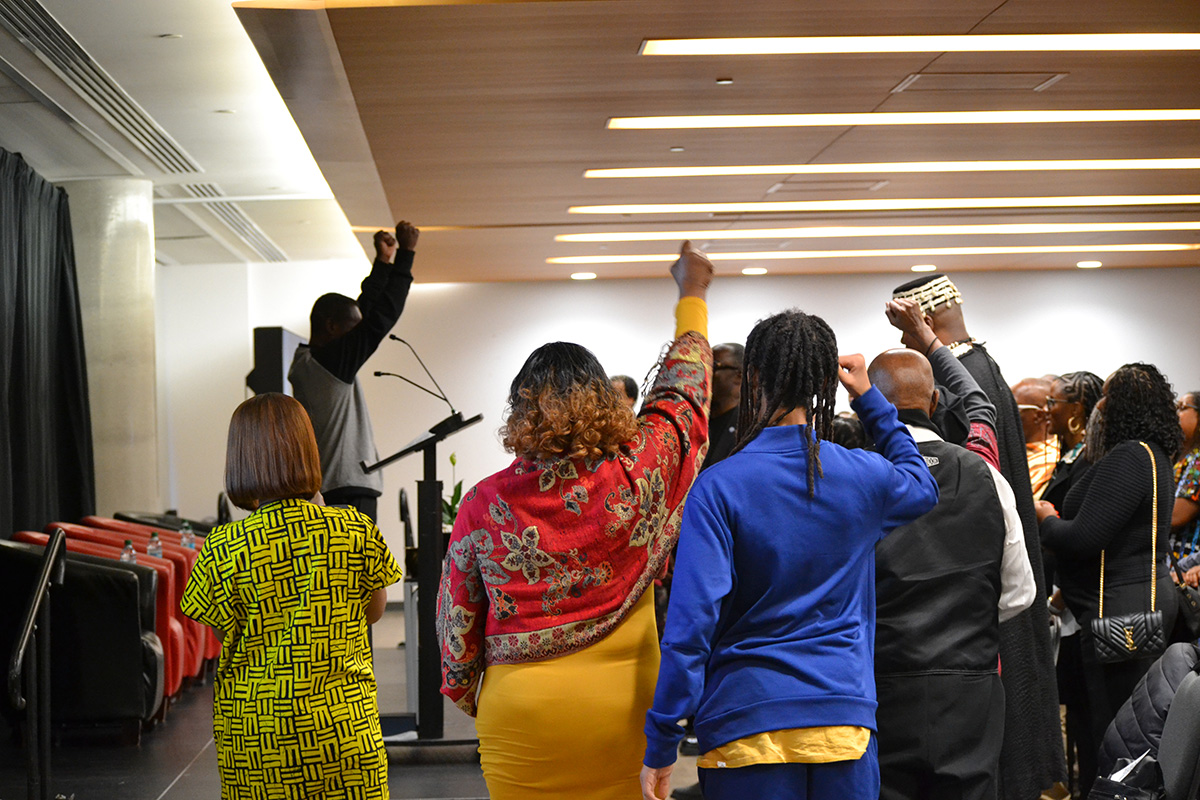
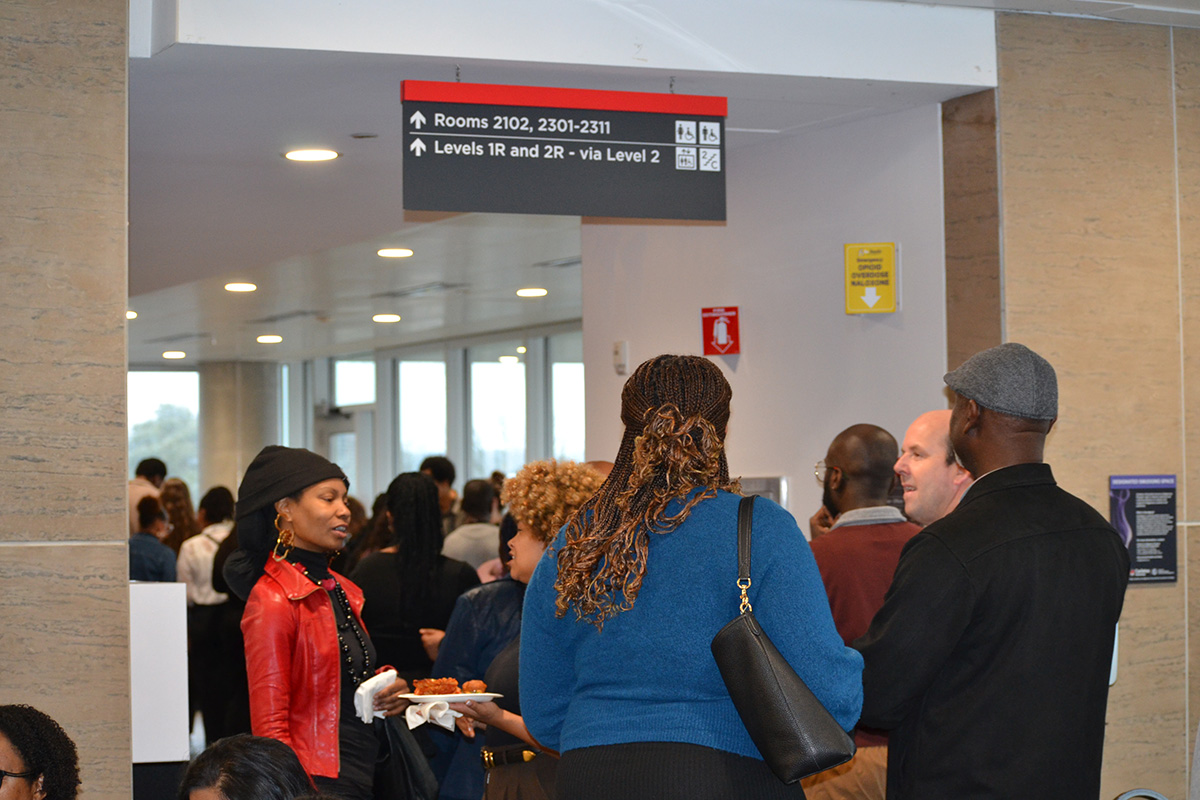
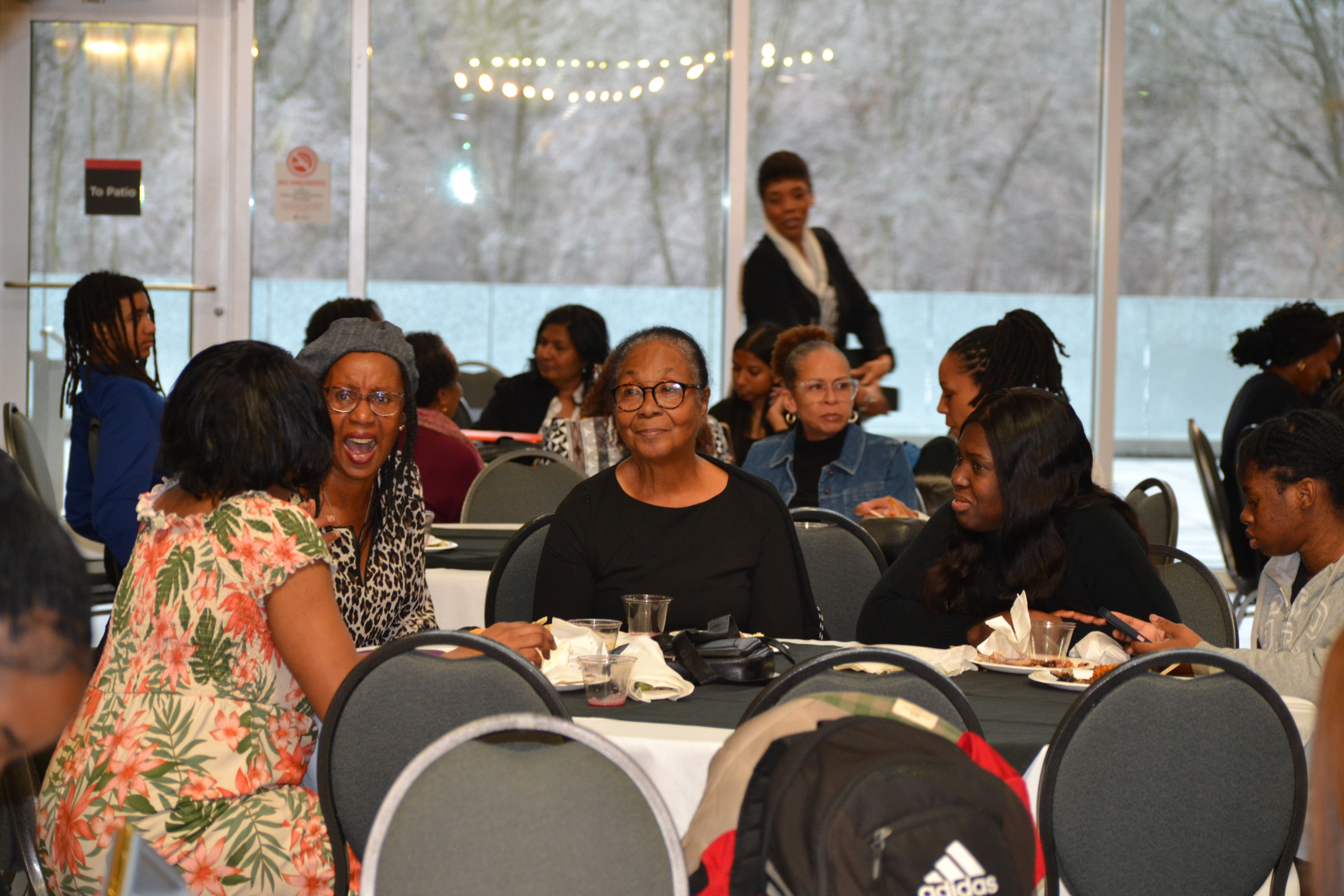
At the eighth annual Carleton University Black History is Every Month event on Wednesday, the school of social work’s Black history committee brought artists and academics together to share in Black joy.
Allison Everett, the event organizer and co-founder and chair of the Black history committee, said self-love inspired her to challenge the limit on celebrating Black achievement.
“We want to be able to celebrate Blackness outside of the regular Black History Month in February,” she said.
“Every day, when I wake up, I look in the mirror and I see that I am Black, I am beautiful, I am fabulous, and I want to be able to celebrate that fabulosity all year round.”
Drawing on this year’s theme of “Joy in Every Step,” the evening showcased mediums through which Black people express happiness found in themselves and in one another.
Artwork submitted by high school students to the Ottawa Catholic School Board’s Afrofuturism and Black joy art contest greeted guests to the Richcraft Hall exhibit.
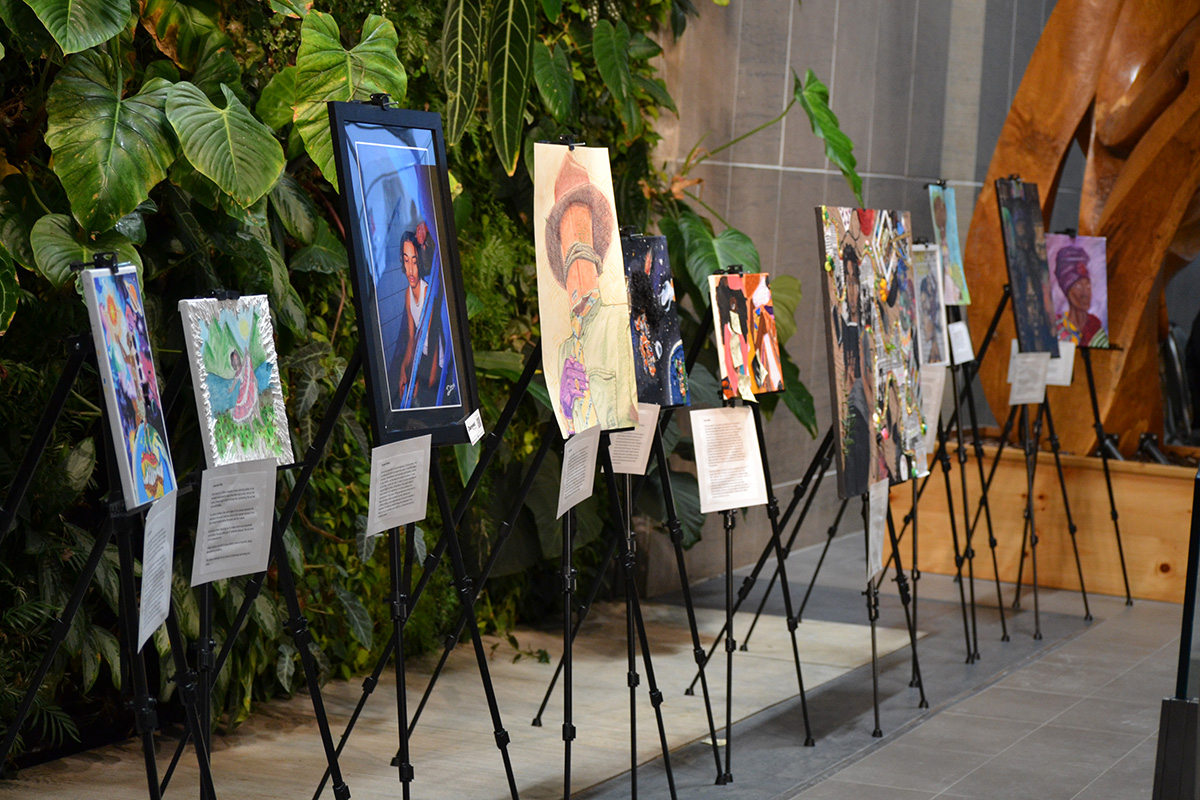
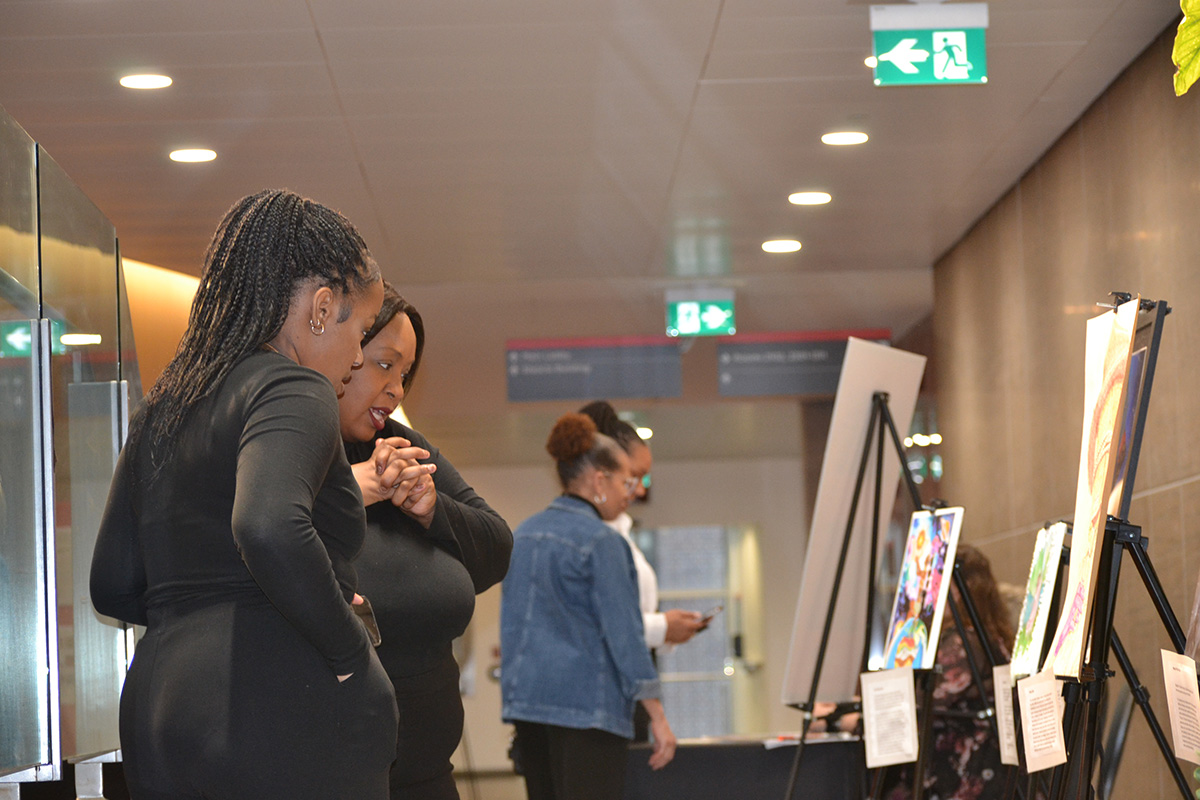
Tolorunlogo Akinrinola, a graduation coach for Black students at the Ottawa Catholic School Board, said the art represents the creativity that exists naturally in young Black minds.
“Excellence is something that Black students embody every day,” he said. “If you did your best, you’re successful, and it doesn’t matter what accolades come or follow that.”
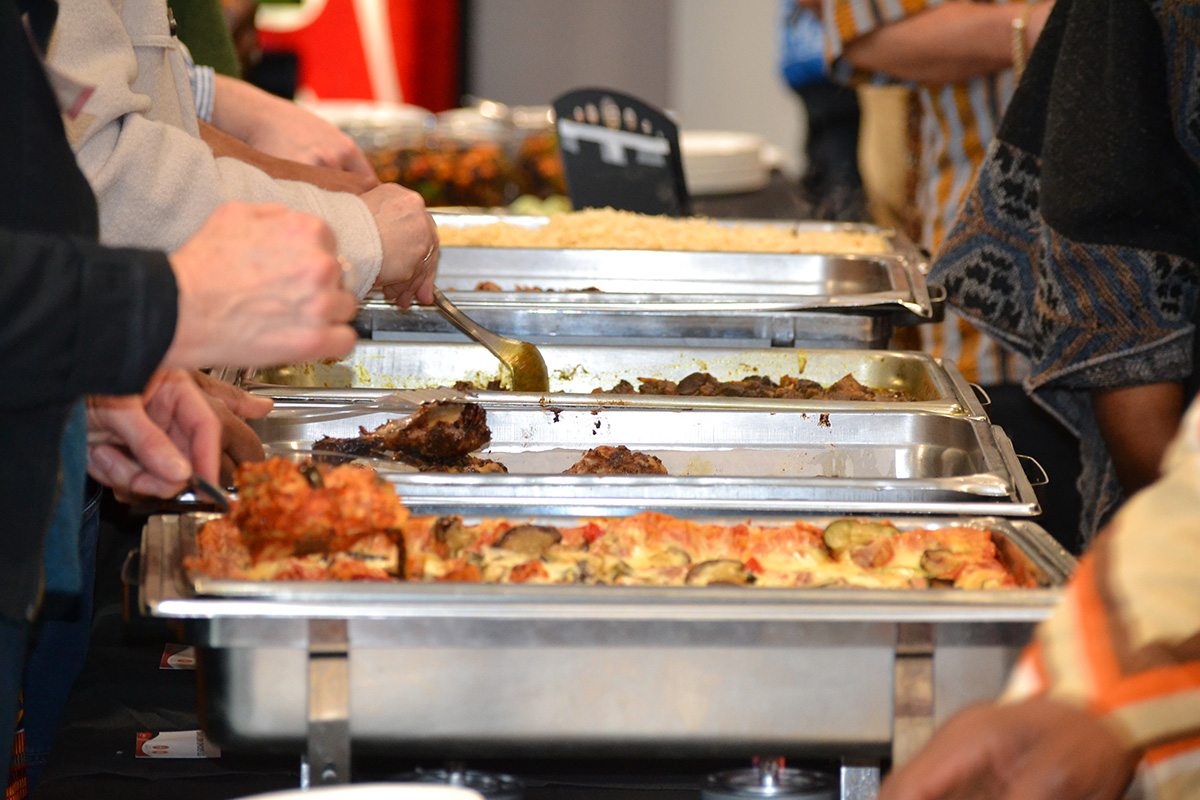
To kick off the event, guests were invited to partake in a buffet-style dinner served by Carleton’s Dining Services with cultural food options such as curried goat and rice and peas.
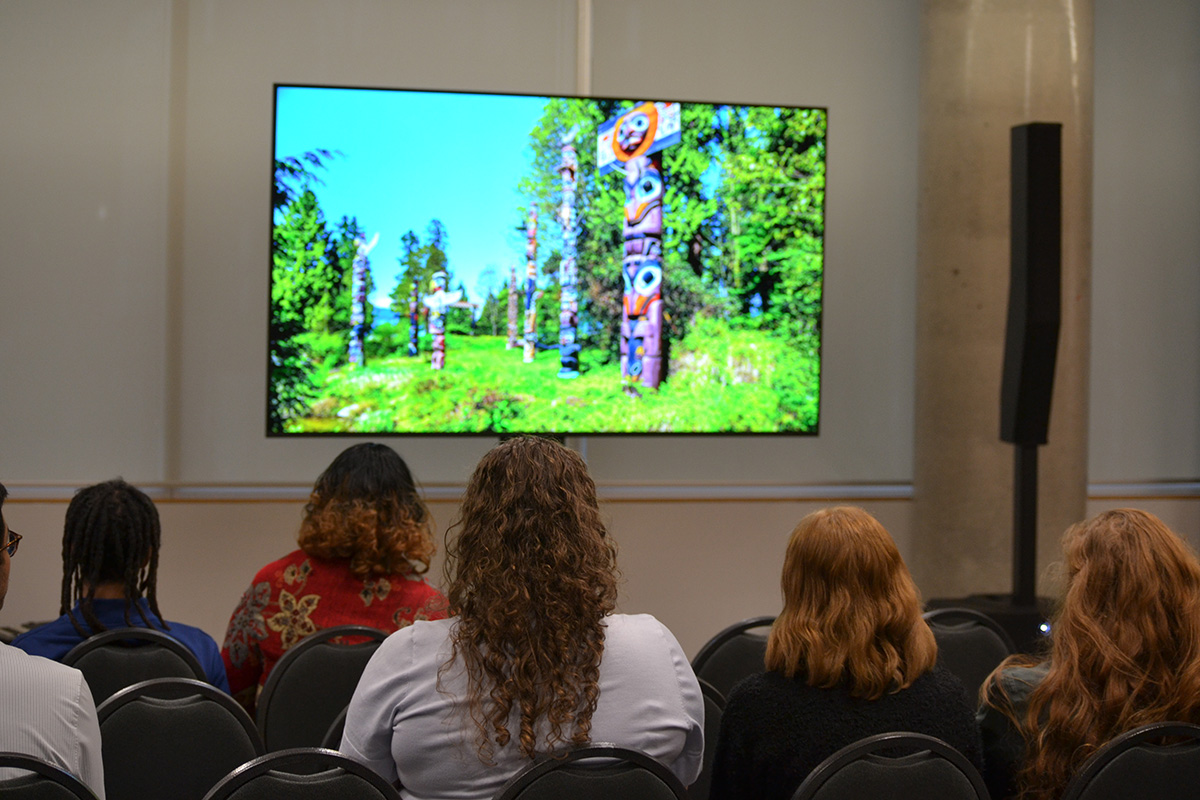
Soon after, Everett directed guests’ attention to the 2021 Black History Is Every Month documentary by the Black history committee.
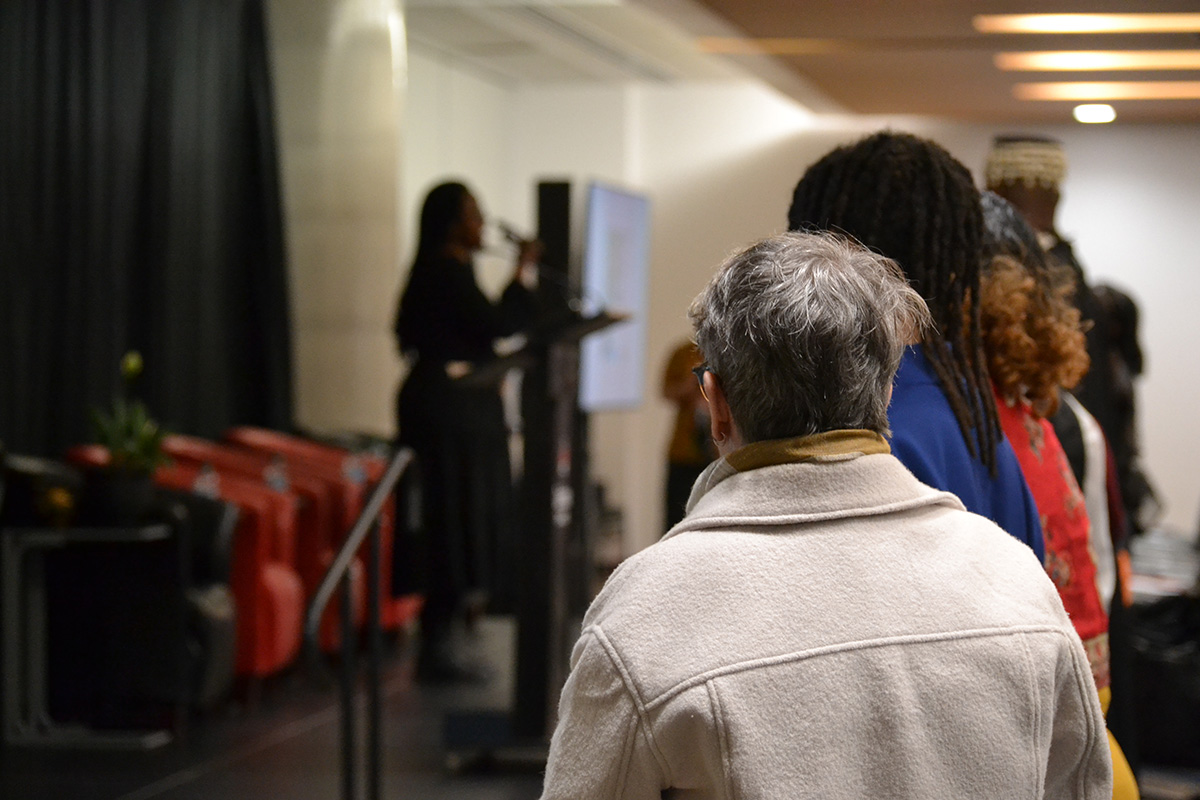
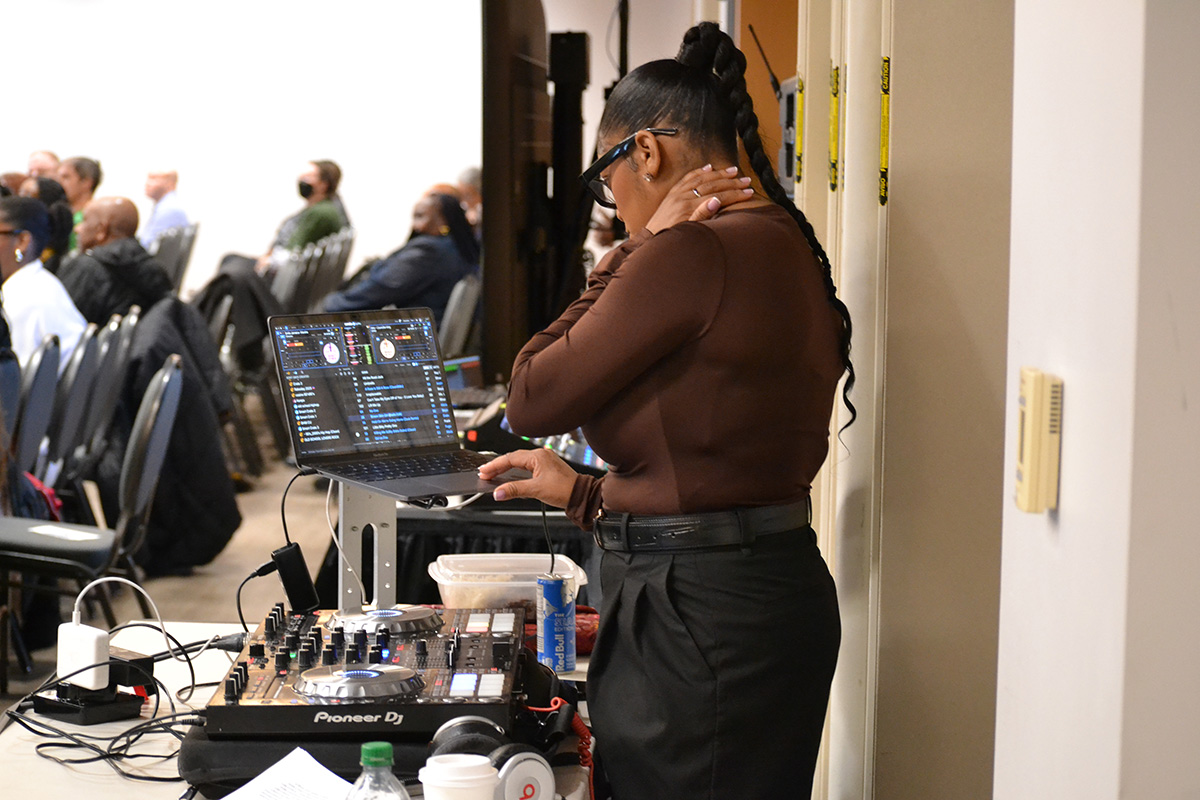
Once the documentary was over, the microphone continued to change hands through the night, moving from Sudanese-Canadian singer-songwriter Samar, to Coun. Rawlson King of the Rideau-Rockcliffe Ward to other activists and performers.
It eventually reached keynote speaker Andrew B. Campbell, a professor at the University of Toronto and Queen’s University and the director of the Centre for Black Studies in Education.
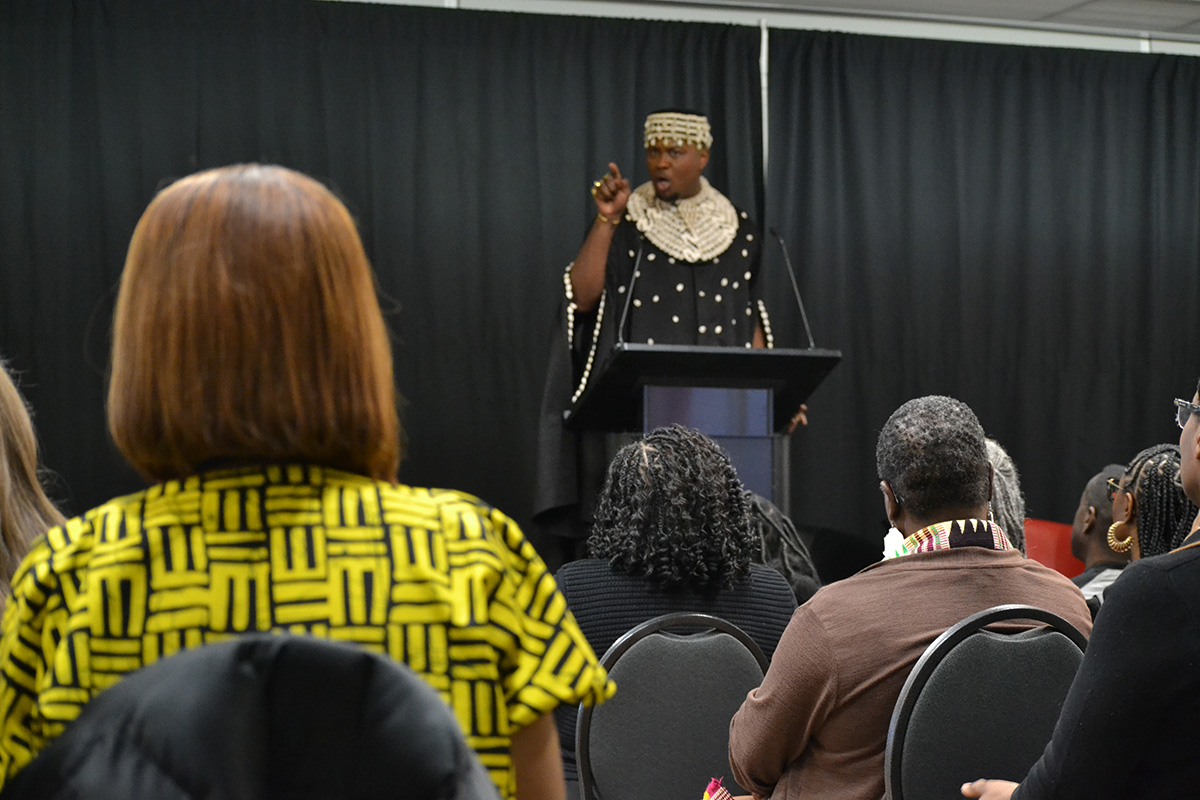
Campbell stressed the importance of developing your voice and said Black people often go unaccredited.
“That speech I made is years of work,” he said. “As much as it seems like I’m talking off my head, I had 21 sheets of paper in my folder with notes in big font.”
“You rehearse. You practice. Gaining your voice is something to be practiced, something to be rehearsed, something to be nurtured.”
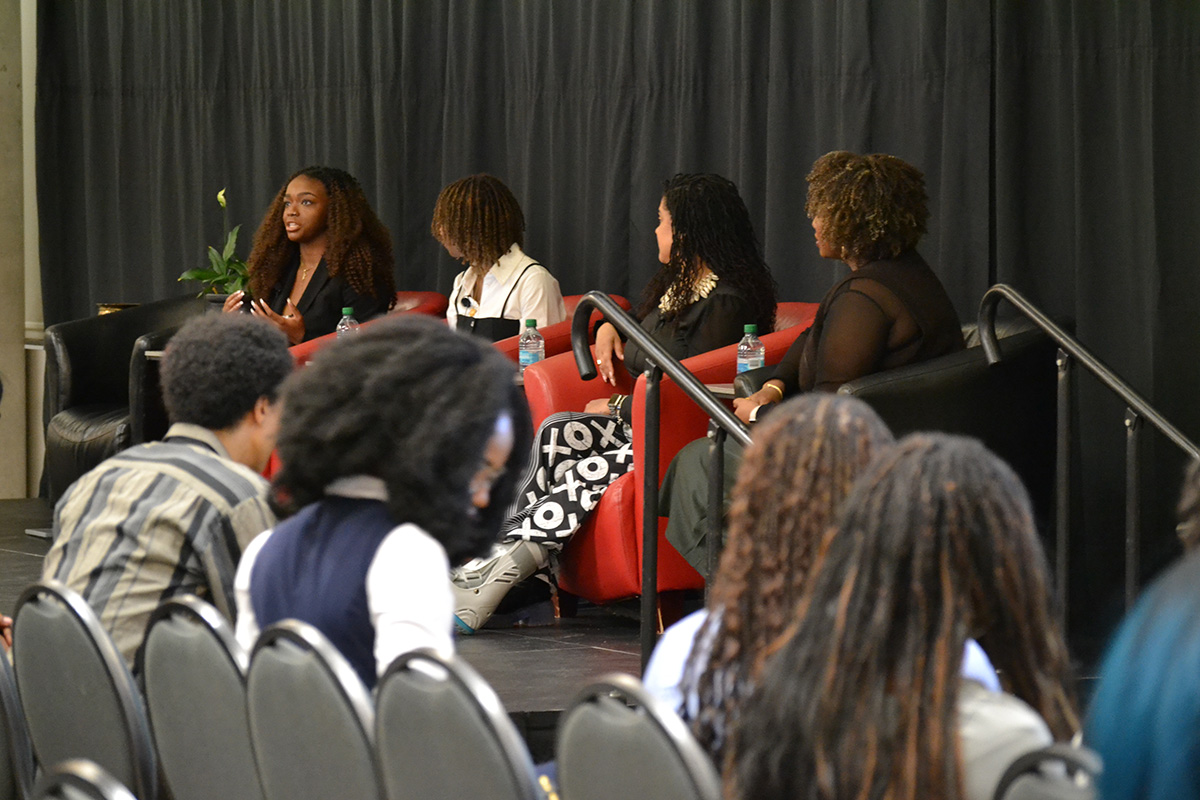
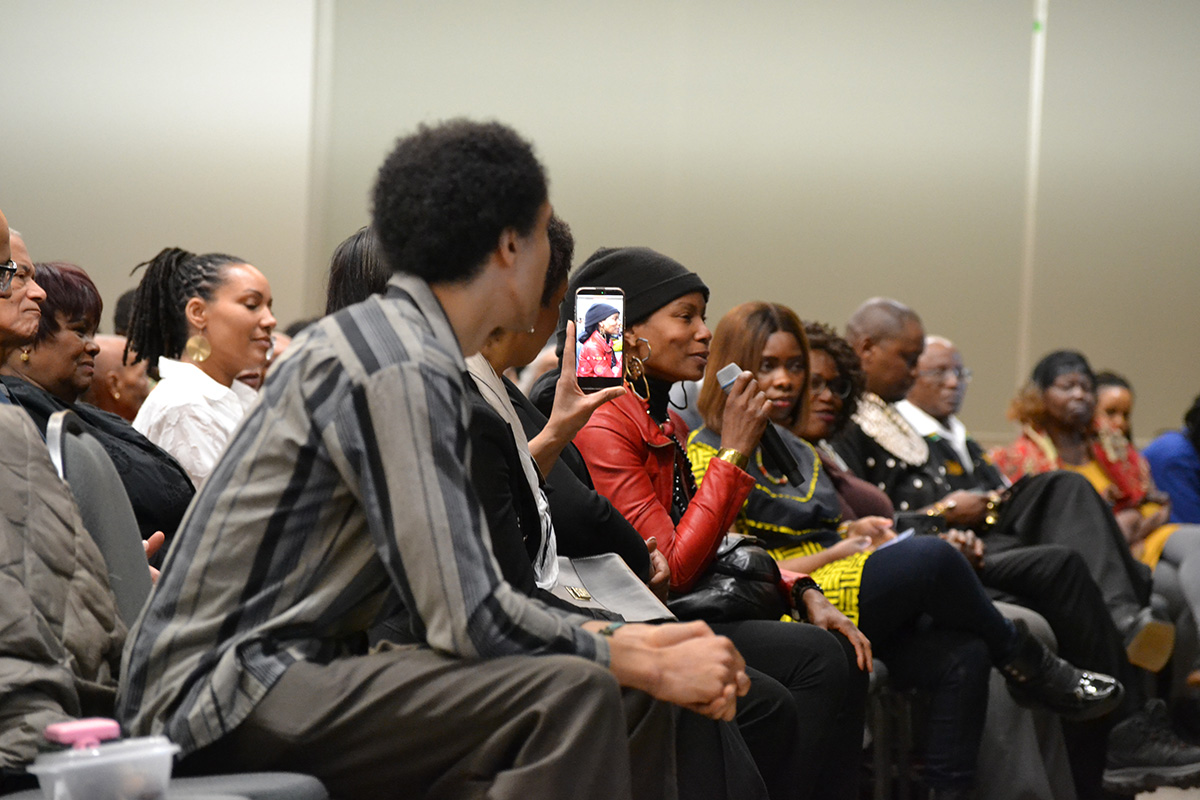
Nana aba Duncan, a Carleton journalism professor and event host, said she can remember many times when her joy was silenced by both Black and non-Black people who saw it as “too loud” or “too much.”
It’s moments like those that have taught her that there is all the more reason for Black people to be joyful in the spaces they take up, she said.
“I know that in my community, joy is there all the time … but there are so many messages that we get that we aren’t supposed to be happy as Black people,” Duncan, who is also the Carty chair of journalism, diversity and inclusion studies at Carleton, said.
“To me, joy is an act of resistance.”
Featured image by Jaidyn Gonsalves/the Charlatan
This article, and all of the Charlatan’s work, is brought to you by an independent student newspaper dedicated to informing, uplifting and entertaining the Carleton University community. We are a levy-funded organization which plays a role in the broader, vibrant student culture on campus. By reading this article, you are supporting our efforts.