
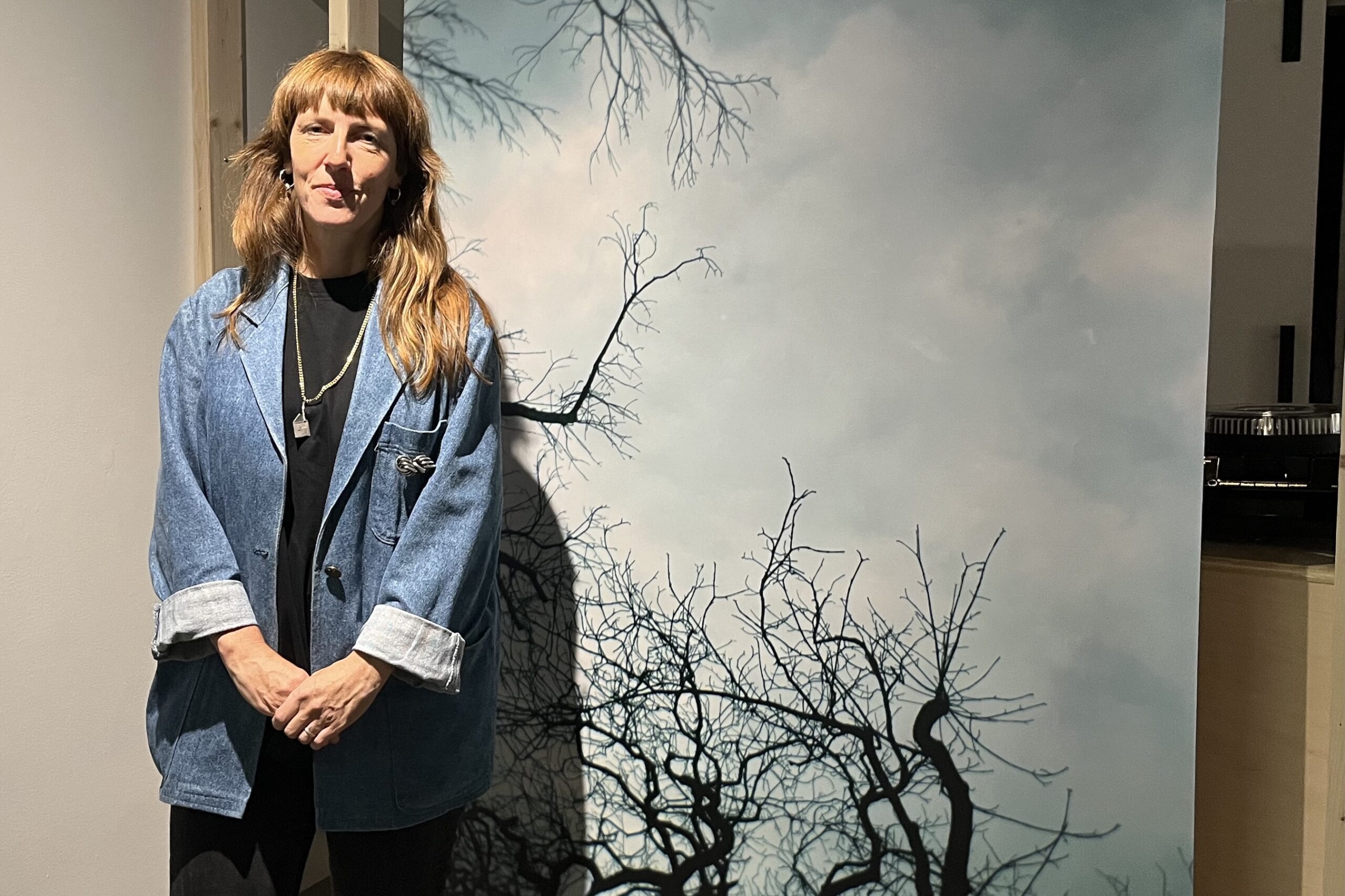
Through photographs of towering, barren trees and sculptures of bullet holes engraved in buildings, Berlin-based artist Sonya Schönberger is confronting how objects and landscapes carry scars of war.
An exhibit of her work, The Memory of Things, of You, of Me, is on display until Oct. 3 at Carleton University’s Lightroom Gallery in the Architecture Building.
Schönberger spoke of her work and how objects can hold memories of conflict at a three-hour discussion on Tuesday, the night of the exhibit’s launch.
Carleton architecture professor Jerzy Elzanowski opened the discussion with the question, “What does it mean to meet the trees of Berlin, growing out of gravel mounds of rubble from the Second World War?”
Schönberger began by explaining her previous work with nails found during an archaeological dig on Tempelhofer Feld, a forced labour camp in Berlin during the Second World War. In a 2021 German exhibition called Nägel, she spread the nails over the floor and invited viewers to walk across them.
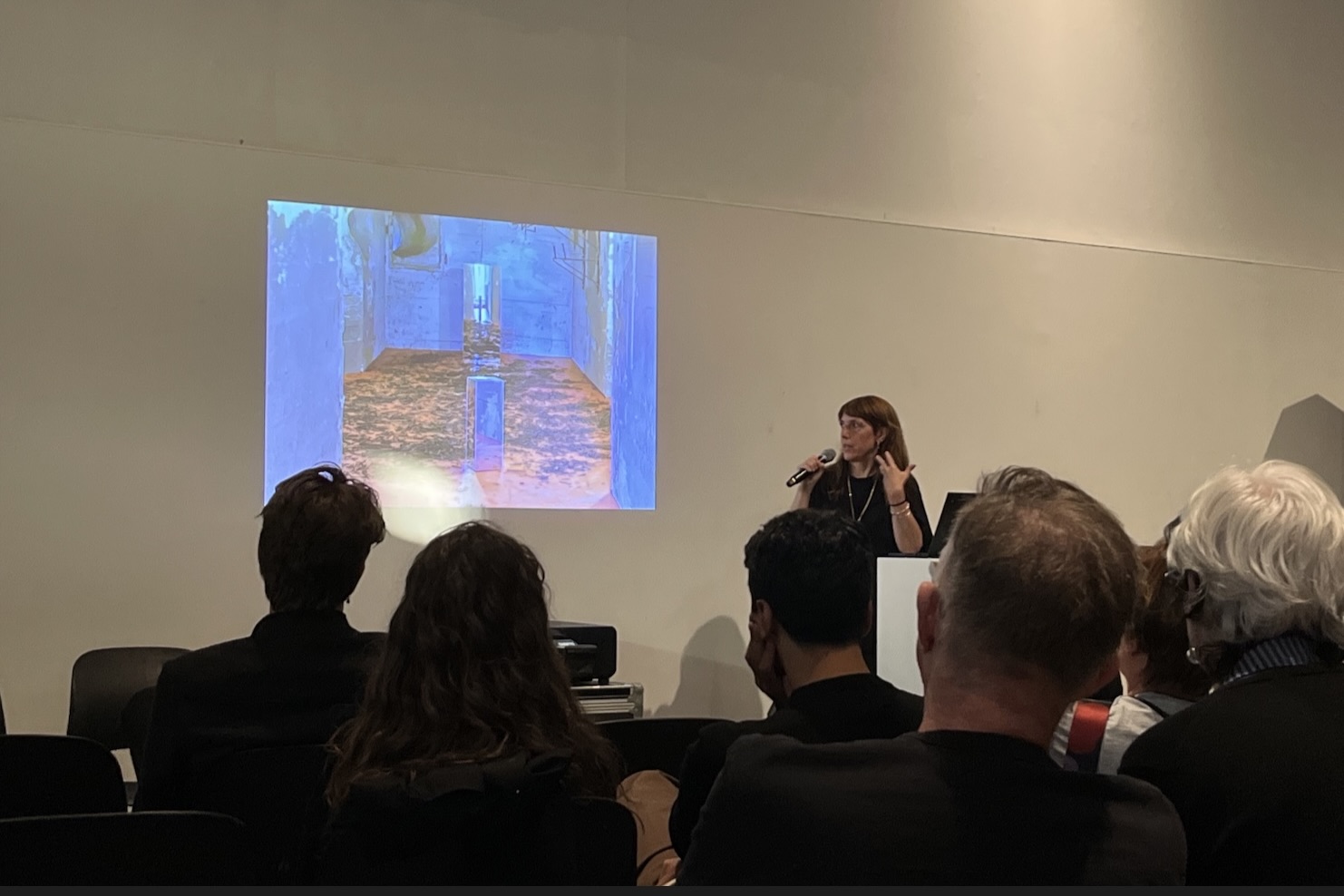
“The idea behind that was to really feel the nails under the soles of your shoes and symbolically take on this history,” Schönberger said.
Through this physical, unpleasant experience, viewers could confront the unseen history of forced labourers.
Though no nails are involved this time around, the exhibition at Carleton attempts a similar feat.
Small, rutted silicone castings of bullet holes found on buildings in East Germany are displayed on one wall, along with videos, maps and photographs that invite visitors to examine the breadth of conflict.
Schönberger said she hopes viewers take the time to connect with the work in their own way.
“There is no rule or order on how to approach this,” she said.
For Imaaduddin Syed, a second-year bioinformatics Carleton student, the exhibit highlights the enduring impact that war can have on a city.
“I think the photos of the trees really encapsulate how so much has come out of the destruction of World War Two,” Syed said as he observed the exhibit.
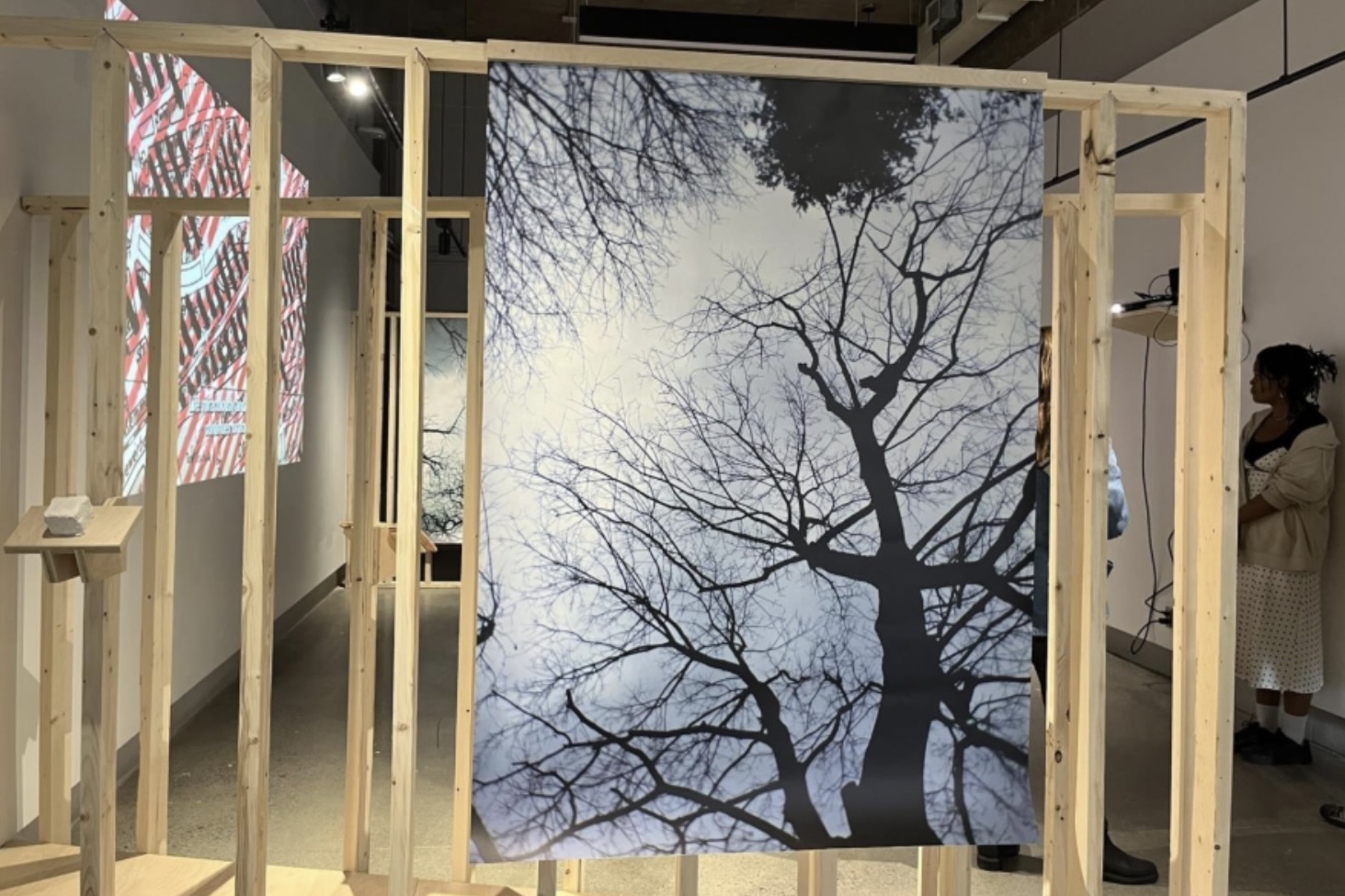
The spindling trees grew out of the rubble hills formed when the remains of thousands of buildings destroyed by Allied bombs in Berlin were piled together.
While working with historic objects might not always provide a full picture, it allows people to engage in something profoundly human, said Carleton history professor Jennifer Evans.
“We have to remember that there are these elusive things that manifest in the ways we touch, smell, inhale and move through the space itself,” she said in the discussion.
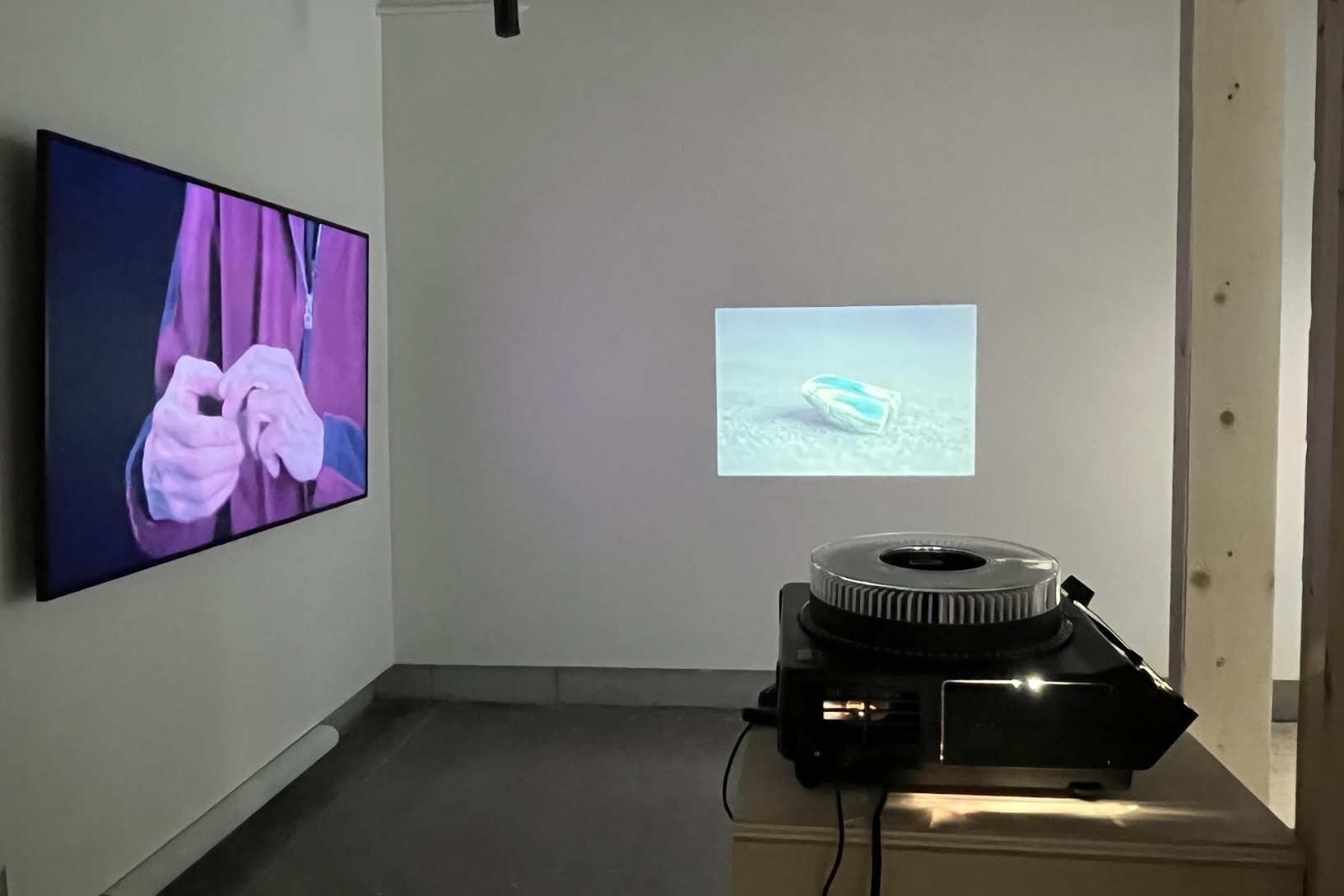
Another video piece, Michael, shows artifact expert Michael Engelke explaining where fragments from the city’s rubble hills come from.
Visitors can click through the slideshow displaying pieces of fragmented glass and ceramics.
For some viewers, the exhibit sheds a new light on the Second World War.
“To me, the most powerful part of this is that you’re actually interacting with something real and being forced to be uncomfortable,” said Matthew Harding, a retired elementary school teacher who attended the exhibit.
Elzanowski said he hopes the exhibit can expand people’s perspectives.
“When [Sonya] explores the loss of material integrity, ultimately, she explores human loss,” he said.
“In a world of polarization, political violence, climate crisis and war, Sonya’s work reminds us that if we look closely, we can see through to compassion.”
Featured image by Miriam Visser/the Charlatan