
This story contains mention of sexual violence. Those in need of support can call the Ottawa Distress Centre Crisis Line: 613-238-3311, the Sexual Assault Support Center of Ottawa Crisis Line: 613-234-2266 or the Ottawa Rape Crisis Centre Line: 613-562-2333.
When Serial was released in 2014, Bailey Reid was joined the millions of other listeners obsessed with the trailblazing true crime podcast.
But as an anti-gender-based violence advocate and support worker, she noticed harmful narratives taking hold in the true crime genre.
“The stories are told in this very folkloric way, which kind of creates a mystery or a ‘whodunnit,’” Reid said. “I just started to think about what it meant to consume true crime narratives without thinking critically about the gender-based violence behind them.”
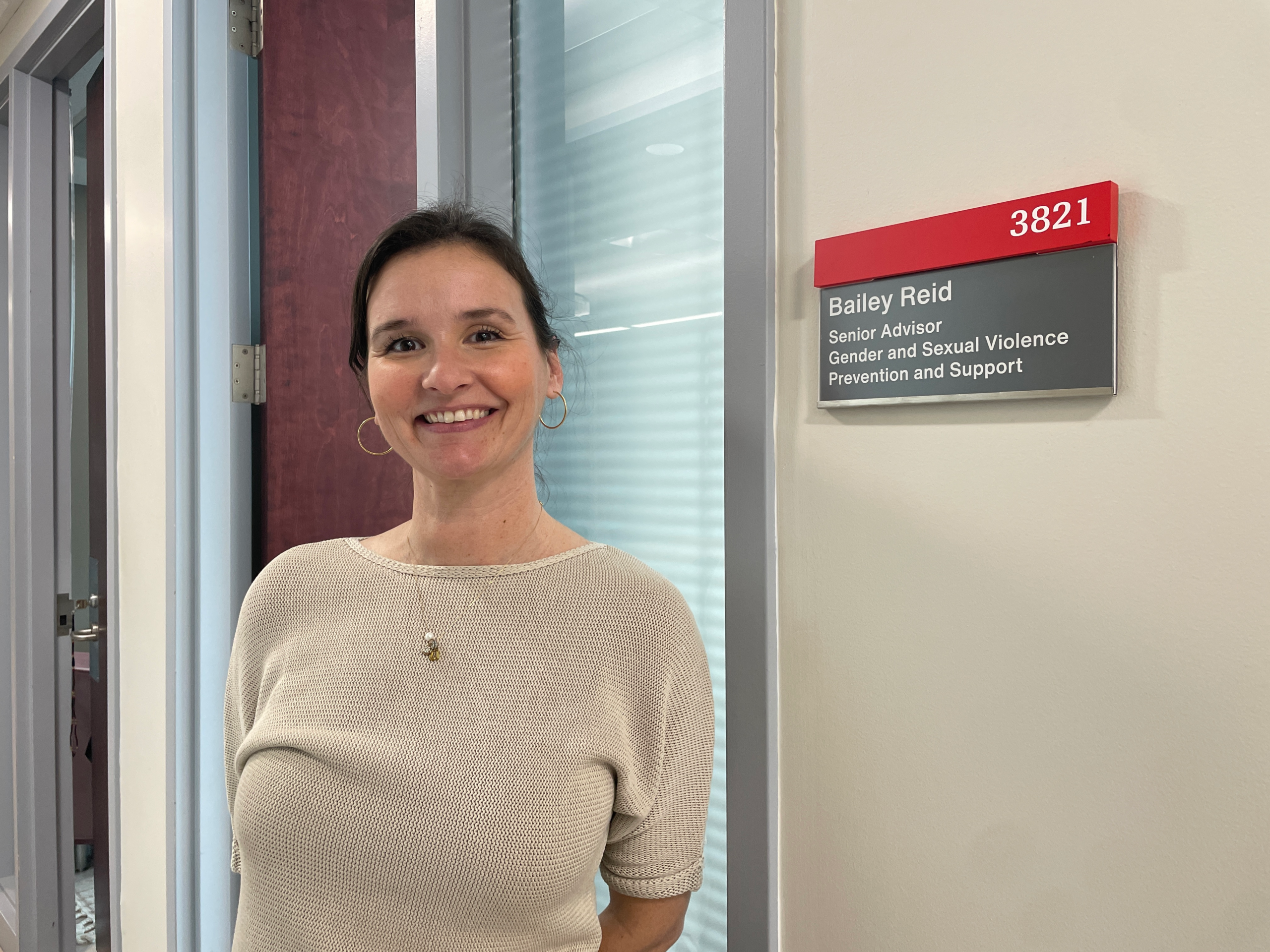
Now Senior Advisor on Gender and Sexual Violence Prevention and Support at Carleton University, Reid created The Care Frame: True Crime as part of her master’s thesis.
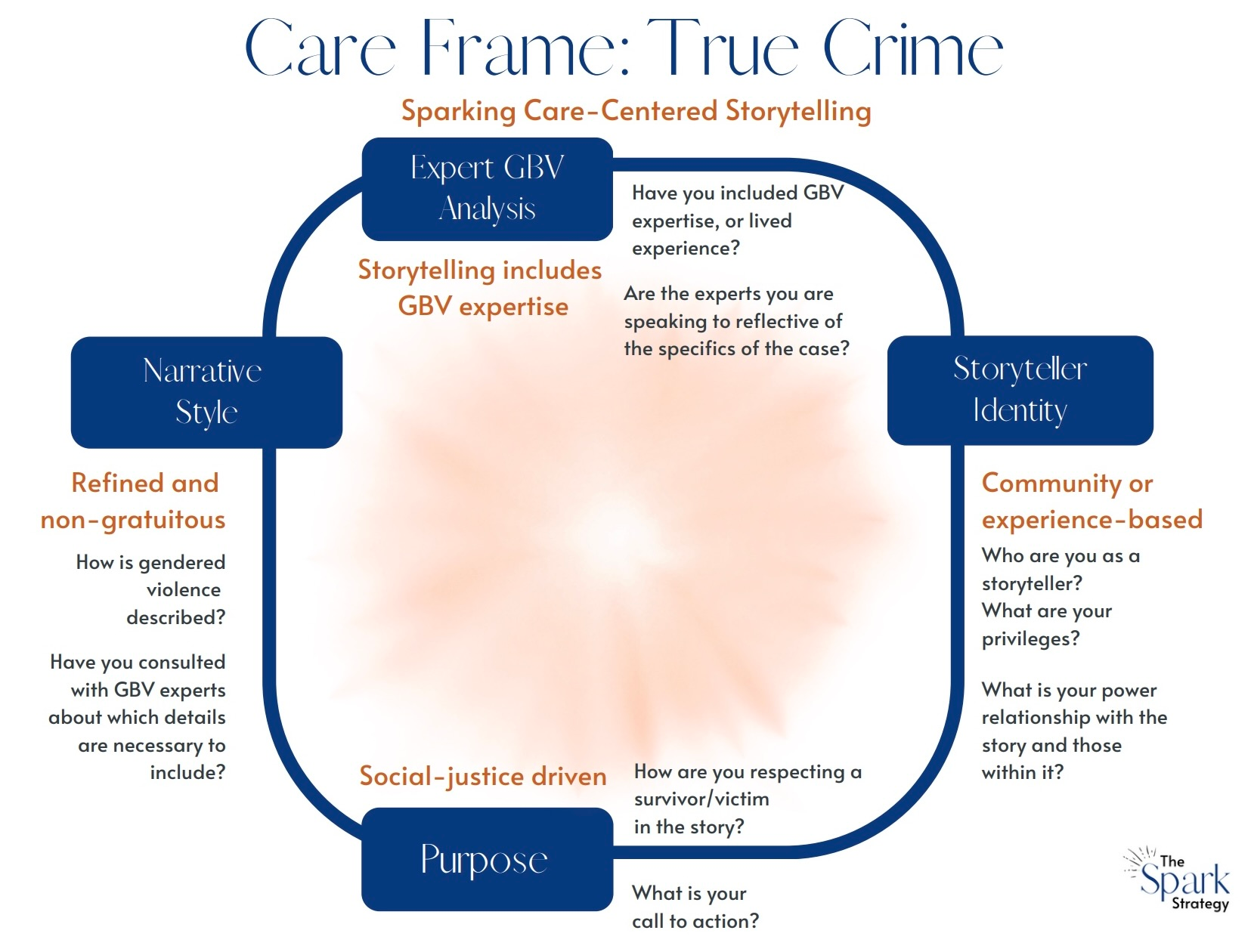
The framework is an online tool designed to help true crime creators address themes around gender violence in a “care-full way,” Reid explained.
It features four key principles that guide creators to tell true crime stories ethically: narrative style, expert gender-based violence analysis, storyteller identity and purpose.
The framework asks creators questions about consultation with gender-based violence experts, as well as their own privilege and respect for victims as storytellers.
Creators are encouraged to start by considering each principle or wall that “frames” their narrative, answer its questions and continue returning to the frame to ensure their stories “remain grounded in care-full principles,” the website reads.
“This tool helps creators build stories that honor the lives affected by these cases while still engaging audiences with skillful storytelling, just like a painter working within the edges of a canvas,” the website reads. “The Care Frame doesn’t limit the art, it elevates it.”
To create the framework, Reid listened to seven different true crime podcasts with themes of gender-based violence. She identified six common tropes, including evil strangers, perfect victim paradigms and rape myths.
In the podcast My Favorite Murder, Reid said storytellers use different slogans like, “stay out of the woods” or “f — politeness.”
Reid explained that this perpetuates the “stranger danger” rape myth, when in fact, most women are sexually assaulted by someone they know.
“True crime is meant to be a warning to women of how to keep yourself safe or how to stay safe,” Reid said. “If that’s what we’re doing, then we have to do it in a responsible way.”
During her research, Reid approached Matthew Shaer for help. Shaer is the co-founder of the podcast studio Campside and co-host and creator of the true crime audio documentary Suspect.
“Ever since true crime podcasting became a thing, there have always been these underlying questions about the morality of the genre … About who it’s okay to feature, what perspectives you could take about honouring the victim, about not sensationalizing it,” Shaer said.
True crime entertains many consumers, he said, and it’s easy for audiences to think of people featured in true crime stories as characters.
“People will literally unwind by watching true crime documentaries,” Shaer said, adding audiences understand that “not all true crime is created equal,” and that the morality of true crime is the subject of much public discourse.
“The timing could not be more right for this tool.”
Syd Robbescheuten*, a second-year Carleton journalism student and a true crime fan, said she started watching the genre when she was 12 out of a “morbid sense of curiosity.”
By consuming true crime television, YouTube, TikToks and podcasts, Robbescheuten said she became desensitized the crimes about which she was learning.
That numbness didn’t strike her until it hit her small town. Kimberly Black, an extended member of Robbescheuten’s family, was raped and left for dead when Robbescheuten was 13.
Black survived, but the incident turned Robbescheuten off the true crime community.
“That was the first time that it only clocked me that this wasn’t just a story,” Robbescheuten said. “These are people’s lives.”
There must be an ethical framework for telling true crime stories, Robbescheuten added.
“(Journalists) have this sort of code that we have to follow, and [true crime creators] have nothing.”
Reid’s hopes to work with companies to weave ethical storytelling into true crime productions, or at journalism schools where students are interested in podcasting or YouTube storytelling.
For now, her main goal is to make the Care Frame more mainstream.
“That’s why it’s so important that it’s free, so there’s no barrier to access,” Reid said. “It’s really meant for anybody to use.”
*Syd Robbescheuten has previously contributed to the Charlatan.
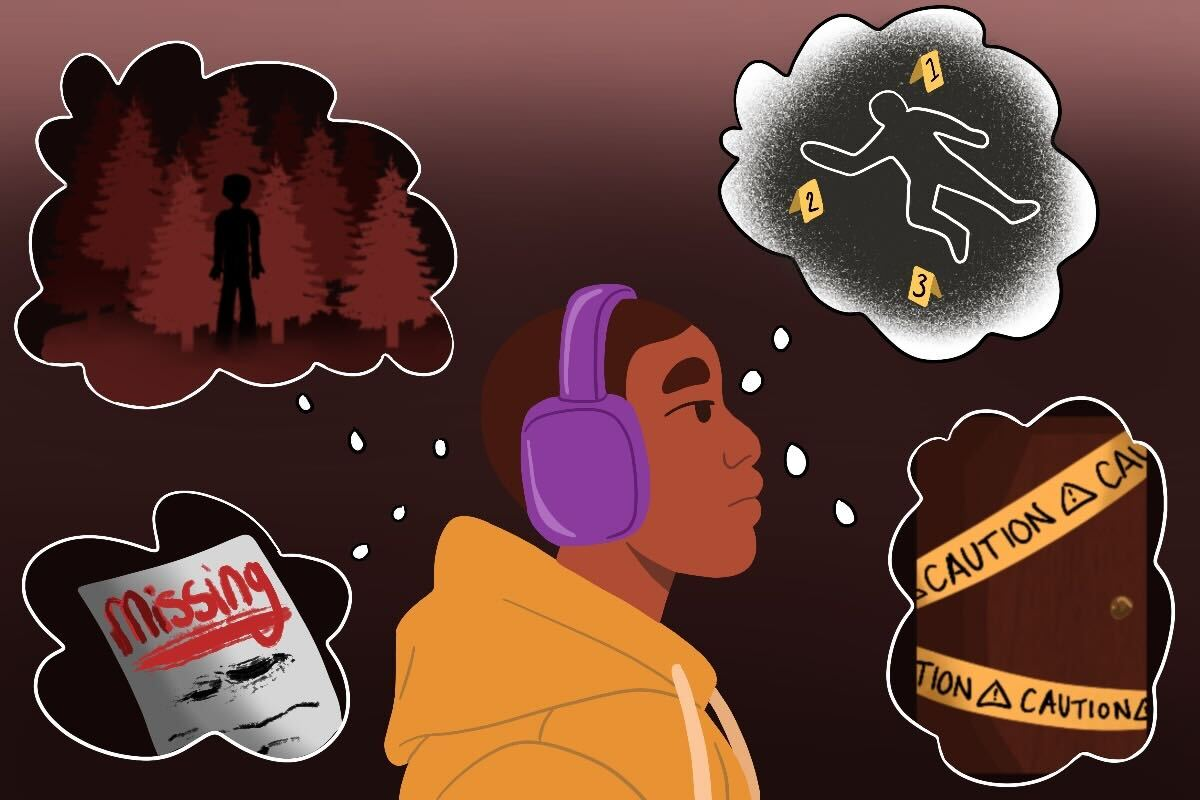
Featured graphic by Alisha Velji/the Charlatan.
This article, and all of the Charlatan’s work, is brought to you by an independent student newspaper dedicated to informing, uplifting and entertaining the Carleton University community. We are a levy-funded organization which plays a role in the broader, vibrant student culture on campus. By reading this article, you are supporting our efforts.