
The Carleton Disability Awareness Centre held a craft night earlier this week for students to de-stress, meet new people and take a break from busy schedules.
Unlike many other craft nights at the university, Thursday’s event put accessibility at the forefront of its programming.
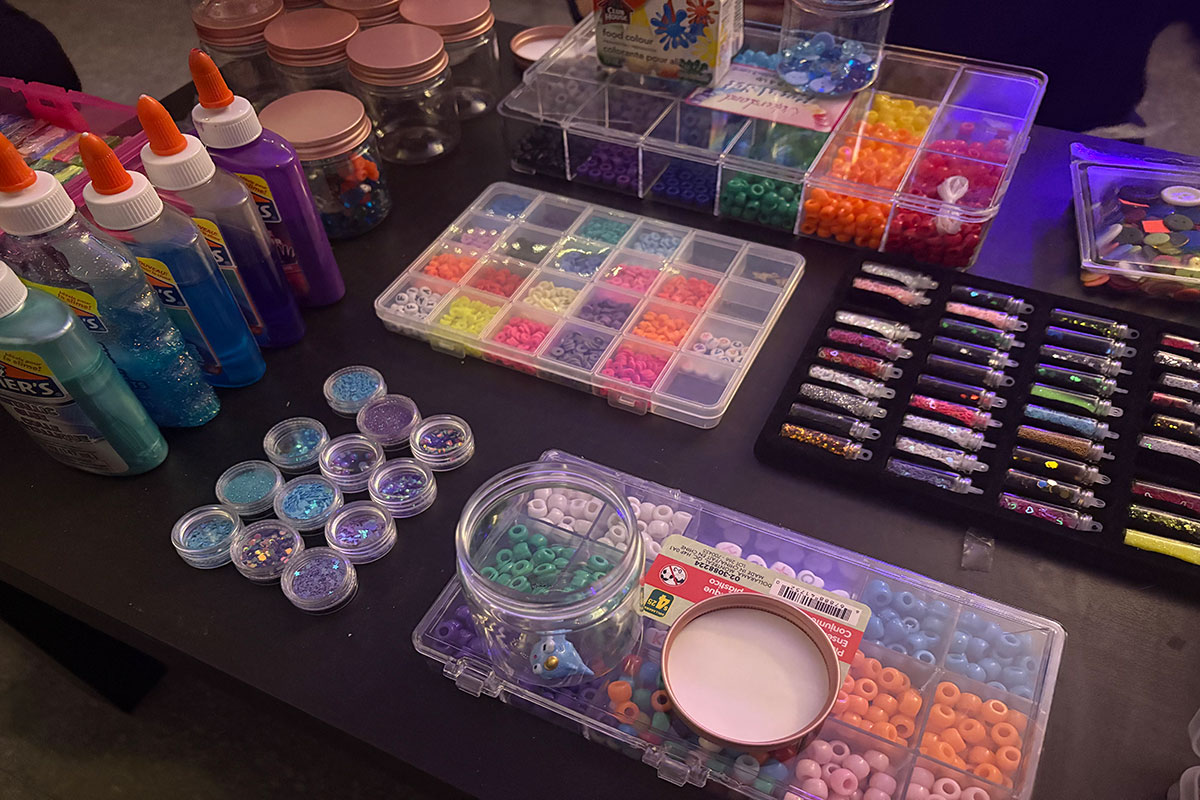
Hosted at the sensory-friendly centre with low lighting and comfortable couches, participants created sensory jars and worked with modeling clay at the event.
Glitter glue, beads and buttons were among the materials available for participants to fill their sensory jars and make clay sculptures.
Part of Carleton University’s Wellness Week, the crafts were accessible to accommodate different needs, according to Shay Hammad, the CDAC programming coordinator.
“A lot of people with disabilities have sensory needs and seek sensory stimulation, so I feel the jars are a rewarding experience,” they said.
Event attendee Annabeth Perry said she enjoyed the creative outlet, noting that for her, sensory crafts are helpful for dealing with emotions.
Offering a variety of different materials allowed people to create crafts that suit their specific needs, Perry said.
“Some people really like smells, some don’t. Some people like specific textures, some people don’t,” she said. “Having a way to pick a variety that suits you specifically is important.”
There are very few events that consider disabled students and accommodate their needs, Hammad said.
“Having events that are targeted specifically at disabled students might feel more like a safe space for people, and people might feel more willing to actually go to those events because they know it will be a safe space.”
The jars accommodate different sensory preferences, Hammad added, including visual and auditory. Beads could be added to the jars for an auditory aspect, while glitter could be used for a visual component.
The craft night offered a space to find community and meet new people, according to AJ Davey, a CDAC volunteer at the event.
“I tend to play with my fingers a lot, and having something small enough like clay or jars like this is very nice,” they said.
“They’re good regulation tools,” Hammad added. “If you are feeling stressed, staring at your glitter in your sensory jar is helpful.”
“It’s also just a rewarding experience to be able to create something.”
__________________________________________________________________________________________
Featured image by Jessica Jagodics/the Charlatan.
This article, and all of the Charlatan’s work, is brought to you by an independent student newspaper dedicated to informing, uplifting and entertaining the Carleton University community. We are a levy-funded organization which plays a role in the broader, vibrant student culture on campus. By reading this article, you are supporting our efforts.