

The Carleton University Students’ Association held its first of three annual members’ meetings on March 2.
The annual members meetings are council meetings for large agenda items, like ratifying election results, approving the budget and electing vice-presidents. Both outgoing and incoming CUSA councillors generally attend.
CUSA budget
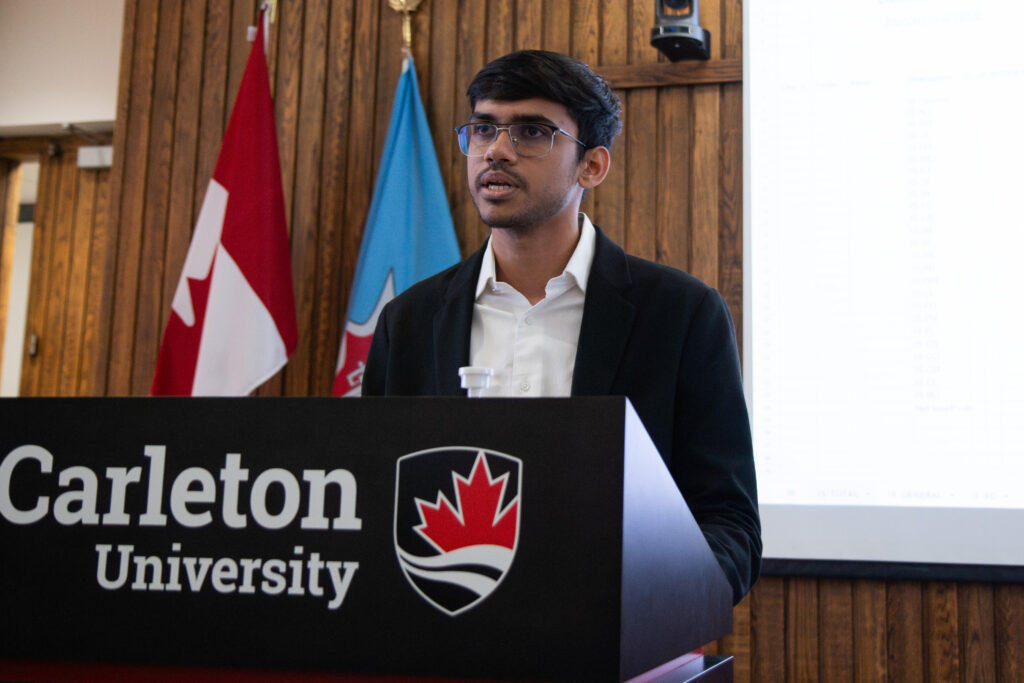
CUSA’s vice-president (finance), Om Maradia, presented the association’s budget for the 2026-2027 year at the meeting. The budget was approved unanimously.
Maradia said drafting this year’s budget focused on improving consistency from last year’s.
“We have tried to amend many of the inconsistencies seen during this year’s budget,” Maradia said. “Next year’s budget is much more consistent and eliminates many errors.”
He also emphasized that the budget was built with extra buffers to avoid the surprises CUSA ran into this year.
“The most prudent way to budget is always to have extra room for expenses,” Maradia said. “As a result, you may see and notice that many expense budget lines have slightly higher allocations.”
Last year’s annual members’ meeting was cut short after seven councillors walked out following a dispute over that year’s budget, with then-vice president (finance) Samuel Easby telling council he was unfamiliar with the version being presented. CUSA had to schedule a fourth annual members’ meeting to pass the budget.
In this year’s budget, CUSA is projecting a total surplus of approximately $14,000 by the end of the fiscal year.
Ollie’s Pub and Patio is projecting an approximately $279,359 deficit in the upcoming fiscal year, compared to a projected deficit of $40,000 in last year’s budget. Maradia said this is because of an overestimation of revenue and an underestimation of costs.
“This year’s budgeted forecast of a $40,000 deficit is realistically unattainable,” he said.
Rooster’s Coffeehouse is projecting a $61,811 deficit after previously posting profits. Maradia said there are currently no plans to increase menu prices again.
The main level of Haven, a coffee shop and community space that was shut down last year due to deep financial losses, is currently rented out to the fitness centre Studio Twitch. The rent brings in $44,209 yearly to the association, less than the originally projected revenue of $70,000 a year.
This discrepancy is a result of last year’s budget not accounting for maintenance costs, property tax and depreciation, Maradia said.
Maradia said that CUSA’s finances are “more stable” and next year’s council should aim to break even.
Vice-president (internal) candidates
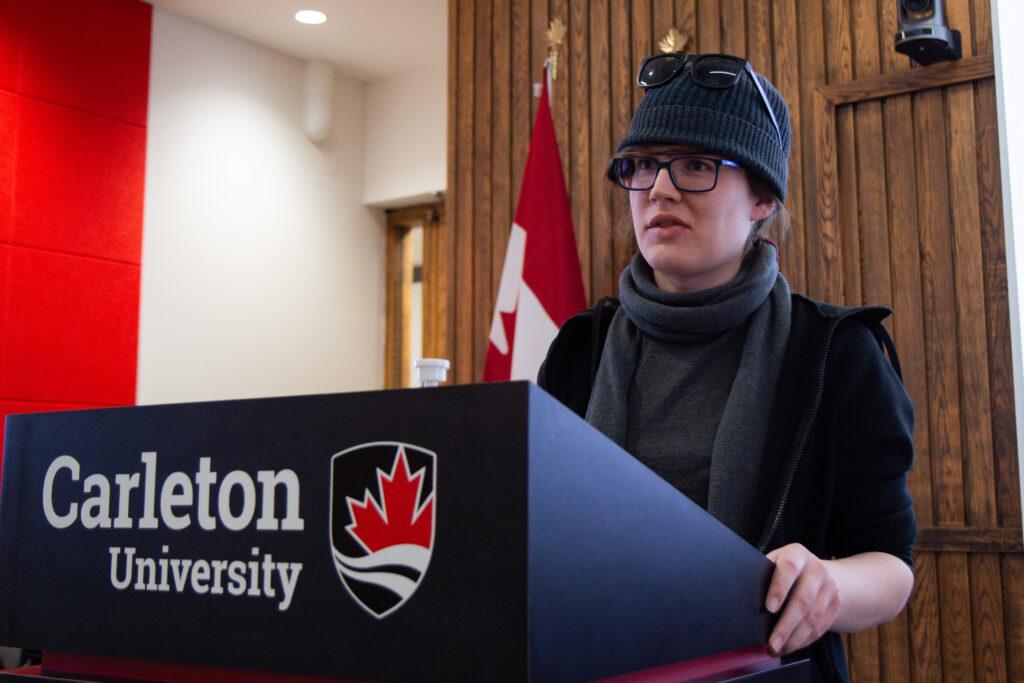
Amy Kopytskiy, an IT student and speaker of council, is running for the position of vice-president (internal).
The vice-president (internal) oversees student governance, clubs and council administration. The position is full-time during the summer and part-time during the academic year, with a salary of $43,000. By comparison the CUSA president’s salary for the 2025-2026 academic year was $49,140.
Kopytskiy said she wants to close gaps in CUSA’s operation, pointing to past cases of club funding and insurance falling through the cracks.
“When things fall through the cracks … people get hurt, and clubs get hurt, organizations get hurt,” she said, adding that she wants clear delegation so all club issues are addressed.
“I will make sure that nothing falls by the wayside.”
Student engagement was another priority for Kopytskiy, saying that council does meaningful work that too few students hear about.
Maraki Berhane Zeru is another candidate in the vice-president (internal) election. They did not give a candidate’s speech and their candidate profile has no further information.
Vice-president (student life) candidates
The vice-president (student life) is plans CUSA’s initiatives and programming student events, like Frosh week. The position will be paid an estimated $43,000.
There are four candidates running for the position this year, but only three gave candidate speeches during Monday’s meeting.
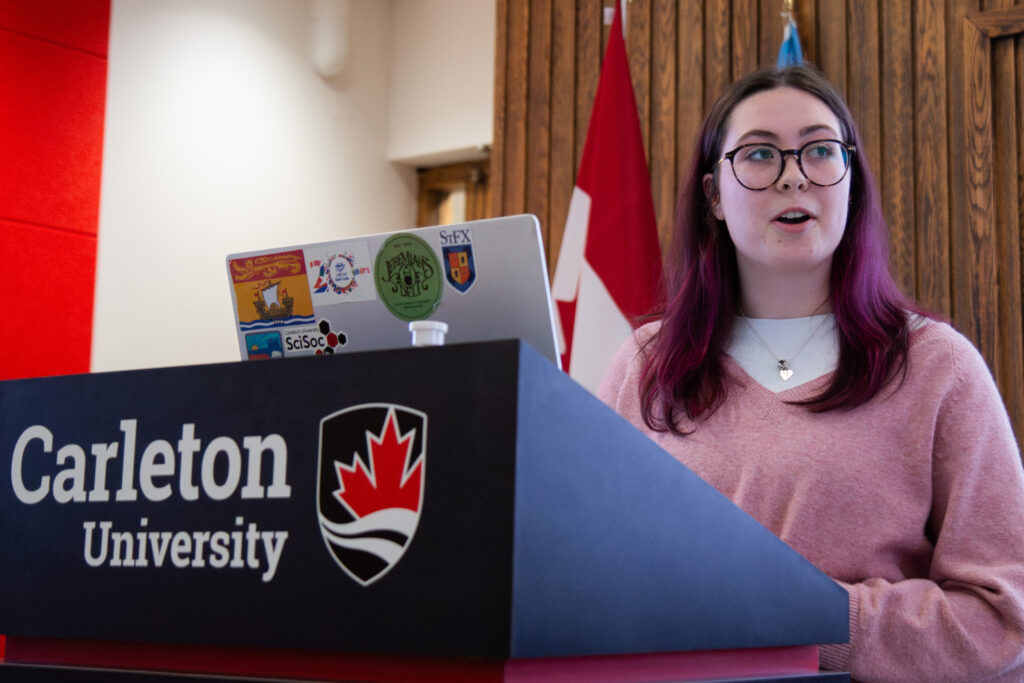
Georgia Anderson is a second-year linguistics student who has held leadership positions in various clubs. Anderson said she would prioritize making events more accessible and better advertise CUSA’s service centres.
Anderson said she would also uplift CUSA’s businesses by planning specific events around products, like a “buck-a-beer” day at Ollie’s Pub and Patio. She also wants to reboot CUSA’s newsletter to keep students in the loop about what the association is doing.
“The monthly memo would be automatically sent out to all undergraduate students and act as a basis for everything I talked about implementing today,” Anderson said. “I would prioritize a basis of communication and collaboration, making student life events more accessible to all.”
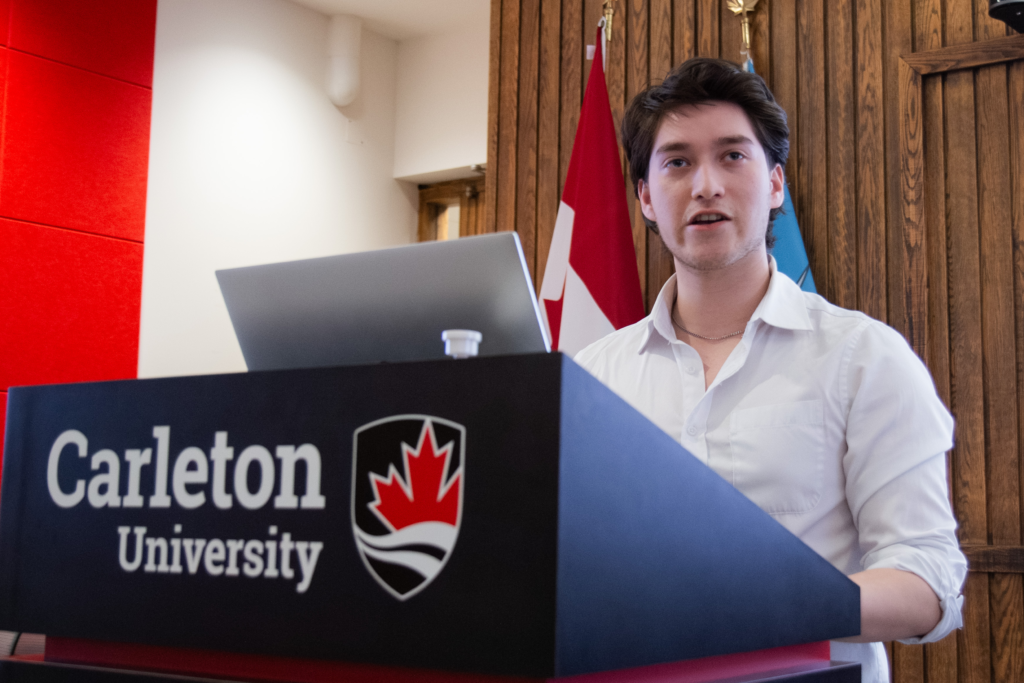
Ulises Gonzalez is a third-year history and theory of architecture student campaigning to strengthen CUSA’s programming, better support clubs and be more inclusive. Gonzalez said he wants to plan events that are impactful with “realistic budgets.”
“Right now for many students, student life can often feel like a luxury,” Gonzalez said. “That’s why I’m focusing on not building the busiest calendar, but on building a student life system that is consistent, accountable and genuinely easier for students to participate in.”
He added a successful event should aim to welcome newcomers and not mislead on their promises.
“Student life is about building the conditions that make students feel that they can participate and belong,” he said.
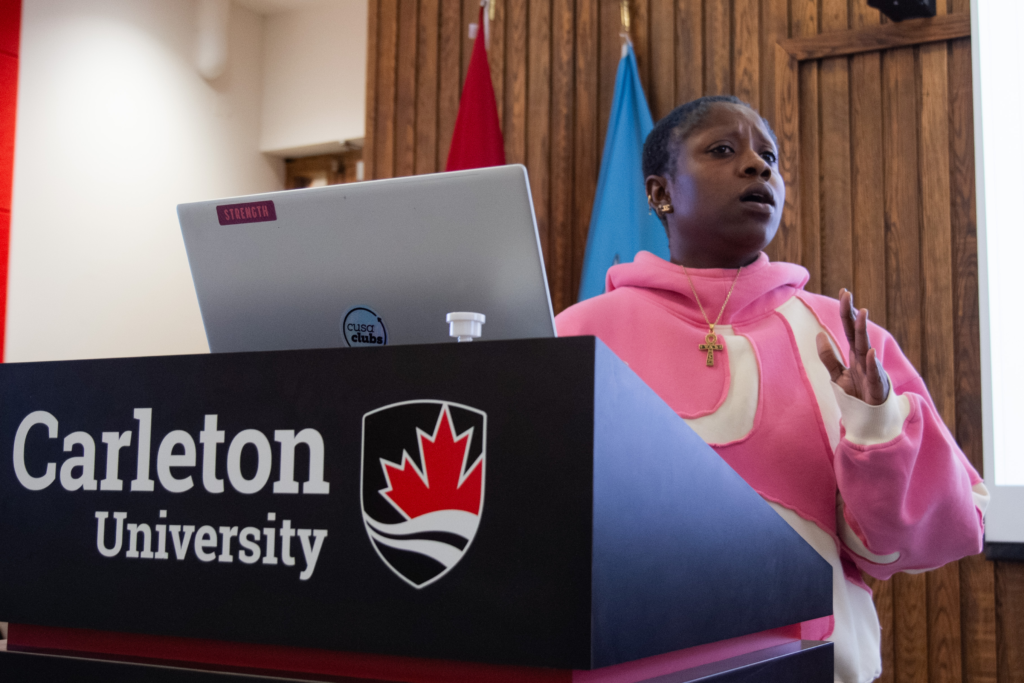
Nifemi Boamah is a third-year political science student, as well as a CUSA councillor, chair of the external affairs committee and creative director for the Black Student Alliance.
Boamah suggested that CUSA’s events are “not what the fans want to see right now” and is campaigning on making initiatives more engaging.
“Our generation has developed interests that are way [too] complicated and way [too] nuanced than what our events are doing,” Boamah said.
Boamah said the breadth of her experiences make her a strong candidate and aims to take a nuanced approach when planning events.
Jayden Pittiman, who did not deliver a candidate speech, is a second-year bachelor of commerce student with a concentration in accounting. His candidate profile has no further information.
Vice-president (student issues) candidates
The vice-president (student issues) represents and advocates for students across campus to address academic and social issues. The salary for the position is an estimated $43,000.
This year, there are four candidates running for the position, but only two gave candidate speeches during Monday’s meeting.
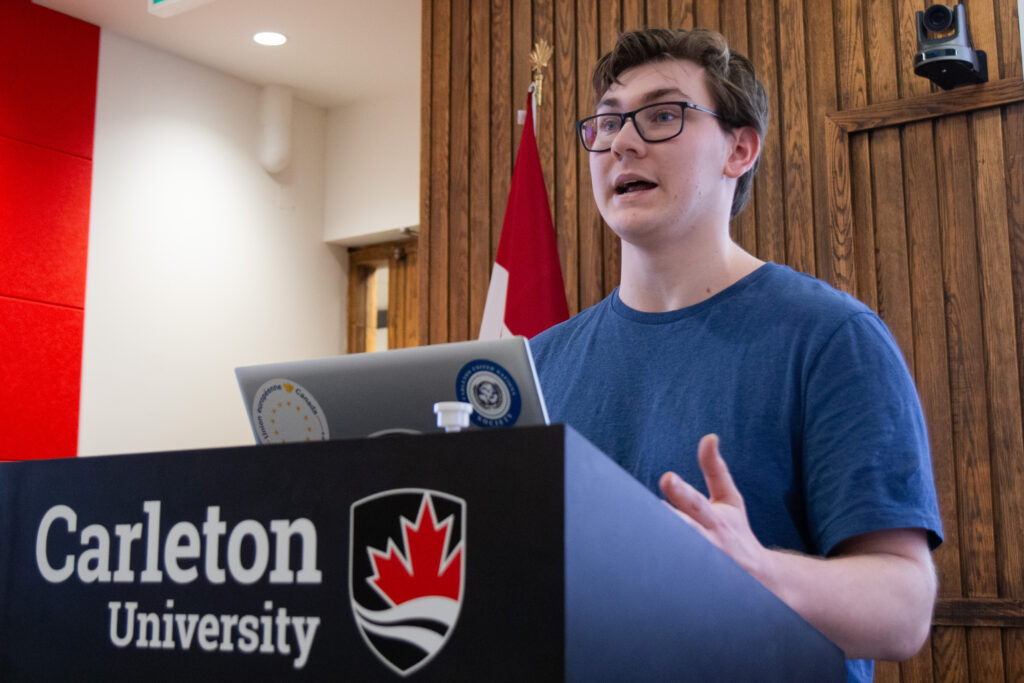
Nathan Harlan is a fourth-year political science student and a representative on Carleton’s Academic Student Government. Harlan said he would reflect the “will of the council” as transparently as possible.
“You guys are the voices of the students,” Harlan said to councillors. “I’d make sure that it is my only responsibility … to make sure you guys would be listened to.”
He added he wants CUSA to become a player in university legislation, not just a stakeholder, and referenced student’s push for the university to divest and to not impose the impartiality policy as areas he would have improved advocacy on.
Harlan said “faith in CUSA … is low” and wants to restore trust in the students’ association.
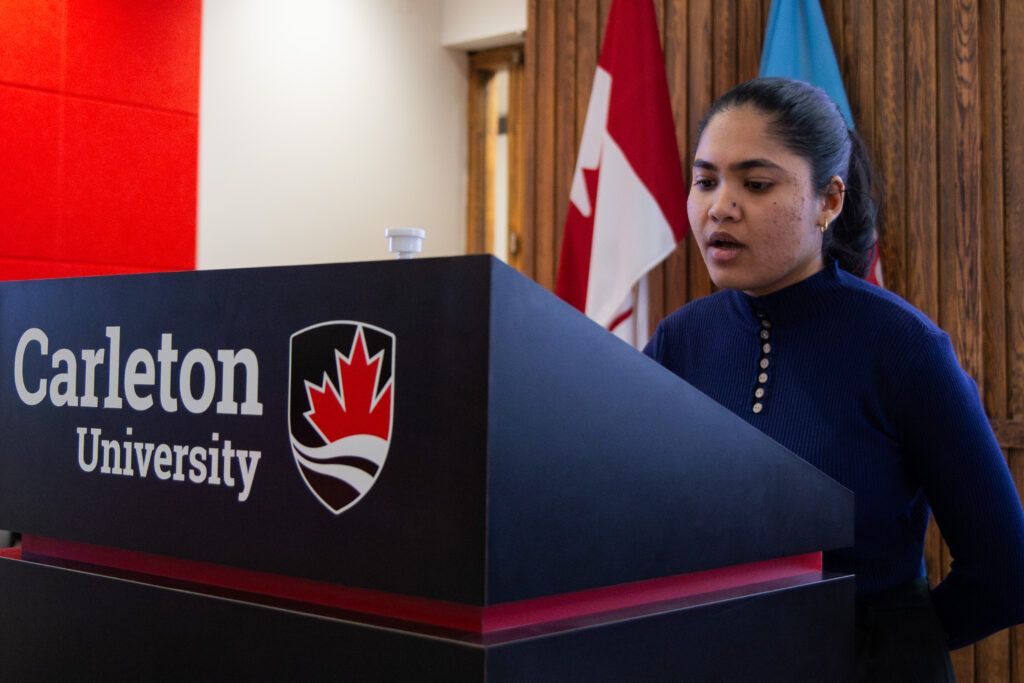
Nishtha Hurrydass is a third-year sociology student and a two-time volunteer with CUSA’s Think Tank, the research team that works on different reports. She also sits on the sexual violence and prevention committee.
Hurrydass said she wants to keep advocating about issues like changes to OSAP and Carleton’s draft AI framework. She added she would look to make changes like installing a borrow-and-exchange library to save students from spending on textbooks.
“I stand in front of you today as a community person, a community organizer, who believes in the power of the people and in a more inclusive future,” Hurrydass said. “Together, we can ensure that environment for everyone.”
Brooke Anderson, who didn’t give a candidate’s speech, is a second-year computer science student and the founder and president of the Carleton branch of Ottawa Transit Riders.
“I believe that it’s my experience as an activist, especially one experienced specifically in the top student issue, that makes me the best candidate for vice president student issues,” Anderson’s candidate’s profile reads.
Jaden Phillip did not give a candidate’s speech. Their candidate profile has no further information.
Featured graphic by Alisha Velji/the Charlatan
This article, and all of the Charlatan’s work, is brought to you by an independent student newspaper dedicated to informing, uplifting and entertaining the Carleton University community. We are a levy-funded organization which plays a role in the broader, vibrant student culture on campus. By reading this article, you are supporting our efforts.