

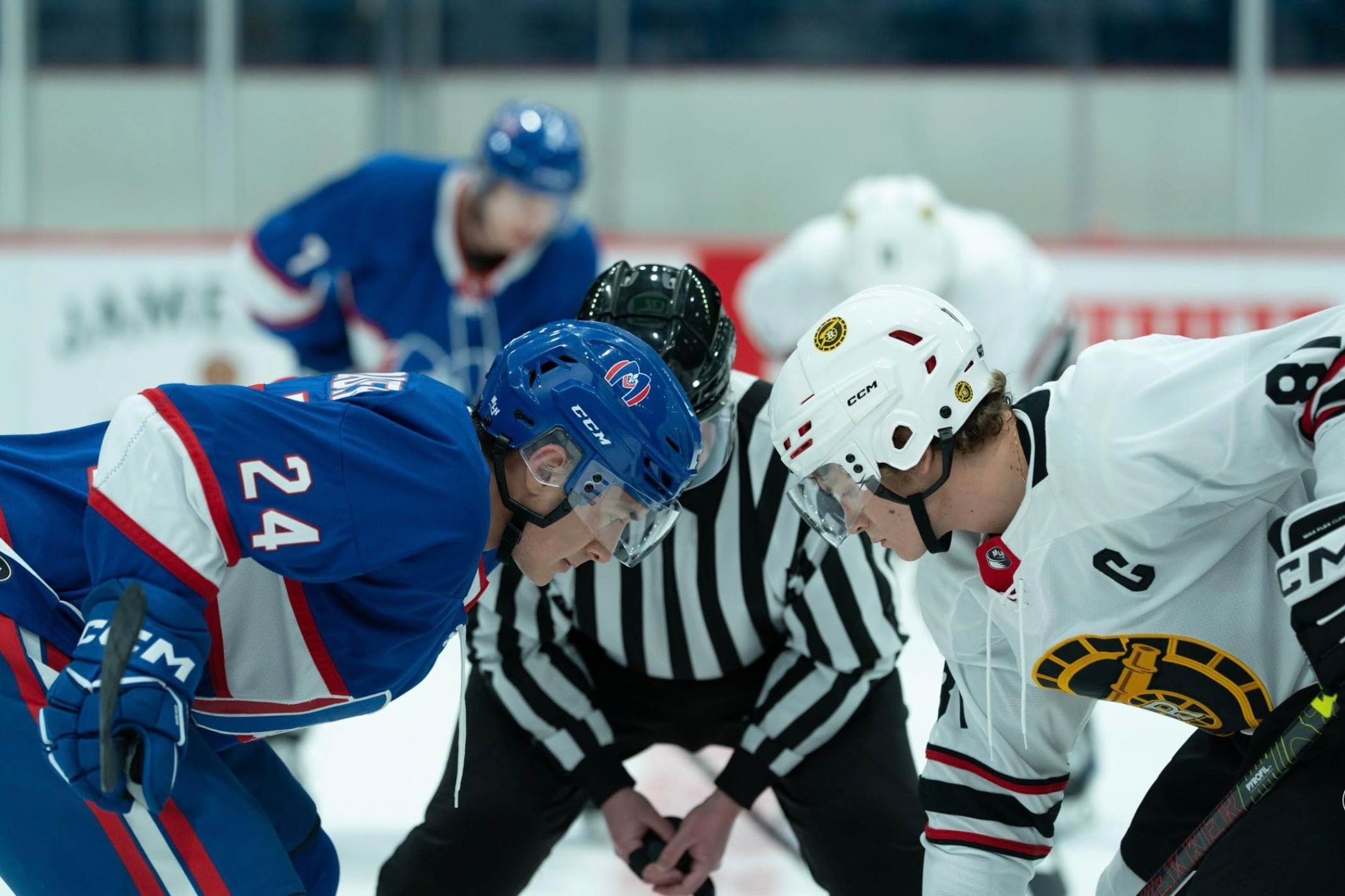
From edits flooding TikTok to Shane Hollander Day being announced in Ottawa last week, Jacob Tierney’s Heated Rivalry has gripped 2SLGBTQIA+ audiences and allies alike.
The show, which centres around a whirlwind sexual relationship between two pro hockey stars, has earned rave reviews from critics and fans, scoring the highest IMDb rating for a 2025 TV show.
Ilya Rozanov and Shane Hollander (from rival Boston and Montreal teams, respectively) find themselves entangled in a complicated relationship beginning the summer before their rookie season and spanning over the next eight years defined by secret meet-ups. There are no out-of-the-closet gay hockey players in the entire league, further complicating their romance.
That said, Ilya and Shane’s relationship is not the show’s only queer storyline. Episode three follows a meet-cute between New York hockey star Scott Hunter and smoothie barista Kip Grady.
Scott and Kip’s relationship differs wildly from Ilya and Shane’s — it feels deeper and more captivating with higher stakes.
One complication for Kip and Scott’s relationship is that Kip is not a celebrity. Ilya and Shane often play hockey games against each other or attend the same fundraisers, so their proximity to one another doesn’t raise eyebrows. But Scott and Kip’s relationship is harder to hide. At one banquet, where Scott is a regular guest while Kip is a server, the two spend the evening gazing at each other from afar, since there’s no obvious reason for them to interact.
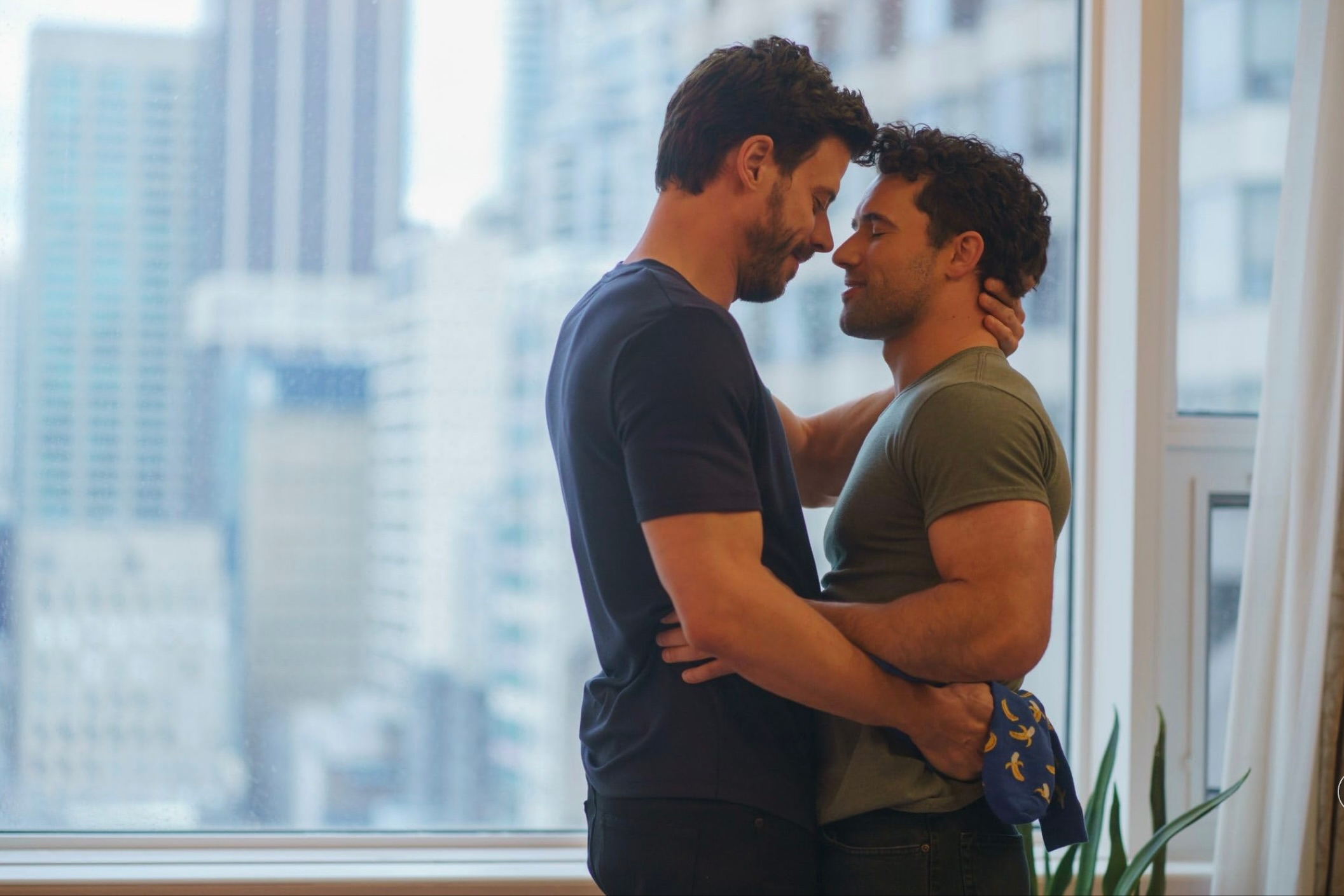
When Scott and Kip first become romantically involved, Scott asks Kip to stay at his apartment. Here, Kip hides from the world, disappearing from his friends and family for days and obscuring context, given Scott’s high profile.
Ilya and Shane have a mutual understanding that their relationship will likely have to stay secret for their entire hockey careers, and Kip clearly expresses the need for secrecy — but deep down, he hopes for more.
Kip inviting Scott to his small birthday party with friends embodies that hope. Kip tells Scott how much he would value having his presence and emphasizes how secluded the venue — a gay bar — would be. Scott replies that he truly wants to be there – but they both know that he can’t. Kip leaves Scott’s apartment and goes back to his father’s house, where he breaks down in front of his dad but still never revealing Scott’s identity.
Kip picks himself up and goes to his birthday party, while the camera zooms out to see Scott standing outside, watching the party from a “safe” distance — with Kip none the wiser.
Scott majorly grapples with his discomfort of being seen with Kip in public. In one scene, Kip and Scott shop for paintings for Scott’s apartment at an art gallery. When the art curator presumes the two are browsing as a couple, Scott bolts.
Back in the apartment, the two talk it out and Scott breaks down about how he wants to be able to be seen with Kip in public, but it simply can’t happen. It’s a heartbreaking scene, the two men hold each other while Scott cries Kip’s arms. They’re painfully in love, each grappling with the inability to take it public.
Scott isn’t a fan favourite player, making his entanglement with Kip all the more intriguing. While Ilya and Shane are global hockey stars at the peak of their careers, Scott is an older player who has never won the Major League Hockey Cup. Podcasters and hockey fans joke that he’s getting too old and will have to retire, so Scott feels added pressure to prove himself in a masculine sport that looks down upon gay men.
As he grasps for respect in the major league he convinces himself it’s all the more reason to keep his relationship with Kip a secret. During Scott’s acceptance speech of the Cup, he speaks about how lonely it felt to be gay in professional hockey, to be queer when that was a catch-all insult on the ice.
But the most compelling part of Kip and Scott’s relationship is how it finally spills into the public realm.
As the New York Admirals win the Cup, Scott grabs the trophy and holds it before looking into the crowd. There, Kip sits in the stands cheering him on with tears in his eyes. Time seems to stand still as Scott calls on him to come to the ice. The commentators are confused, clumsily offering commentary about this “lucky fan.”
Once Kip is on the ice, Scott kisses him on national television, publicly coming out as gay to the Wolf Parade’s roaring “I’ll Believe in Anything.” Here, tensions peak, as Scott has fought his entire hockey career for the moment he’d get to hold the Cup. It’s his moment to celebrate his accomplishments, but rather than celebrating his victory, he takes the opportunity to be honest with himself, Kip and the world at large.
This is monumental for their relationship, as Scott becomes the first openly gay player in the league. It’s also monumental for Heated Rivalry’s main couple, as Ilya then overcomes his initial hesitation and commits to visiting Shane’s cottage — this serves as the first moment where the two pass time together free from outside pressures.
Shane and Ilya’s relationship is remarkable for the amount of time they were together, but Scott and Kip’s relationship is remarkable for their courage. In Heated Rivalry, bravery isn’t the fight on the ice, the push for glory or the final siren of the third period.
Scott’s daring to come out — much less on national television — was the bravest act of love throughout the show.
Featured image provided by IMDb.
This article, and all of the Charlatan’s work, is brought to you by an independent student newspaper dedicated to informing, uplifting and entertaining the Carleton University community. We are a levy-funded organization which plays a role in the broader, vibrant student culture on campus. By reading this article, you are supporting our efforts.