

February marks Black History Month: a time to honour the contributions and impact of Black people and their communities.
To kick off this year’s commemoration, the Charlatan’s editors and contributors compiled our favourite films, TV shows, books and more created and populated by Black artists and culture.
Embrace some of our recommendations below and discover your own to continue supporting Black people’s works.
Alexa MacKie: Arts Editor, vol. 55; Managing Editor, vol. 54
Black History Month media pick: The Skin We’re In, a memoir by Desmond Cole
When I think of role models, Canadian journalist Desmond Cole is the first to come to mind.
Too often, journalists are expected to put aside our identity in search of “objectivity.” Our advocacy and hope for change are meant to take the back burner for us to effectively do our job. Cole — once a Toronto Star columnist and now senior writer with The Breach — is a prime example that this does not have to be the case to be a skilled and impactful reporter.
His thought-provoking and fast-paced memoir The Skin We’re In: A Year of Black Resistance and Power details his experience reporting for Canadian newsrooms, where he was routinely asked to stop writing about race and Black-focused stories. Cole’s work has tackled police carding and systemic racism through the lens of someone who’s experienced discrimination and adversity.
There’s something evocative and straightforward about Cole’s writing style — and something even more powerful about a journalist whose identity shapes their understanding for reporting on social issues. Cole’s work and memoir are inspiring examples of what it means to believe in change and fight for it no matter the cost.
Michael McBean: News Editor, vol. 55
Black History Month media pick: The Stone Thrower: A Daughter’s Lessons, A Father’s Life, a memoir by Jael Ealey Richardson
The Stone Thrower: A Daughter’s Lessons, A Father’s Life is a book that has always stood out to me as a die-hard CFL fan.
Jael Ealey Richardson traces her father’s story back to segregated Portsmouth, Ohio, where he grew up on the wrong side of the tracks — literally. As a kid, he threw stones at passing freight trains to improve his accuracy as a quarterback.
He went through college undefeated, but that still wasn’t enough to earn him a real opportunity in the NFL. Teams were unwilling to consider him as a quarterback because of his race.
That prompted Ealey to head north, where he joined the Hamilton Tiger-Cats and led them to a Grey Cup win in his rookie season. His story is a reminder that despite undeniable talent, barriers still exist for people pursuing their dreams.
Zayn Daureeawoo: Volunteer contributor, vol. 55
Black History Month media pick: Cornbread
Southern dishes stand firmly among iconic American foods, including the humble cornbread.
Underneath its unpretentious appearance lies centuries of history, tracing back to the Atlantic slave trade. One reason European colonists established the slave trade was because African civilizations held complex and innovative agricultural knowledge, skills and technology.
Enslaved Africans carried over this ingenuity to the Americas, turning novel crops like corn — which the region’s Indigenous Peoples developed — lucrative. Tragically, they got no compensation for the plantation economies and empires they built. Enslavers instead gave them measly rations of unwanted foods, like cornmeal.
Colonizers shaped modern cornbread by introducing ingredients like butter, milk and sugar to Indigenous recipes. Enslaved Black Americans expanded on this, adding whatever ingredients were available, like bacon drippings, for flavour and cooking it in a skillet for a crunchy, golden brown crust.
Later, freed slaves moved and founded communities up north, opening restaurants. With this, cornbread flourished into the American staple it is today, as cooks adapted recipes to trends and available ingredients.
Cornbread represents stories of pain, violence and exploitation in Black history — but also survival, community and creativity.
Justin Escoto: Podcast co-host, vol. 55
Black History Month pick: Off the Wall, an album by Michael Jackson
Michael Jackson’s 1979 classic Off The Wall is the best album ever. Period.
Jackson, then 20, proved he wasn’t just a child prodigy. His endless groove, along with the legendary producer Quincy Jones, cooked up something special with this 42-minute epic. From the electric opener “Don’t Stop ‘til You Get Enough” to the heartbreaking “She’s Out of My Life,” Jackson marked the end of the disco era with a bang.
There would be no Thriller without the excellence of Off The Wall.
Matt Piaskoski: Web Editor, vol. 55
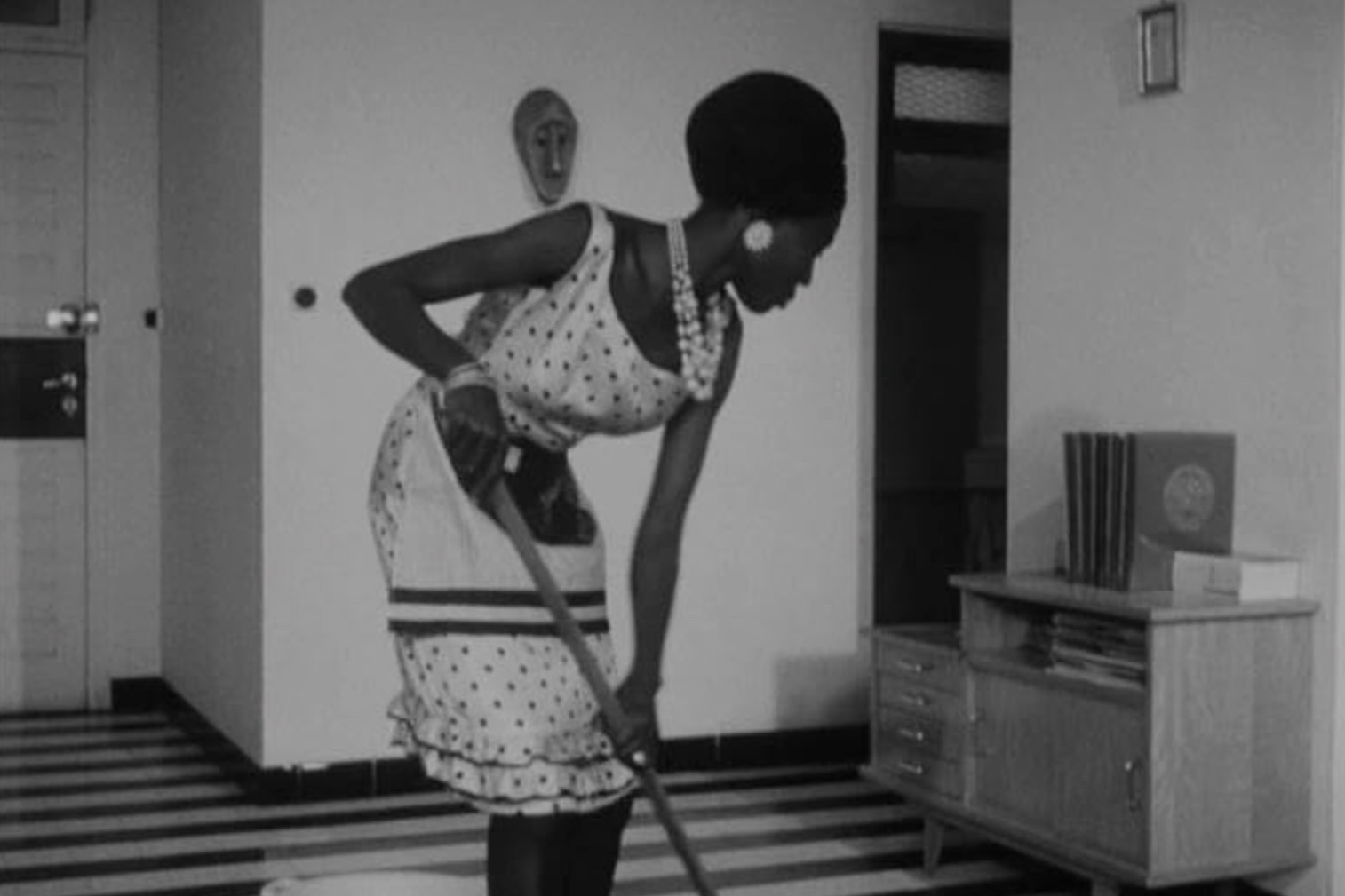
Black History Month media pick: Black Girl (La Noire de…), a film directed by Ousmane Sembène
After browsing the Criterion Channel aimlessly for far too long, 1966’s Black Girl (La Noire de…) caught my eye. This was initially in part due to the film’s short runtime, clocking in at just over an hour.
The film is set in the world of Diouana, a Senegalese nanny in Dakar, Senegal, looking for work. She eventually finds it with a French couple, which requires her to move to their apartment in France. It starts as an exciting move that would give Diouana a chance at a better life, but the couple’s treatment of Diouana quickly deteriorates.
She is alienated in this world, forced to be their servant and frequently abused and dehumanized. Diouana recalls her life back in Senegal as she tries to grapple with her situation in France. She is bound by a language barrier and dependence on the couple trapping her in the apartment, as she looks out to a world she cannot be a part of. Black Girl is a powerful film on themes of neocolonialism and modern slavery in a remarkably short timeframe.
Unbeknownst to me on my original watch, Black Girl was one of the first landmark films in African cinema and is highly acclaimed in modern film discussion. At such a short run time, I recommend giving this film a shot.
Kathan Kapoor: Volunteer contributor, vol. 55 & vol. 54
Black History Month media pick: Are You Experienced, an album by Jimi Hendrix
Innovative, inventive and imposing, Jimi Hendrix’s 1967 record, Are You Experienced, has proved a moving album for myself and an imaginative piece for many musicians since it hit the shelves nearly 60 years ago.
At a time when rock was a primarily white-dominated genre — with artists like Jim Morrison and Mick Jagger shrouding the billboards — Hendrix brought distorted guitar tones, captivating songwriting and evocative lyrics, paving the way for Black artists.
The sonic diversity makes the album especially intriguing. It launches with the electric energy of “Purple Haze,” shifting into more sentimental tones in “The Wind Cries Mary.” It concludes with “Red House” — now a blues standard — which pays homage to the players that came before Hendrix, like Robert Johnson.
Beyond the musicality and production, the album shaped my journey as a guitar player. Though Hendrix is regarded as an all-time great guitarist, his music never sacrificed feeling for technicality. “Hey Joe” was the first song I learned, and as years pass, I still go back to it, spicing up the rudimentary chords with techniques extracted from the record.
Hendrix proved that technical mastery and emotional presence can coexist, making Are You Experienced a blueprint for all musicians.
Daniel Fraser: Opinions Editor, vol. 54
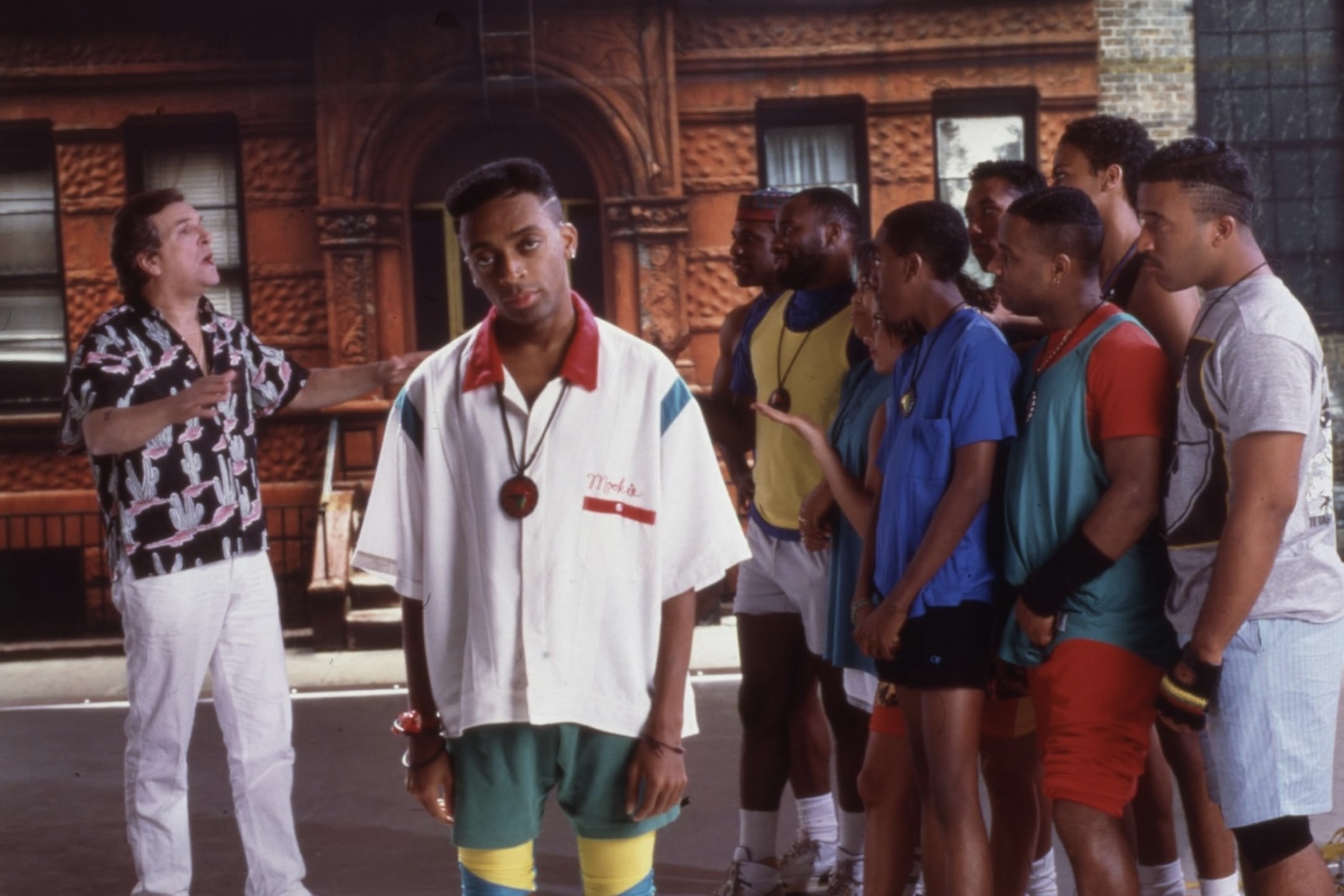
Black History Month media pick: Do The Right Thing, a film directed by Spike Lee
Do The Right Thing, directed by Spike Lee, unfolds over the hottest day of the summer on a Brooklyn block where simmering racial tensions finally boil over.
Centred on Mookie, a Black pizza delivery man played by Lee, the film tracks everyday interactions between neighbours, shop owners, police and friends to reveal how structural racism, economic pressure and unchecked prejudice shape daily life.
What begins as casual conflict escalates into tragedy.
The movie shows how racism doesn’t appear out of nowhere but is rather built through everyday moments that people choose to ignore until it’s too late.
Jaidyn Gonsalves: Volunteer contributor, vol. 55 & vol. 54
Black History Month media pick: Welcome to the Cruel World, an album by Ben Harper
I first discovered Ben Harper on a whim while listening to a comfort mix riddled with Jack Johnson and Amos Lee. His song “Waiting on an Angel” melted me in an instant: the gentle tone, its hopeful promise and the world of interpretation that his words offered up. It was not long until I was deep down the rabbit hole of his mind.
Harper consistently surprises his listener with opportunities to grow. With Welcome to the Cruel World, he does not limit himself to one musical genre, alternating between the folk-inspired rugged tension illustrated in “Whipping Boy,” to the undeniable bluesy perseverance of “I’ll Rise” and even paying homage to reggae music amidst a lovestruck crisis in “Breakin’ Down.”
Thematically, he explores the agony of the human experience. Dancing across oppressive political landscapes, questioning the end of treasured bonds and begging his audience to think beyond their doomed reality, Harper addresses the need to publicly vocalize personal struggle.
The ability to merge individual interest with lifelong advocacy is just as pertinent now as 30 years ago. This album is only a small plank of the soapbox that is Harper’s pursuit of growth and justice.
Zoe Pierce: Sports Editor, vol. 55
Black History Month media pick: Frank Ocean’s discography
Frank Ocean’s music never seems to leave people’s minds. Despite last releasing an album in 2016, he continues to have a major cultural impact while staying largely out of the public eye.
He’s still surely one of your favourite artists’ favourite artists, continuing to go viral through trending TikTok and Instagram sounds, and above all, has created music that withstands time.
As an openly queer Black artist who is relatively quiet online, his music serves as his voice in impactful ways. Ocean’s creativity is especially inspiring in how it allows people to feel connected to his art.
One example is “Bad Religion,” one of my all-time favourite Frank Ocean tracks. It’s a very honest and vulnerable tune about unrequited love with someone of the same sex and how religion can make that love feel forbidden. The lyrics and raw openness, paired with Ocean’s beautiful vocals, are what make so many of his songs so powerful.
Although I find it impossible to pick favourites, as it really changes from day to day, I always find myself going back to “Nikes,” “Pink Matter” and “Swim Good.”
I will be the first to hop onto Spotify when we finally, hopefully, get new music from one of this generation’s greatest artists.
Maia Tustonic: News Editor, vol. 55 & vol. 54
Black History Month media pick: My 21st Century Blues, an album by RAYE
Sandwiched between her viral hits “Escapism” and “WHERE IS MY HUSBAND!,” British singer RAYE released My 21st Century Blues, a debut album exploring all of the personal, heavy experiences she had yet to translate into music.
RAYE, who has Ghanian roots, released the 15-track album in 2023. Weaving across the genres of pop, R&B and rap, the singer flows seamlessly from sultry rapping to powerhouse vocals.
The songs tackle a swath of taboo topics, including sexual violence (“Black Mascara.”), addiction (“Mary Jane.”) and body dysmorphia (titled as such). Her song “Ice Cream Man,” which tells a story of persevering through sexual assault, recently won this year’s Harry Belafonte Best Song for Social Change Grammy award.
It’s a sonically complex album that will make you want to dance, sing and scream. My favourite tracks include the belty “Oscar Winning Tears.,” the wired “Environmental Anxiety.” and the light-hearted “Worth It.”
Simon McKeown: Photos Editor, vol. 55
Black History Month pick: Gordon Parks’ photography
Gordon Parks’ photos are some of the most powerful and pure examples of photojournalism.
As a Black photographer who grew to prominence during the civil rights movement in the United States, Parks’s photos served as important mosaics into the lives of everyday Black Americans.
From his famous and nearly banned portrait of Ella Watson (a.k.a. American Gothic), to the stark candid of a Black boy pointing to a white doll rather than the Black one in the Clark Doll Test at Columbia University, Parks’s photos pushed limits.
Parks used his camera not to tell the viewer what to see, but rather to suggest an alternative: empathy. Additionally, among his legendary achievements as a photographer, Parks was also a novelist, filmmaker, composer and poet.
His feature film Shaft kickstarted the Blaxploitation genre, proving that films with Black protagonists could reach large commercial success. He also wrote, then adapted and composed, The Learning Tree, a coming-of-age book of a Black teenager in rural Kansas.
Parks is a staple to me and someone whose work I often reference in awe.
Minna Glendinning: Volunteer contributor, vol. 55
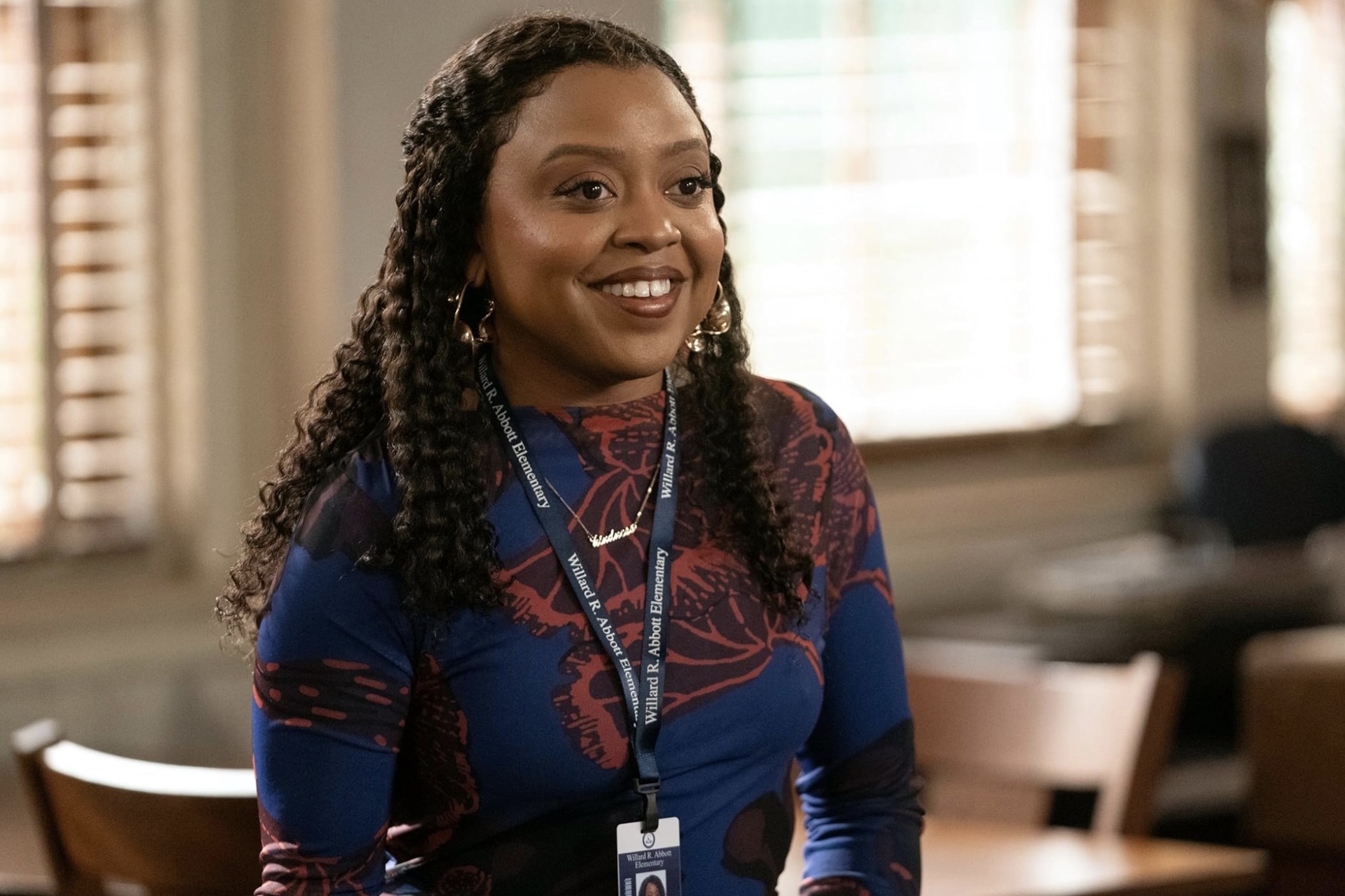
Black History Month pick: Abbott Elementary, TV series created by Quinta Brunson
As a long-time enjoyer of the mockumentary genre, I can confidently say Abbott Elementary is the best of the best. From the first few episodes, it quickly became one of my all-time favourite comfort shows.
The series follows staff members of Willard R. Abbott Elementary School in Philadelphia, an underfunded public school with a predominantly Black student body, as they are filmed by a documentary crew.
Created, executive produced and co-written by Quinta Brunson of Buzzfeed fame, Abbott Elementary revitalizes the workplace sitcom with a rare blend of sharp wit and social conscience. While most modern comedies rely heavily on cynicism or dark humour, the series succeeds by telling authentic stories. It highlights the daily struggles of educators, the underfunding of school systems (which disproportionately affects racialized students) and the experiences of Black people within society — all while uplifting their voices.
Brunson stars in the show as Janine Teagues, an optimistic Grade 2 teacher who aspires to do right by her students and turn the school around. Her engaging performance is met by an ensemble cast who create a dynamic group, where even the most “cringe” moments feel grounded in genuine human connection.
Though I have yet to catch up with the most recent season, I’m sure it’ll be just as witty and heartfelt as its predecessors.
Mya Pasparakis: Volunteer contributor, vol. 55 & vol. 54
Black History Month pick: The Art of Loving, an album by Olivia Dean
At a time that typically feels cold and miserable, Olivia Dean’s album The Art of Loving has been keeping me hopeful for the year ahead.
Dean, who is English, Jamaican and Guyanese, has said in interviews that early exposure to many cultures and musical influences helped her feel comfortable with genre experimentation. That perspective feels alive in each one of the album’s 12 tracks.
A blend of R&B, soul and pop elements, complete with relatable lyrics exploring the vulnerability of love, create a unique listening experience that makes me want to hit repeat every time.
While my top songs change as frequently as the weather these past few weeks, I can’t get enough of “Lady Lady,” “Close Up” and “A Couple Minutes.” Dean’s smooth-as-honey vocals radiate comfort no matter the tempo backing them.
All in all, The Art of Loving encapsulates human emotion in a truly refreshing way. Whether you’re looking for an album to dance, scream or cry to, you’ll find just what you’re looking for.
Syd Robbescheuten: Volunteer contributor, vol. 55 & vol. 54
Black History Month pick: Donald Glover’s (a.k.a. Childish Gambino) discography
Donald Glover is a man of many talents.
From becoming a member of the SNL cast to starring in Community, he has undeniably set himself apart as one of the biggest stars of our generation. But Glover is perhaps best known for is his music under the name Childish Gambino.
His catalog of hits is large, his genres vast. From hip hop hits like “V. 3005” and “Bonfire” to more introspective R&B tracks like “Me and Your Mama” and “Redbone,” Glover defies definition.
In 2018, his smash hit “This Is America” debuted. The song, a biting trap track, criticizes systemic discrimination against Black people in America with an intricate and jarring music video focusing on gun violence. The song won the coveted Grammy for Record of the Year in 2019, beating out Drake’s “God’s Plan” and Cardi B’s “I Like It.”
But the song’s impact is far deeper than a Grammy, becoming an anthem during the Black Lives Matter protests of 2020, providing necessary commentary on the issues facing the Black American community.
Glover brought attention to the struggle facing Black Americans using perhaps his most powerful medium, music, to speak out.
Marissa Meilleur: Culture & Community Editor, vol. 55
Black History Month media pick: Willie O’Ree, a biography by Nicole Mortillaro
This short but sweet Willie O’Ree biography always sticks with me for the way it tells the story of the NHL’s first Black player. Starting from his family-filled childhood that sparked his determination for hockey, to the legacy he’s leaving in his post-retirement community work, Mortillaro offers a meaningful glimpse into O’Ree’s life.
Although O’Ree has said he always felt included on the rinks growing up in Fredericton, N.B., the book explores his experience being part of one of only two Black families in the city at the time.
While he may not have felt discrimination in hockey early on, that changed as he grew up. This biography delves into O’Ree’s experiences with racism, primarily from opposing players and fans.
In addition to overcoming discrimination, O’Ree also overcame an injury that left him blind in one eye. If he hadn’t kept the disability a secret, NHL rules would have prevented him from playing.
A story of perseverance, resilience and community, this book is a must-read for hockey fans and non-fiction lovers alike.
Elissa Mendes: Editor in Chief, vol. 55; Opinions Editor, vol. 54; News Editor, vol. 53
Black History Month pick: SZA’s discography
SZA’s humble upbringing as a Black and orthodox Muslim kid in suburban New Jersey feels alive in each of her honest and gorgeously-crafted albums.
She has pushed back against what she describes as pigeon-holing into the R&B genre because of her Blackness, and it’s clear that her sonic talent defies clear genre boundaries.
Tracks like “Rich Baby Daddy” and “Kill Bill” soundtracked my first year as a university student, as I know they did for countless other young people exploring nightlife for the first time.
That said, “Another Life” stands out as my all-time favourite, a yearning, bittersweet and wholly authentic ode to an alternate reality.
Today, she has asserted herself as one of the most gifted and predominant artists of our time, and no chill playlist is complete without her smooth and playful voice.
Sophia Laporte: Volunteer contributor, vol. 55 & vol. 54
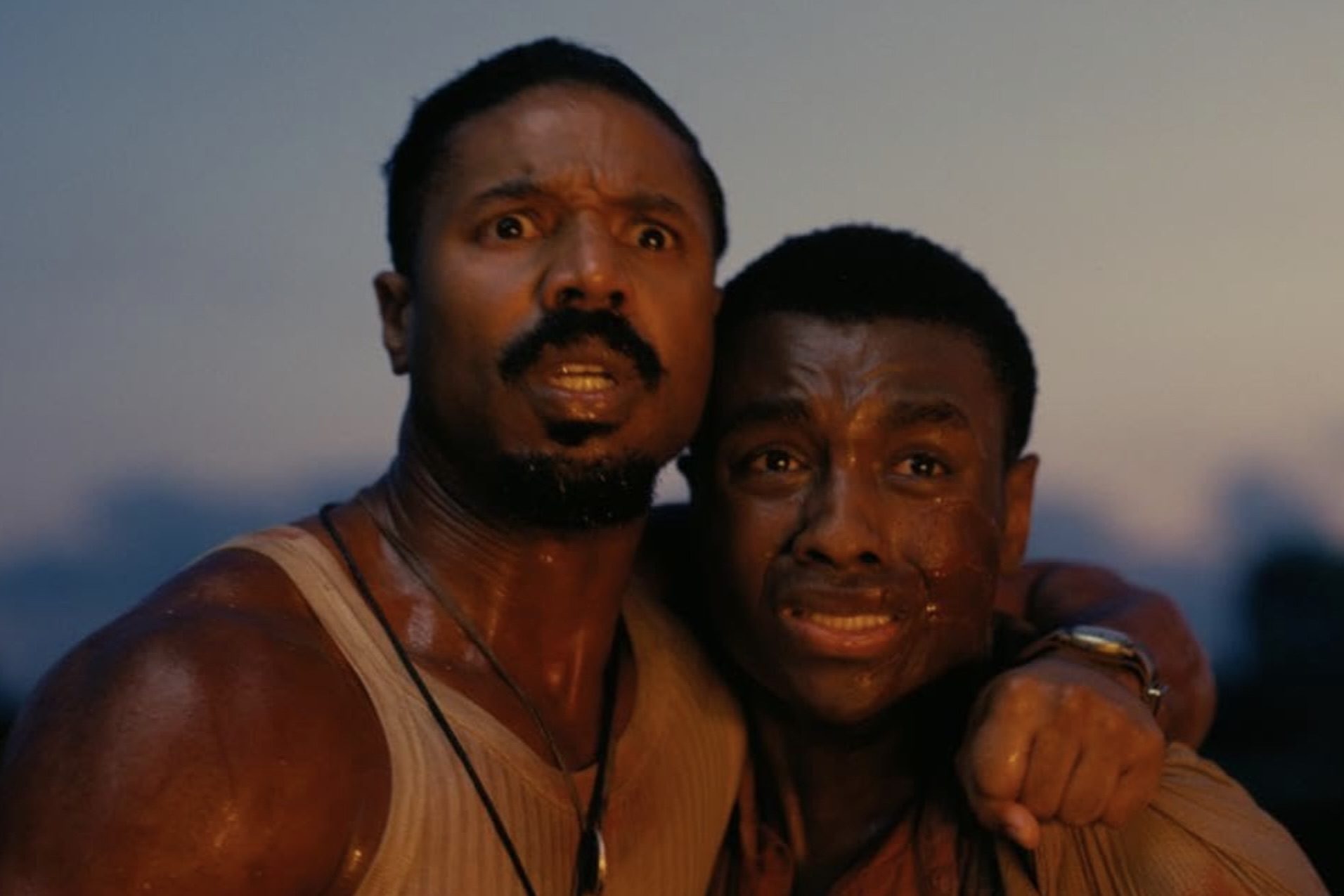
Black History Month pick: Sinners, a film directed by Ryan Coogler
It’s impossible to look back on 2025’s cinematic masterpieces without addressing the incredible Sinners, which recently broke the record for most Academy Award nominations of all time. I personally believe it was the best film of the year.
If you’ve been living under a rock, Sinners tells the story of twins living in rural Mississippi in 1932 who start a juke joint for their local Black community. However, on opening night, the joint is threatened by a greater evil outside its doors that threatens everything the twins and their community have worked towards.
Every element Ryan Coogler’s film that stands out on its own. The cast stars Michael B. Jordan as both identical twins Smoke and Stack, as well as Miles Caton, Hailee Steinfeld, Wunmi Mosaku and Jack O’Connell. Each cast member embodied their character powerfully, highlighting their greatest strengths to their most fatal flaws.
From the beginning to the end of the film, music is intertwined with its horror. Caton portrays Sammie, the twins’ cousin. Sammie’s powerful instrumentals inadvertently attracts the dangers to the juke joint and the actor, with a background in gospel singing, knocked it out of the park with featured songs “I Lied to You” and “Last Time (I Seen The Sun).”
This awards season, I dearly hope that Sinners sweeps in all categories.I would give so much to watch it again for the first time.
Georgia Looman: Managing Editor, vol. 55
Black History Month media pick: “Club Can’t Handle Me,” a song by Flo Rida (feat. David Guetta)
This song is one of my favourites ever! I grew up listening to it with my family on our mini light-up dance floor.
It’s the perfect 2000s club song: upbeat, catchy and nostalgic. The intro transports you right in the middle of a low-lit, crowded club, gets you comfortable with the beat, and then bursts into dance. It’s such an exciting and memorable song that anyone can enjoy, regardless of whether you know the lyrics.
If I’m not sure what to play at a party, this is my go-to track. With Y2K’s resurgence and collective realization that 2000s club music is the best club music, everyone will appreciate this one.
Flo Rida is masterful at the club hit genre — my other favourites of his are “My House,” “Wild Ones,” and the iconic “Low.”
Enjoy dancing!
Cassandra Bellefeuille: Social Media Manager, vol. 55 & News Editor, vol. 54
Black History Month pick: They Said This Would be Fun, a memoir by Eternity Martis
Eternity Martis’ They Said This Would Be Fun is not an easy read, but it’s one I think every student should sit with. Through a series of essays, Martis documents her experiences as a Black woman navigating predominantly white institutions, particularly within Canadian academia.
Martis writes with sharp honesty about racism, misogyny, sexual violence and the exhaustion of having to constantly explain and defend her own pain. The title alone stays with me. It’s a bitter nod to the promises made about higher education and opportunity, which often ring hollow for marginalized students. I found myself thinking about how often these experiences are dismissed or minimized, especially within institutions that brand themselves as progressive.
Reading this as a Canadian university student, I found the book especially urgent. It challenged me to think more critically about the spaces I move through and the systems from which I benefit. I encourage every university student to read They Said This Would Be Fun and to reflect on its lessons and the structures that underpin their university experience.
Featured graphic by Alisha Velji/the Charlatan.
This article, and all of the Charlatan’s work, is brought to you by an independent student newspaper dedicated to informing, uplifting and entertaining the Carleton University community. We are a levy-funded organization which plays a role in the broader, vibrant student culture on campus. By reading this article, you are supporting our efforts.