

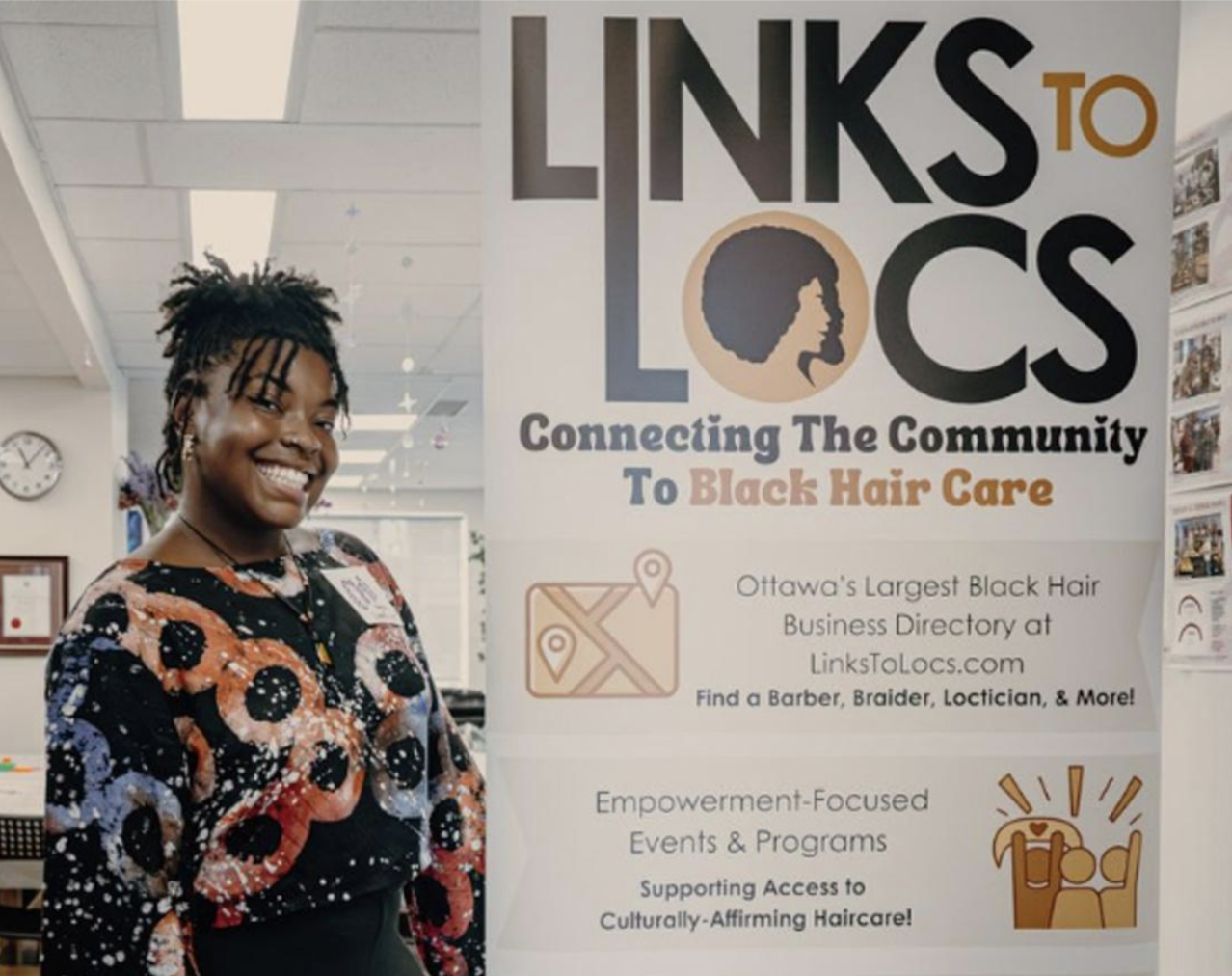
Growing up in a predominantly white neighbourhood in the Niagara region, Chidera Onyegbule often struggled to find hairstylists trained to care for curly, Afro-textured hair like her own.
“Sometimes I would go into places, and I’d be turned away,” Onyegbule recalled. “They’d be like, ‘Oh, sorry sweetie, I can’t help you.’”
Receiving hair care, she said, meant feeling the pressure of conforming to Eurocentric beauty standards. Onyegbule said stylists would offer to chemically straighten her hair to make it more “manageable,” but she tried the treatment once and found it damaging.
When Onyegbule moved to Ottawa to pursue a bachelor’s degree in neuroscience at Carleton University, she said she faced similar challenges in accessing culturally affirming haircare.
Onyegbule said she knew then that something had to change.
In Ontario, training on Afro hairstyles is not mandated as part of the official hairstyling certification curriculum.
The province’s 2025 Hairstyling Program Standards includes a section on chemical treatments and hair relaxers that alter the natural texture of clients’ hair. However, specific training on Afro-textured or Black hair is not included — which Onyegbule called a “big, systemic issue.”
“There is more mention of relaxing and chemical straightening techniques than there is on how to manage Afro-textured hair in its natural state.”
In 2024, Onyegbule created Links to Locs, an online directory showcasing a total of 31 Ottawa-based salons, barbers, braiders, locticians and beauty services that specialize in various aspects of Black haircare.
“It came down to wanting to create spaces where other people just like me — Black people with Afro-textured hair — could feel affirmed, celebrated and supported through something as personal as hair.”
As she started building the directory, Onyegbule said she realized there were many professionals trained to care for Afro hair in Ottawa. It was just a matter of having a centralized space to find them.
Lu-Ann Telphia is one of these professionals.
Telphia started Lu’s Locs in October 2022, and like Onyegbule, faced similar challenges to accessing haircare after moving to Ottawa for post-secondary education.
‘Black hair front and centre’
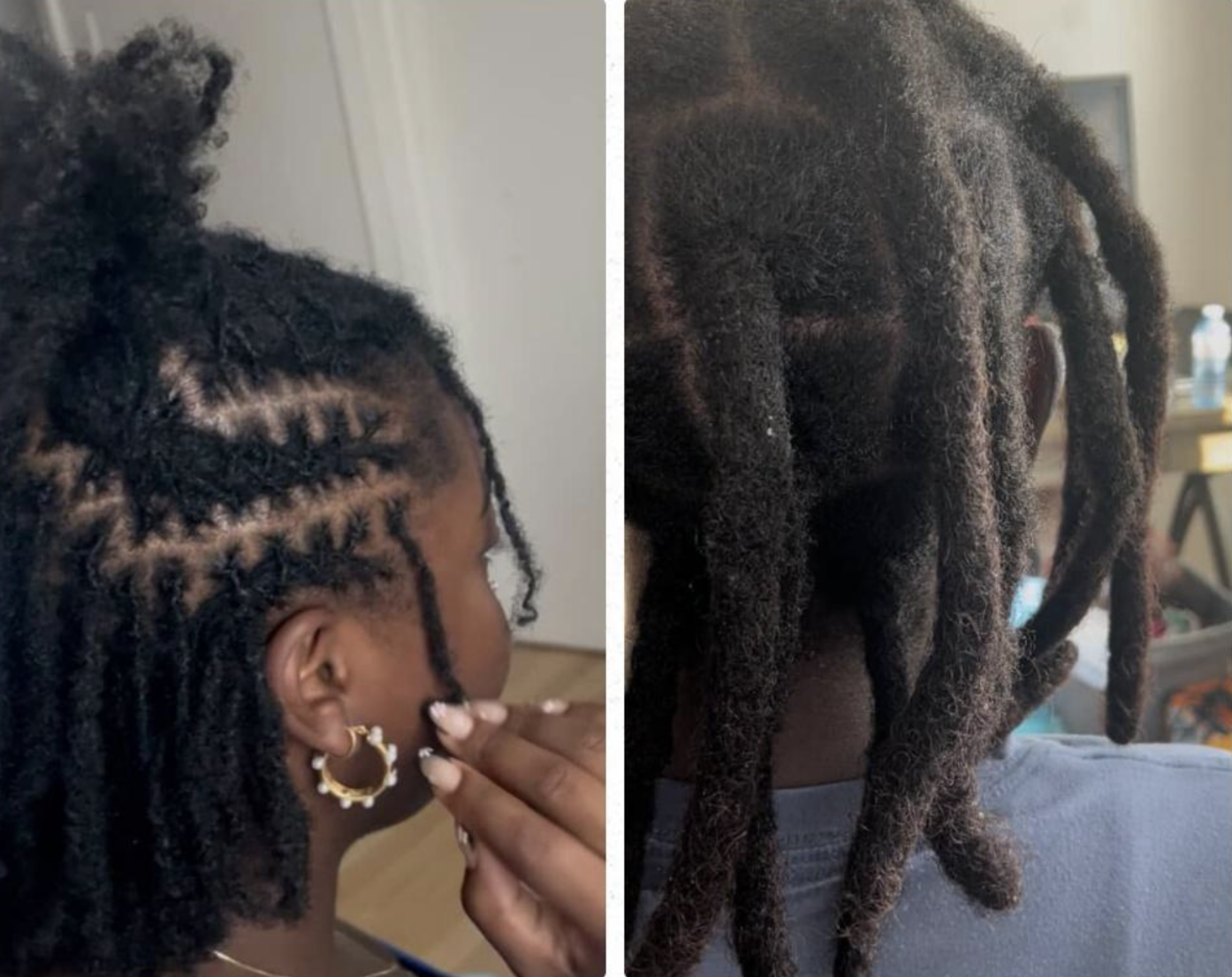
Along with the directory, Onyegbule is trying to bring subsidized pop-up hair salons and educational resources to the community.
The first pop-up she hosted was March 21 on Carleton’s campus, where 15 Black hair professionals braided, retwisted and offered haircuts for a subsidized price to over 80 students.
“There was a lot of excitement with just the opportunity of this happening because it’s something that’s never happened before,” Telphia, one of the professionals participating in the pop-up, said.
“A lot of the feedback that I had heard from students was, ‘it’s really amazing to have Black hair front and centre,’” Onyegbule said. “It was in the university atrium — the most high-traffic part of the university.”
Ruth Nobossi, one of many students who attended the event, said she was grateful for the way Links to Locs connected the Black community in Ottawa.
“Connecting different hairstylists to each other, and a lot of people together is a really huge benefit,” Nobossi said. “I think it’s a really great asset to have.”
The most recent pop-up event Onyegbule hosted provided free haircare for Black survivors of gender-based violence on Sept. 6.
“We were able to create, just like the first event, a great sense of community. A really safe and trauma-informed space,” Onyegbule said. “There was a lot of intention around recruiting professionals who had experience with survivors.”
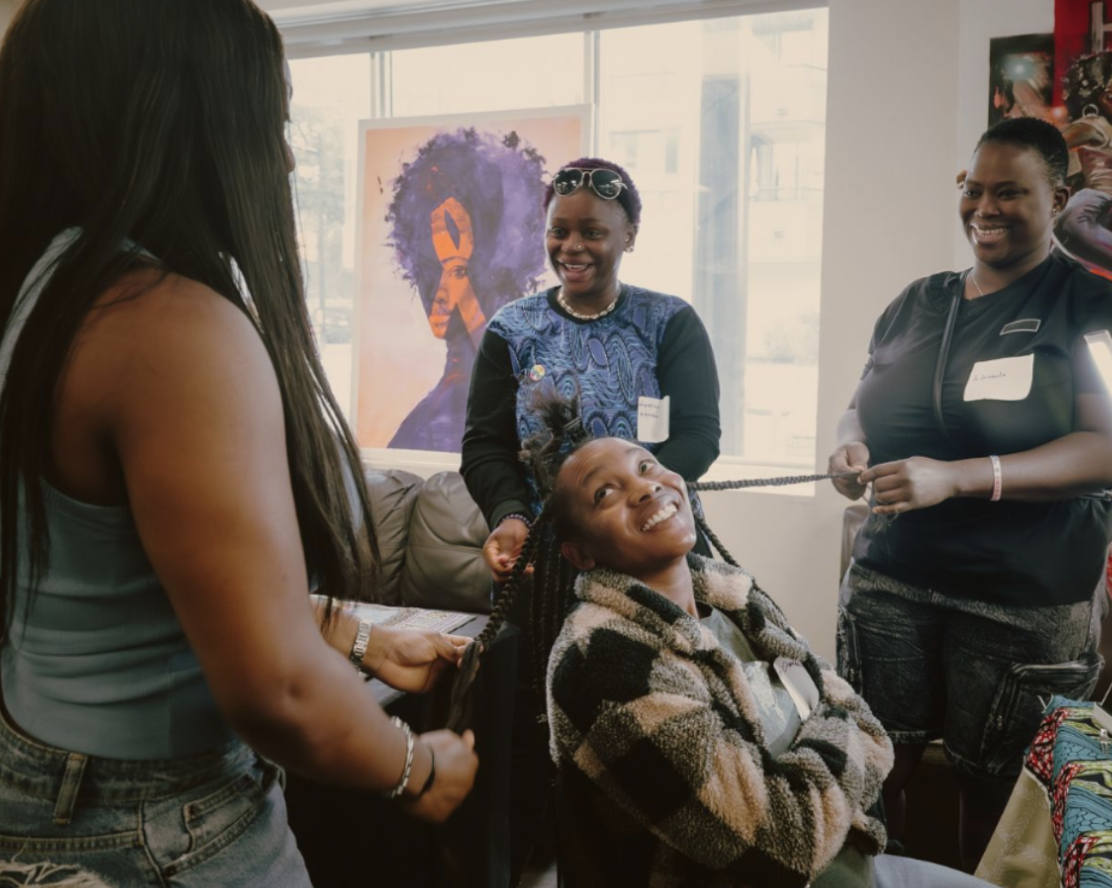
With clients often spending two or three hours in a chair, “Salons have always been a place for people to vent and talk about their life,” Telphia said. “The ability to feel safe in that space and be able to talk about any issues you’re having while you’re in that space is important.”
In addition to the tips and tricks she received from Links to Locs to enhance her hair routine, Nobossi said the event provided more than just the necessities.
“All the little things that went into the event made it feel like a safe space,” Nobossi said. “I didn’t know anyone, but I still felt extremely comfortable.”
‘Black hair isn’t just style or aesthetic’
As Onyegbule begins her Master of Counselling Psychology at the University of Toronto, she hopes to continue bridging Black haircare with mental health.
“Hair is the thing that connects some of the worst moments with some of the best,” she said.
“Growing up, my natural hair was often the source of discrimination for me, and a big misunderstanding or disconnect between some of my white counterparts.”
But Onyegbule said she loves her hair now. “That’s a big journey. I also think there’s a lot of cultural significance for me.”
“Black hair isn’t just style or aesthetic.”
Nobossi said part of the issue with Black haircare is accessibility and cost.
“The main issue is that we can’t just walk into a salon and access hair care the same way as everyone else,” she said.
Onyegbule was able to create Links to Locs with financial support from the Pathy Foundation, a fellowship that funds student-led community projects.
Now, as she works to plan future events, Onyegbule said she is looking for more funding opportunities to continue expanding Links to Locs and extend her directory to other cities like Toronto and Niagara Falls.
Onyegbule said watching young kids getting their hair done at her events is among the most rewarding moments of her journey.
“When you’re a little Black child, it’s just painful. Everything around you is telling you you’re not beautiful, you’re not worthy, you’re not important enough,” she said. “Seeing them smile and feel happy in the mirror — it was the closure that I needed.”
“I want to create what I didn’t have … that was always my hope for Links to Locs.”
Featured image provided by Chidera Onyegbule