


Marty Supreme culminates in a music cue titled “Force Of Life.” It’s a propulsive, affirming melody tinged with melancholy — there is no sound or phrase more befitting for a film like this one.
From its guerrilla marketing campaign — fronted by now-undeniable superstar Timothée Chalamet — to its head-splitting, relentless pacing, Josh Safdie’s Marty Supreme feels like the mutated afterbirth of the auteur’s previous works.
Chalamet’s Oscar-worthy performance is core to any interpretation of the film or its central character. A volatile and self-mythologizing table tennis prodigy, Marty Mauser works because Chalamet makes him unbearable — but just irresistible enough to keep watching.
The film opens on Marty deliberately fitting an elderly woman with the wrong-sized shoe. He capitalizes on her visible discomfort to manipulate her into buying a more expensive pair.
But Marty’s heart doesn’t lie with selling shoes. And if he’s willing to lie to gain leverage in a job he considers beneath him, it’s worrisome to think what lies ahead when he realizes his ambition to become the greatest table tennis player.
Marty has a mystical charm about him, confidence and an appetite for success that borders on religious fervor, but he’s also cursed with tunnel vision and an inscrutable devotion to self-sabotage.
Table tennis merely serves as the backdrop to his charade — and a story about human nature.
Marty is obsessed with pursuing his dreams, though what those dreams actually mean or allude to is never clearly defined. This is not as a coy act of narrative ambiguity but rather because Marty has no clue. He reeks of emotional immaturity and is convinced that greatness is his birthright.
In all fairness, Marty is extraordinary at table tennis. He competes at the highest levels and effortlessly defeats a former world champion. But Marty doesn’t lose with grace. When he’s defeated in his final match at the United Kingdom tournament, he blames Japanese player Koto Endo’s (Koto Kawaguchi) paddle, technique and anything but his own limits.
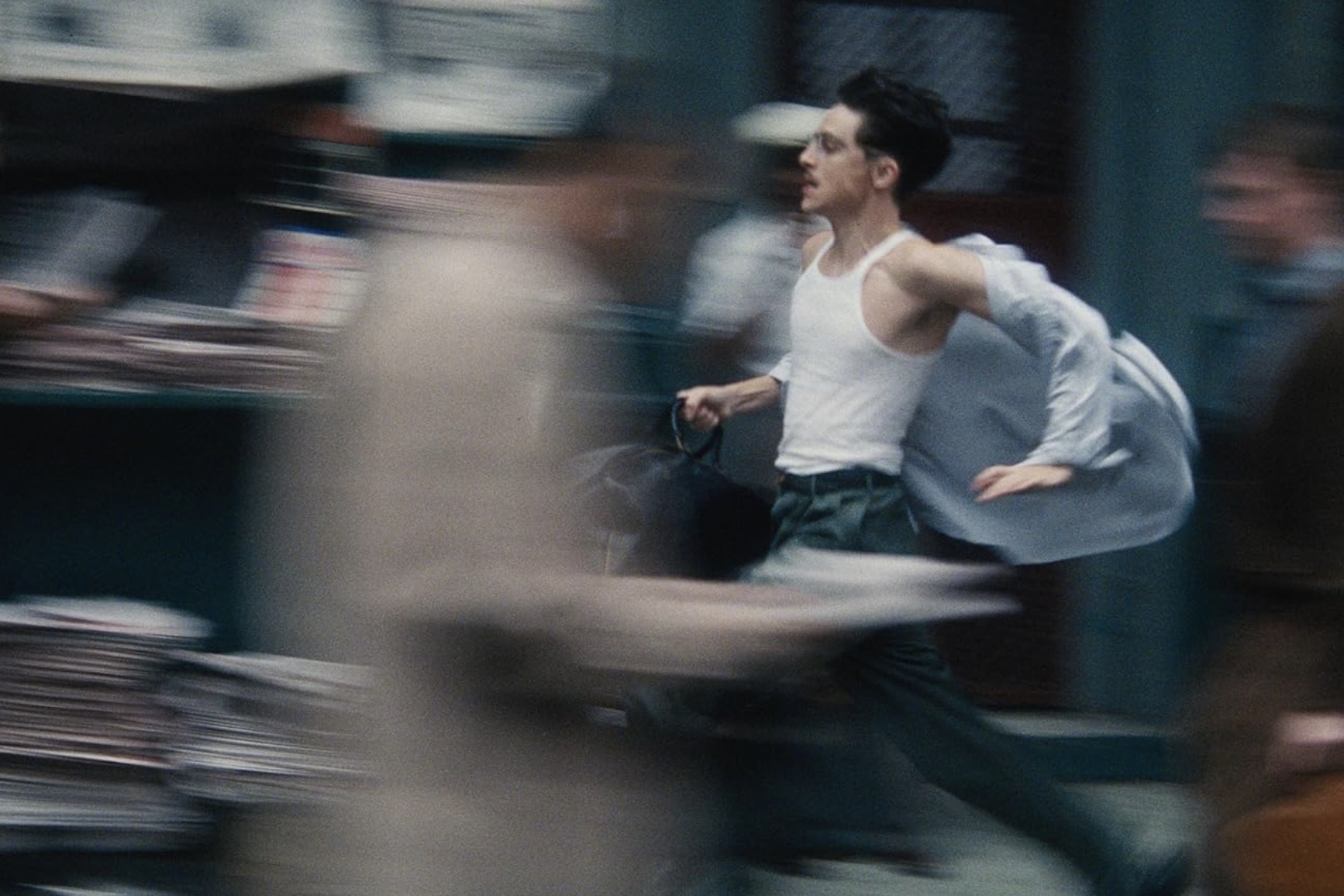
Upon returning to New York, Marty spirals through disaster after disaster, scrambling to raise money for a rematch in Tokyo. One day he’s running from the cops, the next from a psychotic mobster and a killer farmhand. Sometimes, it’s fallout from his entanglements with famed movie star Kay Stone (Gwyneth Paltrow), and others because his friend Rachel Mizler (Odessa A’zion), who is carrying Marty’s child, has nowhere to sleep.
The famed Marty Supreme orange ball, which lies at the forefront of the film’s promotions, symbolizes the legitimacy just out of his reach. Even that rests on the faith of people naive enough to overlook who he really is.
At one point, thousands of these supposedly “unique” balls — each representing the countless Marty Mausers roaming the world — spill from a building and bounce once or twice before settling into indistinguishable trash on the sidewalk.
Still, Marty sees himself as an alien from the future. He fancies himself as the ultimate embodiment of American individualism — when in reality, his existence is a critique of it. The film, however, doesn’t just try to condemn him but also seduces the audience into believing him.
Although set in the 1950s, Josh Safdie ingeniously laces the soundtrack with ‘80s anthems like Alphaville’s “Forever Young” and Tears for Fears’ “Everybody Wants to Rule the World,” songs that perfectly capture the gap between Marty’s self-image and the reality he leaves behind. Paired with Daniel Lopatin’s powerhouse of a score, each scene bleeds into the other like a fast-growing tumor.
Odessa A’zion is a revelation, grounding the film with a devastatingly beautiful performance. Gwyneth Paltrow returns from retirement with a performance that matches Chalamet’s complexity beat for beat. These characters are fully realized and deeply human, believably harboring the misfortune of being in Marty’s way.
Milton Rockwell, a multimillionaire played with surprising authority by Kevin O’Leary, is the only figure whom Marty fails to bulldoze. Rockwell represents an upper echelon of existence to Marty, that Marty can’t charm his way into. Without their humiliating and humbling collision, Marty’s final dance wouldn’t land with the same impact.
The ending has strong ties to Josh Safdie’s own creative reckoning. In a post-screening Q&A, Safdie spoke about spending over a decade trying to make Uncut Gems, only to feel no fulfillment or joy once it was released. It wasn’t until after the birth of his son that his understanding of purpose was realized and startlingly reordered.
For a film driven by such a selfish and destructive protagonist, Marty Supreme’s ending is imbued with an astonishing amount of love and revelation. Whatever the ending may represent, there is no denying its message of transformation.
Whether Marty accepts it willingly or not, life has caught up with him.
Or maybe, for the first time, it is him who has finally caught up to life.
Featured image from IMDb.
This article, and all of the Charlatan’s work, is brought to you by an independent student newspaper dedicated to informing, uplifting and entertaining the Carleton University community. We are a levy-funded organization which plays a role in the broader, vibrant student culture on campus. By reading this article, you are supporting our efforts.