
For Adam Saulis, films aren’t just a source of entertainment — they’re an outlet to learn about world events underrepresented in the media.
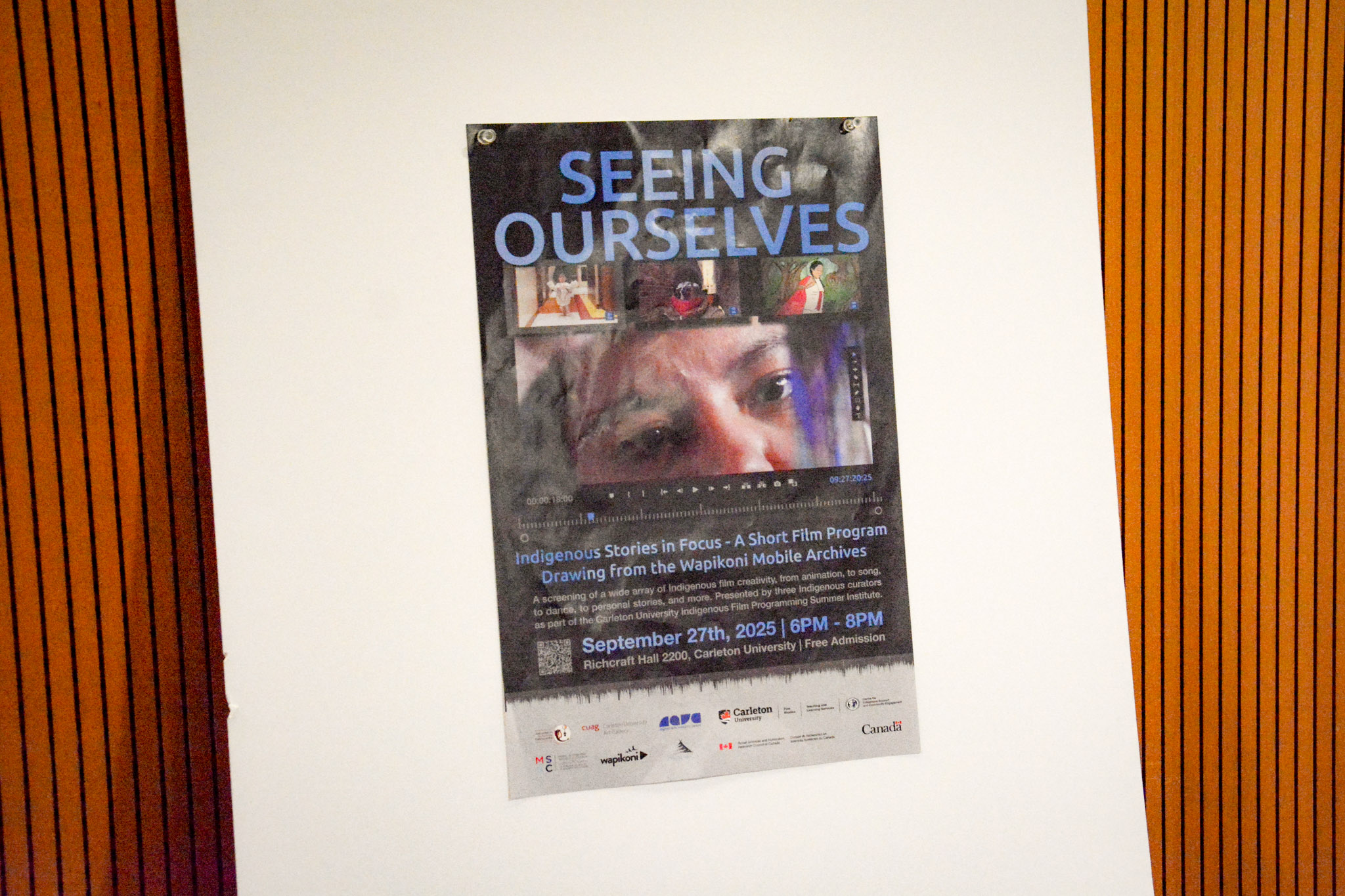
That’s why Saulis and a team of Carleton University students and staff planned “Seeing Ourselves,” an Indigenous short film program screened at Richcraft Hall on Sept. 27.
“It can feel like Indigenous films are typically oriented towards a non-Indigenous audience,” said Saulis, a film studies master’s student.
“The films are typically oriented around either educating non-Indigenous people about Indigenous ways of life or the struggles and oppressions that Indigenous people face.
“These are important stories to hear … But at the same time, it can feel like this is such an overwhelming thing that nothing else becomes available, especially to the Indigenous viewer.”
The short-film program showcased live-action, animation, fictional and documentary filmmaking with differing narratives.
Lily Inskip-Shesnicky, a Carleton master’s film student and the event’s photographer, said they felt motivated by the creativity on display.
“A lot of them had a positive, hopeful or humorous lens. They made me feel inspired to make my own art,” they said. “I hope what people take from the event is the importance of creative outreach.”
They singled out the 2009 short film Kick it Now as a favourite.
Atikamekw artist Louis-Philippe Moar created the montage-style short film, featuring a person dancing to upbeat music, shot from different angles and cut together with a quick editing style.
Rien sur les Moccasins, a 2015 short film from Eden Mallina Awashish, was Laurence Richard’s top pick. Narrated by the director, the film discusses her grandma’s resistance to making a film about moccasins.
“It really talks about cultural transmission,” she said. “It’s interesting to bring up the challenge that Indigenous people have: They want to share knowledge but protect it at the same time.”
Richard is the director of professional services for Wapikoni Mobile, a Montreal-based non-profit Indigenous film studio. The “Seeing Ourselves” event, curated by three Indigenous students, comprised 14 films from the Wapikoni collection.
“We really highlight the importance of narrative sovereignty in the creation process,” Richard said. “When our participants make their films, we’re there to accompany them in the process, but they’re the one who chooses what they want to talk about and how they want to talk about it.
“They have full control.”
Viewers smiled and chucked throughout the full runtime of It’s Me Landon, a 2018 film by Landon Moise from the Clearwater River Dene Nation. The short depicts a young boy taking the audience on a tour through the woods, stopping to point out the land’s most valued sights and what they mean to him.
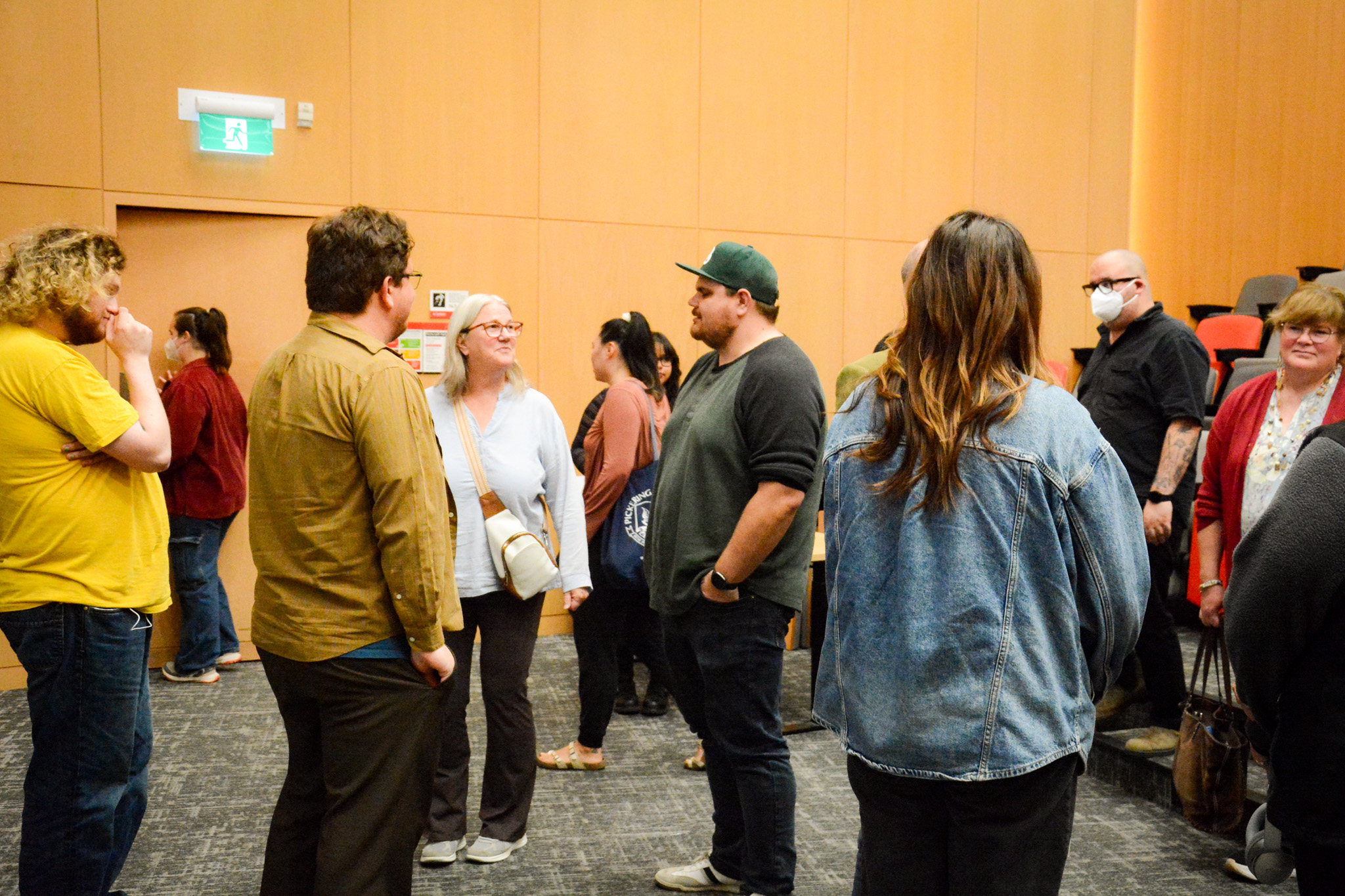
During a Q&A after the event, many audience members mentioned My Father’s Tools as a favourite, and praised the film’s storytelling and documentary-style approach. Heather Condo’s 2016 short features a man harvesting wood and weaving a basket.
Audience member Gunnar Iversen, a Carleton film studies professor, said he found the diverse film types engaging.
“It was a very interesting mix,” he said, “from the more poetic to the fun and satiric and some more serious discussions in the middle.”
“Seeing Ourselves” curators Helena Granger, Melanie Brochu and Jessica McKenzie, spoke of the themes and ideas they hoped to highlight in the Q&A.
“We wanted to call into question a lot about representation and knocking down stereotypes about native people,” said Granger, a member of the Sagamok Anishnawbek community. “If it’s not super stereotypical representations where we’re in the woods and we’re medicine people, then it’s trauma.”
For Brochu, Wolastoqiyik from the Tobique First Nations, “there was life” in every presented film.
“Whether it was Landon taking you for a walk, or a beader showing you how she practices her culture, all those stories, whether they are super big or small, little bits of daily life, [it] feels like there was a lot of soul there.”
Featured image by Nicholas Verge/the Charlatan